U.S. Vice President Vance Says Military Action Against Iran Is on the Table; Global Oil Prices Jump More Than 4%
- Input
- 2026-02-19 04:05:26
- Updated
- 2026-02-19 04:05:26
Global oil prices surged more than 4% on the 18th (local time).
The jump came just one day after prices fell on hopes that geopolitical tensions would ease, following signs of progress in nuclear talks between the United States and Iran.
U.S. Vice President J. D. Vance said Iran had made no effort in the latest nuclear talks to meet Washington’s "red lines," and that President Donald Trump therefore still retains the option of using military force.
Vance’s remarks that military operations are also under consideration sent oil prices sharply higher.
Brent crude, the global benchmark, for April delivery jumped $2.93, or 4.35%, to $70.35 a barrel.
West Texas Intermediate (WTI) crude, the U.S. benchmark, for March delivery surged $2.86, or 4.59%, to settle at $65.19 a barrel.
Just a day earlier, the mood had been very different.
U.S. special envoy Steve Witkoff and Trump’s son-in-law Jared Kushner held nuclear talks on the 17th in Geneva, Switzerland, with Iranian Foreign Minister Abbas Araghchi. Araghchi described the talks as "constructive" and said the two sides had agreed on the principles for further dialogue.
On expectations that a nuclear deal could be reached, international oil prices had moved lower.
But within a day, the situation flipped.
Vance stated that Iran had failed to accept the United States’ core demands.
Speaking to Fox News on the night of the 17th, he said, "In some ways, the negotiations went well, and the delegations agreed to meet again later." However, Vance stressed, "In other ways, it became very clear that the Iranians still have no real willingness to recognize and implement some of the red lines the president has set."
He warned that if diplomacy fails to stop Iran’s nuclear program, Trump could resort to military force, adding, "We have very powerful military capabilities, and the president has made it clear that he is prepared to use them."
Axios, citing sources, reported that a potential U.S. military operation against Iran could be large-scale and last for several weeks. The sources said it could look like a full-scale war, unlike the operation in January to capture Venezuelan President Nicolás Maduro.
Iran is also preparing for a possible conflict.
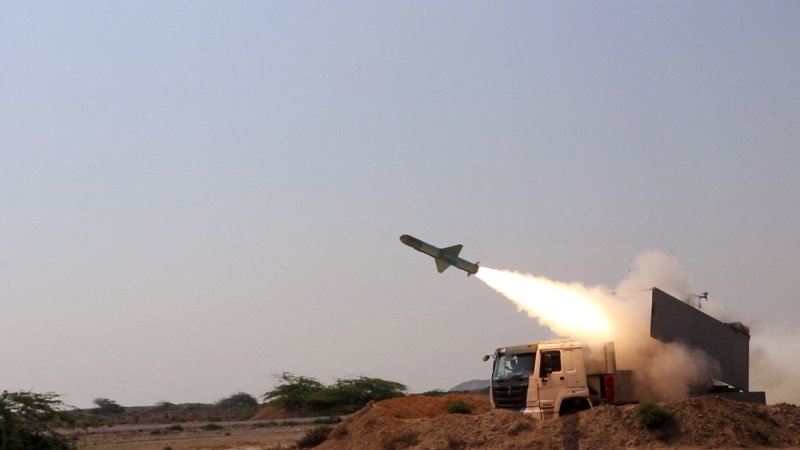
The Islamic Revolutionary Guard Corps (IRGC) has signaled that it could carry out an operation to blockade the Strait of Hormuz, a vital waterway through which about one-third of the world’s seaborne oil shipments pass. It conducted related drills this week.
The United States has deployed the USS Abraham Lincoln aircraft carrier strike group to the Middle East for potential use in airstrikes on Iran, and the Gerald R. Ford carrier strike group is also currently heading to the region.
Earlier, on the 13th, Trump said he was dispatching a second carrier group, the Gerald R. Ford, in case the talks collapse, adding, "If we fail to reach an agreement, that carrier group will be needed."
[email protected] Song Kyung-jae Reporter