"Regional extinction means national extinction... We must revive local healthcare through digital telemedicine" [Editorial News Analysis]
- Input
- 2026-02-18 19:23:39
- Updated
- 2026-02-18 19:23:39
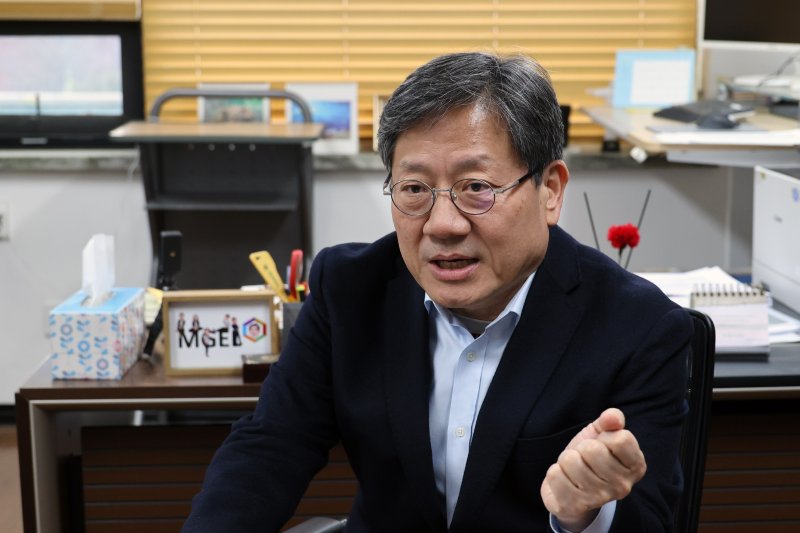
Kang summarized the center’s activity plan at the time of its launch in 2023. The idea is for universities and local governments to join forces to provide medical services to residents in medically underserved and remote areas, where simply getting to a hospital can take more than half a day. Companies with digital medical and health technologies will also participate to build new models for local treatment and health management. The Regional Healthcare Innovation Center at Seoul National University College of Medicine is now formally launching a new type of regional healthcare innovation project with Pyeongchang Health Medical Center. On March 13, it will hold a forum at Pyeongchang Medical Center under the theme of "locally complete regional healthcare innovation," meaning a care system that can be completed within the community.
"Pyeongchang has a population of about 40,000, yet there is not a single dialysis machine. One-third of the country’s 226 basic local governments are in similarly poor medical conditions. The biggest problems in regional healthcare are access and a lack of medical resources. Pyeongchang Medical Center has eight public health doctors. There are several private clinics as well. But there are areas they simply cannot cover. We also have to consider that the disease profile differs from region to region. That is why we are preparing five different pilot projects, each tailored to its area. One will focus on dementia, another on sarcopenia, another on diabetes, and so on. No one has tried this kind of approach at a national level before."
Pyeongchang has eight towns and townships, and even within the county, access to care and medical resources varies by area. Daegwallyeong, Jinbu, Yongpyeong, and Bongpyeong-myeon, which are close to the Yeongdong Expressway, are relatively better off. Bangnim-myeon and Mitan-myeon in the south, however, have such poor infrastructure that it can take more than two hours to reach a medical facility. To address this, the project plans to incorporate digital telemedicine technologies. Consultations will not be entirely remote; in-person visits will be combined with non-face-to-face care.
"This is work done jointly by technology and doctors. In some regions, people aged 65 and older make up more than 40% of the population. Take dementia as an example. We plan to install diagnostic kiosks in community centers so residents can screen themselves for early cognitive impairment. After that, we will combine telemedicine with digital health. People living in mountain villages have to spend hours traveling to a hospital, and many come in for relatively minor symptoms. In such cases, a doctor can simply examine them remotely and say, 'Take the medicine and wait a bit.' We want to introduce that kind of system quickly. In these regions, just sending more doctors will not solve the problem."
Using digital health and medical technologies, it will be possible to conduct first-line screening not only for dementia but also for conditions such as heart rhythm abnormalities, loss of muscle mass, and diabetes, which are common among the rural elderly. Digital healthcare companies including Kakao Healthcare and Seers Technology are taking part. In April, the same model is to be expanded to medically underserved remote areas such as Namwon in North Jeolla Province. If this experimental project by Seoul National University College of Medicine succeeds, it could open a breakthrough in resolving regional healthcare problems. The government and the ruling party are seeking to address these issues by creating new regional public medical schools and implementing the Special Act on Essential Medical Services. This does not conflict with the college’s pilot project; the two approaches can complement each other.
"The government emphasizes regional, essential, and public healthcare. In reality, there is no such thing as care that is not essential or public. Some dermatological diseases also have high mortality. Private clinics can provide public-minded care. During COVID-19, neighborhood clinics served as the front line of public healthcare. That is why we must keep local clinics alive, but it is extremely difficult to recruit medical staff in the regions."
The acceleration of regional healthcare innovation at Seoul National University College of Medicine has been driven not only by advances in digital health and medical technologies but also by the legalization of telemedicine, or non-face-to-face care. Late last year, after much controversy, the National Assembly passed an amendment to the Medical Service Act that institutionalizes non-face-to-face consultations. This will bring major changes to a healthcare system built around in-person visits and open a new chapter for the medical industry.
"If the Pyeongchang model succeeds, we plan to roll it out in Namwon, Pohang, Hwasun, and Seogwipo as well. In particular, the core keyword for Pyeongchang and Namwon is digital. We aim to build a system that can treat dementia, diabetes, and sarcopenia remotely, even without a doctor physically present."
A specialist in preventive medicine, Kang served as chair of the COVID-19 Scientific Committee at Seoul National University College of Medicine, which was launched in 2021 when the pandemic was raging. At that time, non-face-to-face care drew attention as an alternative. Seeking to establish the academic concepts and terminology of telemedicine, Kang founded the Korean Telemedicine Society and has served as its president ever since. Going a step further, he launched the Asian Telemedicine Society late last year and now leads the organization as its founding president. The society currently has 12 member countries, including Korea as the chair country and Japan, Indonesia, and Vietnam as vice-chair countries. By 2030, he plans to expand the scope and establish a World Telemedicine Society. In geographically large countries such as the United States and China, telemedicine is already well developed. In the United States, about 30% of all consultations are conducted remotely, and that share is said to be growing by 2–3 percentage points each year. Korea accumulated records of 30 million non-face-to-face consultations during the COVID-19 pandemic, but the field is still in its infancy. Moreover, resistance from the medical community is strong. One survey found that 70% of doctors opposed telemedicine. Even so, Korea’s advanced digital medical technologies are a clear strength.
"Three things are crucial for the development of telemedicine. First, deregulation. Second, advances in digital health technologies. Third, consent and cooperation from the medical community. The goal of the Asian Telemedicine Society is to provide technical support to medically underdeveloped regions and to help Korea’s excellent digital health companies expand into Asia. Our companies are already very active in places such as Vietnam and the Middle East."
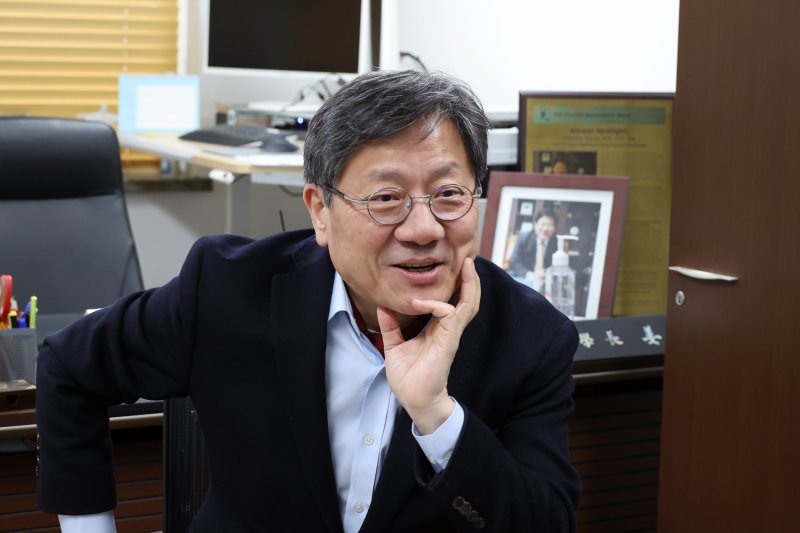
"We once carried out a pilot project in Pohang, North Gyeongsang Province, together with the North Gyeongsang Fire Headquarters and three general hospitals in Pohang, to respond to emergencies such as childbirth and cerebral hemorrhage. We trained 119 Emergency Services paramedics. They assess how urgent the situation is by observing it on camera and then connect the patient with a doctor. Korea has a well-developed fire and rescue system. We are continuing to build on that experience."
He offered this explanation for why doctors are reluctant to move to the provinces even when offered annual salaries of hundreds of millions of won.
"The main reason is that there simply are not enough patients in those areas. Young doctors’ values have also changed a lot. They need a sense of professional fulfillment. There is also the issue of their children’s education. The salary may look high, but private practitioners in Seoul can earn about the same. It is true that there is a shortage of doctors in the regions. But you cannot achieve healthcare reform just by increasing the number of doctors. Even if you train more doctors, they will not go to the regions. We need a balanced policy. Personally, I strongly recommended to the previous administration that the intake be increased by about 500 students a year. Then suddenly they announced an increase of 2,000, and I anticipated a healthcare crisis. Both the previous and current governments have failed to communicate properly on issues such as medical school quotas. We need not formalistic dialogue but fully open communication."
We asked him what he sees as the essence of healthcare reform.
"First, it is a problem of the compensation system. In Korea, the fee-for-service payment system is the foundation. Every time a medical act is performed, the state—through National Health Insurance—pays money. That is the problem. Doctors are not properly compensated for their professional services, while reimbursement rates for expensive tests such as CT and MRI scans are set relatively high. As a result, providers have to perform many high-cost tests. Korea has the highest number of MRI and CT scans in the world. From a doctor’s standpoint, you have to make patients come to the hospital frequently. There is a lot of antibiotic prescribing and many surgeries. Among major countries, Koreans visit hospitals the most. Medical costs are relatively low compared with other countries; for the same illness, treatment in the United States can cost dozens of times more. Yet among Organization for Economic Cooperation and Development (OECD) members, Korea ranks last in patient satisfaction. The reason is that access to hospitals is too easy. The system itself is flawed. There is far too much unnecessary medical care, and it needs to be regulated. If we change the fee-for-service system, hospital visits will decrease. Costs should go up and demand should go down. People will have to pay higher health insurance contributions. The supply of doctors is a secondary issue. Without addressing these fundamental problems, debates over medical school quotas are meaningless. Surgeons who perform heart and brain operations are quitting. They want to move to cosmetic dermatology practices in places like Apgujeong-dong. The current structure forces them to avoid life-and-death surgery. If something goes wrong with a patient, the doctor bears all the responsibility. Who would want to do that? The key is for the government to understand what the public truly wants."
He had this to say to the government as it pursues healthcare policy.
"There must be communication. Simply creating public medical schools in the regions will not solve everything. The government needs to listen to voices from the field. This is not about taking the doctors’ side. In September 2020, medical students staged collective action. I pleaded that their views be heard sincerely. At the same time, I worked to persuade then Prime Minister Chung Sye-kyun and Choi Dae-zip, then president of the Korean Medical Association. I told them, 'Doctors cannot exist apart from their patients. Doctors exist because of patients.'" [email protected]