"Do I Have Two Husbands Now?" Daughter-in-Law Explodes Over In-Law Honorifics [What Do You Think?]
- Input
- 2026-02-16 17:07:01
- Updated
- 2026-02-16 17:07:01
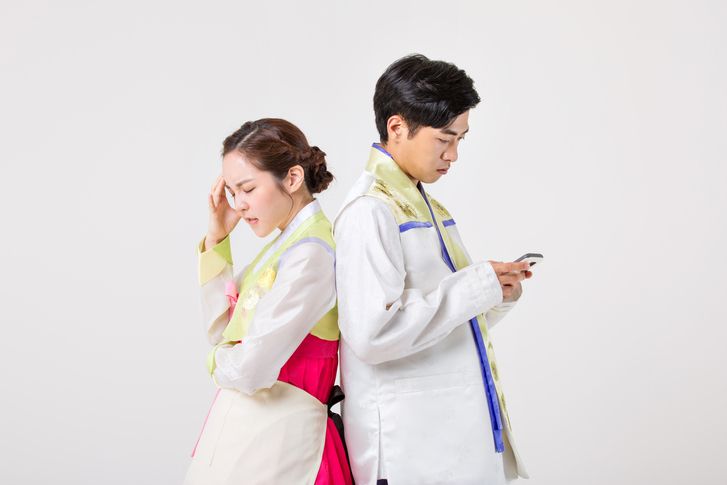
[Financial News] As Lunar New Year, the biggest traditional holiday, approaches, the issue of how daughters-in-law must address their in-laws has once again become a hot topic.
On the 16th, a post titled "Calling my elementary school–aged brother-in-law doryeonnim — am I a servant?" was shared on several online communities and social media (SNS).
A, who has been married for three years, wrote, "This Lunar New Year, I was really hit by reality again because of the way I’m expected to address my in-laws," adding, "My husband’s cousins have just started elementary school, but my husband’s aunt told me off, saying I should address them politely as 'doryeonnim' and 'agassi.'"
She continued, "It is not like I am a servant in a historical drama serving my masters. Having to bow to little kids and use honorifics makes me feel utterly miserable."
A also said, "My husband’s younger sister is seven years younger than my husband and the same age as me, yet I always have to call her 'agassi' and speak to her in honorifics," adding, "Every time I go to my in-laws’ place, having to say things like 'Agassi, I’m here' and 'Have you been well?' is a huge source of stress in itself."
She went on, "My husband can call my younger siblings simply cheonam or cheoje, without any extra honorific, or even just call them by name and speak casually. But because I have to watch my parents-in-law’s reaction, it is hard for me even to drop honorific speech with his side of the family."
What bothered her even more was how she was told to address her brother-in-law who recently got married. A said, "Now that he is married, I am supposed to stop calling him doryeonnim and start calling him seobangnim instead, but the words just will not come out of my mouth," and complained, "They are telling me to use the same term seobangnim, which I use for my own husband, to address my husband’s younger brother. I do not understand why, in this day and age, I am being forced to use such a sexist expression."
Finally, A said, "My back is about to break from cooking all the holiday food, and on top of that I find myself saying, 'Doryeonnim, seobangnim, please have some apples,' which really makes me feel like I have become a household maid here," adding, "I do not know how long I am supposed to endure these forms of address. Do I have two husbands now?"
People who read her story commented in support, saying things like, "Do we really have to address them with elevated honorifics as if we were slaves who were sold into the family?", "I think it is time to retire the term seobangnim," and "What era are these titles from? Is it really true that people still call their married husband’s younger brother seobangnim these days?"
Others, however, pushed back, saying, "Don’t you get called hyungsu-nim?", "Those are the correct titles, so what exactly is the problem?", and "If your brother-in-law is in elementary school, he would call you hyungsu-nim, so doryeonnim is the proper title for him. You are making too big a fuss."
Meanwhile, the National Institute of Korean Language (NIKL) conducted language surveys and policy research in 2017 and 2018 on how people actually communicate, reflecting these concerns. Based on that work, it published a guidebook in 2020 titled "What Should We Call Each Other?"
The guidebook explains, "If your husband’s younger sibling is younger than you, that person is also, in effect, your younger sibling, so it can be uncomfortable to address them with elevated titles such as doryeonnim, seobangnim, or agassi," and suggests, "In such cases, you can call them by your child’s name plus 'uncle' or 'aunt.'" It also proposes that, "Depending on how close you are and on the family atmosphere, you can simply call them by their given name."
[email protected] Moon Young-jin Reporter