"Samsung, SK in all-out race to lead HBM4"... Production lines running at full capacity even during Lunar New Year holiday
- Input
- 2026-02-16 10:53:37
- Updated
- 2026-02-16 10:53:37
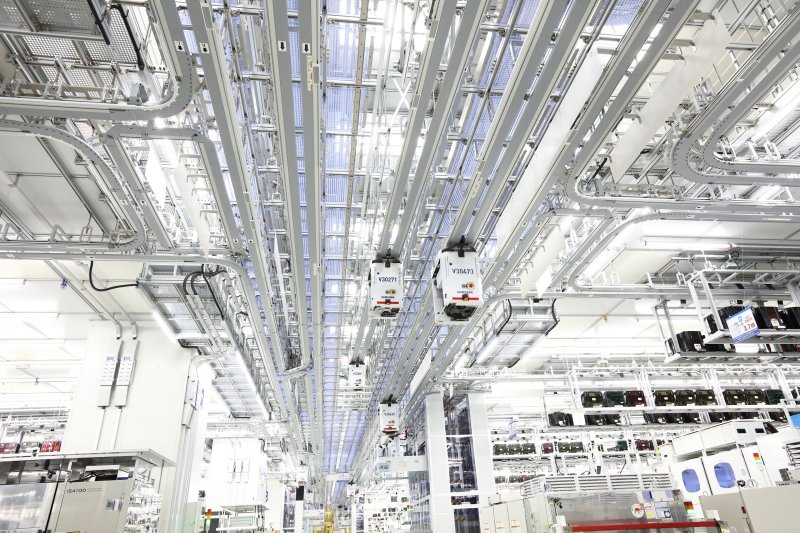
Samsung Electronics and SK hynix are running their semiconductor fabs around the clock even during the Lunar New Year holiday as they ramp up production lines to gain an early lead in the next-generation high bandwidth memory (HBM4) market.
According to industry sources on the 16th, Samsung Electronics and SK hynix are operating their major domestic semiconductor production lines over the Lunar New Year period as usual, without any shutdown.
Due to the nature of semiconductor manufacturing, if a production line is halted, wafers in process must be scrapped. If equipment stops mid-process, the silicon film is exposed to air, causing oxidation and damaging its electrical properties, which makes normal production difficult. Restarting the line also requires hundreds of billions of won in costs and a significant amount of time.
Tensions are especially high this year as the race to mass-produce HBM4 enters full swing. Securing early yield and stable supply capacity is seen as a key factor that will determine future market leadership. As global big tech companies move ahead with their artificial intelligence (AI) chip launch schedules, analysts say the companies that lock in initial volumes will have a strong chance of seizing the market.
On the 12th, Samsung Electronics announced that it had become the first in the world to begin mass production and shipment of HBM4, signaling its determination to lead the market. SK hynix is also expected to start full-scale shipments as early as this month after completing product optimization and yield stabilization. Both companies are focusing their capabilities on rapidly improving yield in the early stages of production.
HBM4 stacks more layers than previous products and requires far more demanding heat management and power efficiency control, making it a highly challenging technology. Meeting the performance standards demanded by major customers such as Nvidia while securing a stable production system is considered the core of market competitiveness.
The expansion of the AI chip market is also shaping the two companies’ production strategies. Nvidia has announced plans to launch its next-generation AI accelerator "Vera Rubin" in the second half of this year, and the product is expected to incorporate eight HBM4 chips. As a result, global customers are entering into fierce competition to secure initial supply.
During the holiday period, both companies plan to focus on improving line efficiency, inspecting equipment, and stabilizing yields. Samsung Electronics is producing Dynamic random-access memory (DRAM) and NAND Flash Memory at its Giheung, Hwaseong, and Pyeongtaek plants, maintaining a four-team, three-shift system throughout the Lunar New Year. SK hynix is operating its Icheon and Cheongju fabs under the same system as it sustains a production regime geared toward HBM4.
[email protected] Reporter Lee Dong-hyuk Reporter