Jeju Airport Slot Capacity Reaches Structural Limit: Could Early-Morning Operations Be the Answer?
- Input
- 2026-02-15 10:12:31
- Updated
- 2026-02-15 10:12:31
The issue of slot saturation at Jeju International Airport, referring to the allocation of takeoff and landing times for aircraft, has resurfaced.
As tourism demand recovers, flight operations are increasing. However, critics note that the current slot system and restrictions on airport operating hours are becoming obstacles to further growth.
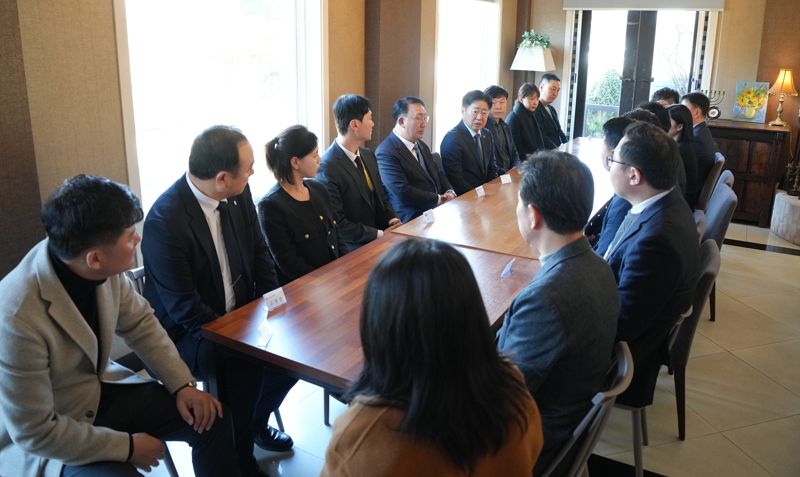
On the 13th, Governor Oh Young-hun held a meeting with the heads of airlines based at Jeju International Airport to discuss ways to improve systems, including addressing slot saturation and adjusting operating hours.
■ "Slots are full, but demand keeps rising"
The meeting was attended by Jang Se-hwan, head of Jeju International Airport at Korea Airports Corporation (KAC), Kim Jin-ho, chair of the Jeju Airport Airline Operations Committee, and branch managers from 14 domestic and international airlines based in Jeju.
Airlines pointed out that slots at Jeju International Airport are effectively maxed out, making it difficult to add new routes or increase frequencies. They explained that rigid scheduling tied to the first departure times is also weighing on efforts to improve profitability.
Jeju International Airport serves a high proportion of domestic passengers and shows large seasonal and time-of-day fluctuations in demand. Yet airport operating hours and facility usage times are limited, and industry representatives agree that this makes it hard to take advantage of relatively underused early-morning slots.
Airline officials suggested that if operating hours for airport facilities such as check-in counters and security checkpoints were adjusted, it would be possible to expand early-morning flight operations.
■ "Operating hours require consultation with central government"
Adjusting slots and changing airport operating hours are not issues that Jeju Island can resolve on its own. They are tied to the Ministry of Land, Infrastructure and Transport’s slot allocation policies, airport operating standards, and the Ministry of Justice’s immigration control system.
Governor Oh Young-hun stated, "Adjusting slots and airport operating hours requires close consultation with the relevant central government ministries," adding, "We will compile the on-site proposals and discuss them with the government."
■ Concerns over 'aviation infrastructure bottlenecks' amid tourism recovery
Cumulative tourist arrivals to Jeju this year are estimated to be up 17% from a year earlier. Analysts also say that the strong won-dollar exchange rate and shifting international conditions centered on China and Japan are creating opportunities for Jeju’s tourism industry.
However, there are concerns that if slot constraints turn into a bottleneck, the recovery in demand may not translate into actual revenue growth. This is because Jeju’s tourism industry is structurally and heavily dependent on air transport.
Industry voices are calling for a combination of measures, including more flexible slot management, a phased extension of airport operating hours, and parallel discussions on expanding mid- to long-term infrastructure such as a second airport on Jeju Island.
Jeju Island plans to operate a regular consultative body with airlines and related agencies to flesh out specific system improvement tasks.
jyb@fnnews.com Reporter Jung Yong-bok Reporter