"Only Hyundai Motor Would End Up Getting Support": Fiscal Authorities Oppose Subsidies for Autonomous Vehicle Companies
- Input
- 2026-02-16 08:00:00
- Updated
- 2026-02-16 08:00:00
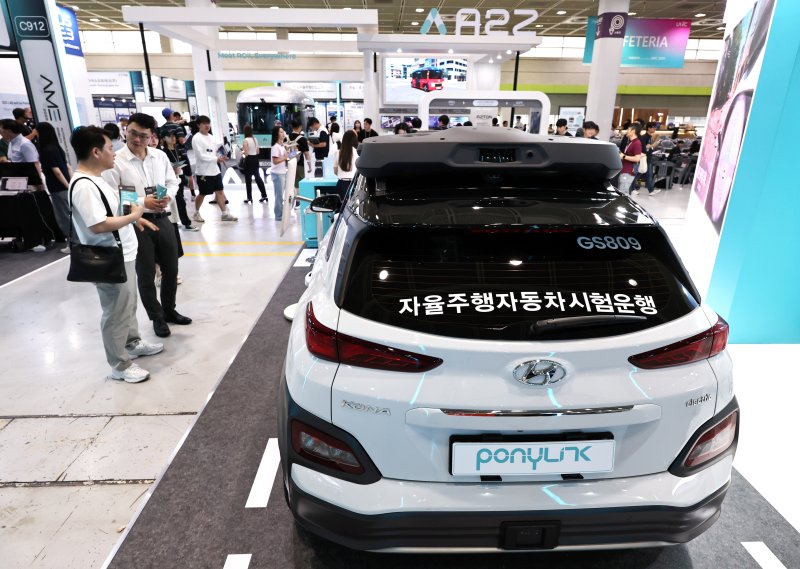
According to Financial News, the ruling party has introduced a bill aimed at fostering the autonomous driving industry by providing subsidies to autonomous vehicle operators. However, the fiscal authorities reportedly opposed the measure, arguing that "it would end up subsidizing only large corporations such as Hyundai Motor."
In contrast, the relevant standing committee of the National Assembly and the Ministry of Land, Infrastructure and Transport have taken a positive view of the amendment. Some observers also suggest that, now that the former Ministry of Economy and Finance has been split into the Ministry of Planning and Budget and the Ministry of Finance and Economy, the government may adopt a more flexible stance on subsidies for autonomous vehicle operators.
According to industry sources on the 16th, the former Ministry of Economy and Finance expressed a negative view of the amendment to the Act on the Promotion and Support of Commercialization of Autonomous Vehicles, proposed by Democratic Party of Korea lawmaker Lee Jeong-heon. The ministry warned that it "could trigger public criticism."
The ministry stressed that in the United States and China, governments focus on institutional support such as deregulation, while technology development, production, and operation of autonomous vehicles are carried out with private capital. It acknowledged that "there is a need for state funding to secure national competitiveness in autonomous driving technology, including research and technological advancement." Nevertheless, it drew a clear line, stating that "costs for production, operation, and maintenance of autonomous vehicles should, in principle, be borne by the beneficiaries—namely, the manufacturers, sellers, and operators that earn revenue from vehicle sales."
The amendment was introduced in early November last year, but it was not referred to the Land, Infrastructure and Transport Committee of the National Assembly, the relevant standing committee, until February 10 this year.
In his review report on the amendment, Oh Se-il, a senior expert of the National Assembly Land, Infrastructure and Transport Committee, emphasized that major countries such as the United States and China are actively pursuing deregulation and large-scale fiscal support to foster the autonomous vehicle industry. He stated that the amendment is "necessary," taking a position at odds with that of the fiscal authorities.
In practice, several Chinese cities, including Beijing, Guangzhou, Shenzhen, Wuhan, and Suzhou, provide subsidies. These subsidies take various forms, such as project funding, support for technological innovation, backing for commercial operations, and incentives for talent.
In Beijing, the city offers compensation of up to 3 million yuan (about 570 million won) for 30% of the actual investment in a single autonomous driving project. In Wuhan, companies can receive compensation equal to 30% of their investment in autonomous driving business model projects, with each company eligible for up to 10 million yuan (about 1.9 billion won).
In Korea, this year's budget includes 6 billion won for commercialization of autonomous vehicles, 2.5 billion won for the Chungcheong region autonomous mobility advancement project, and 61 billion won for the AI Mobility Pilot City. However, critics point out that most of these funds are allocated to purchasing and modifying vehicles for demonstration projects and data collection, rather than directly supporting operators.
Oh suggested easing the eligibility criteria in the amendment, which currently requires companies to meet all three conditions—performance certification, conformity approval, and submission of operational or research and development records—in order to receive subsidies.
The Ministry of Land, Infrastructure and Transport also believes that companies should be able to receive support if they meet just one of the three conditions, rather than all of them. Oh noted that "at present, there are no companies that have obtained performance certification or conformity approval," underscoring the need to relax the subsidy requirements.
A ruling party official commented on the situation, saying, "With the Ministry of Economy and Finance now split, we can no longer rule out the possibility that the government's previously rigid stance on subsidies may soften." The official added, "Since autonomous vehicle projects are one of the future growth engines, it is time for the government to step up and provide active support."
[email protected] Reporter Kim Hak-jae Reporter