U.S. Defense Department: "Alibaba and BYD on blacklist...linked to Chinese military"
- Input
- 2026-02-14 03:11:23
- Updated
- 2026-02-14 03:11:23
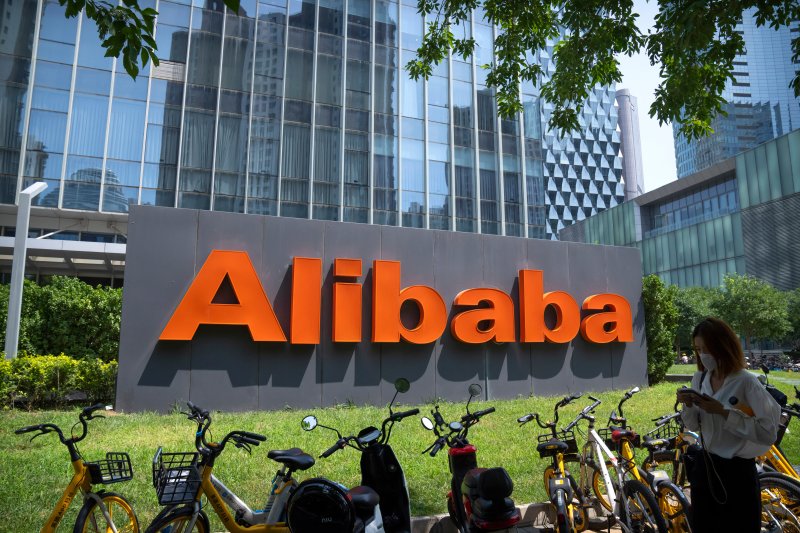
The United States Department of Defense (DoD) has concluded that Alibaba Group, BYD, and Baidu should be placed on its blacklist, saying they appear to be linked to the Chinese military.
This tug-of-war comes just two months before a planned summit in Beijing between President Donald Trump and President Xi Jinping.
According to the Financial Times (FT), the DoD on the 13th (local time) published a list of “Chinese military companies” in the Federal Register. However, the list was suddenly removed from the Register’s website after an anonymous government agency requested its withdrawal. This indicates that the DoD decided to include the companies, but internal disagreements among government departments have delayed a final decision.
The blacklist, known as the Section 1260H list, is expected to be expanded to include e-commerce giant Alibaba Group, search engine company Baidu, and BYD, the world’s largest electric vehicle manufacturer.
Analysts say adding these firms to the blacklist signals Washington’s intention to continue trading with China while treating national security as a separate issue.
Craig Singleton, a U.S.–China relations expert at the Foundation for Defense of Democracies (FDD), described the move as a form of “mutually assured disruption in practice.”
In other words, the United States is making clear its willingness to cause serious turmoil and disruption in the other side’s economy and supply chains by cutting technology supply chains, curbing economic exchanges, and blocking capital flows. It is a milder version of Cold War–era “mutually assured destruction (MAD),” a strategy based on both sides being completely annihilated in a nuclear exchange.
Although the U.S. and Chinese leaders agreed to a truce in their trade war at a summit in South Korea last November, intense behind-the-scenes maneuvering has continued.
Singleton explained that the United States is trying to stabilize trade negotiations while maintaining pressure in the national security arena.
Henrietta Levin of the Center for Strategic and International Studies (CSIS) also predicted that, while Beijing will be displeased with the latest step, it is unlikely to cancel the summit. She noted that China believes the meeting will ultimately work to its advantage.
The DoD blacklist, meanwhile, is considered less severe than the blacklist maintained by the U.S. Department of Commerce.
The Commerce Department’s Entity List targets companies deemed contrary to U.S. national security and foreign policy interests, and bans exports of technology and components to them. In effect, they are cut off from U.S. supply chains. Huawei and Semiconductor Manufacturing International Corporation (SMIC) are prominent examples.
Once added to the Entity List, companies can lose access to advanced U.S. technology, putting their very survival at risk.
By contrast, the DoD’s Section 1260H list targets firms suspected of having ties to the Chinese military. They face indirect impacts such as financial and investment restrictions and tighter access to funding.
[email protected] Song Kyung-jae Reporter