Lee Administration Squeezes Small Businesses: Boosting Big-Box Stores, Driving Up Costs
- Input
- 2026-02-17 06:00:00
- Updated
- 2026-02-17 06:00:00
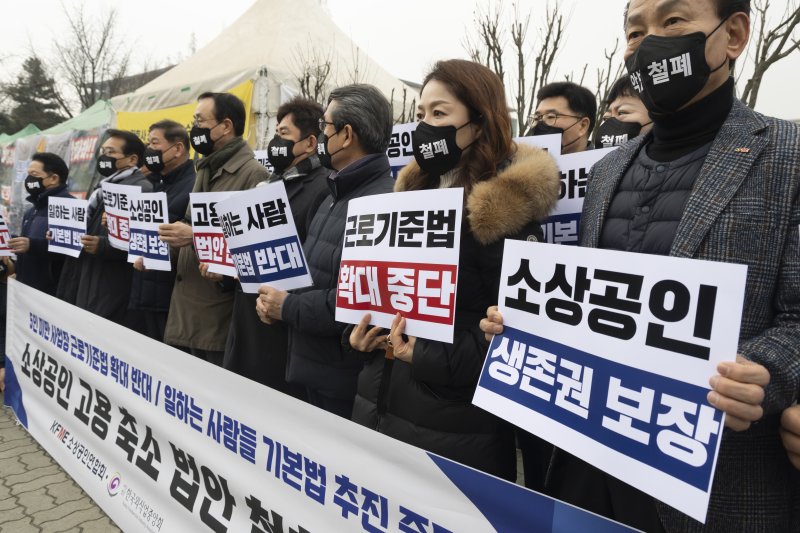
[Financial News] Economic policies backed by the Lee Jae-myung administration and the Democratic Party of Korea are, in effect, putting pressure on small business owners. They are slowing the pace for now, mindful of the Lunar New Year shopping season and the June local elections, but many expect that once the elections are over and the policies are rolled out in full, the burden on small businesses will rise significantly.
According to political sources on the 17th, the key policies being pushed by the government and ruling party that directly affect small businesses include: allowing early-morning delivery by large discount stores, enacting the Basic Act on Working People, and introducing a sugar levy on excessive sugar use.
Early-morning delivery for large discount stores to rein in Coupang...concerns over “entrenched oligopoly”
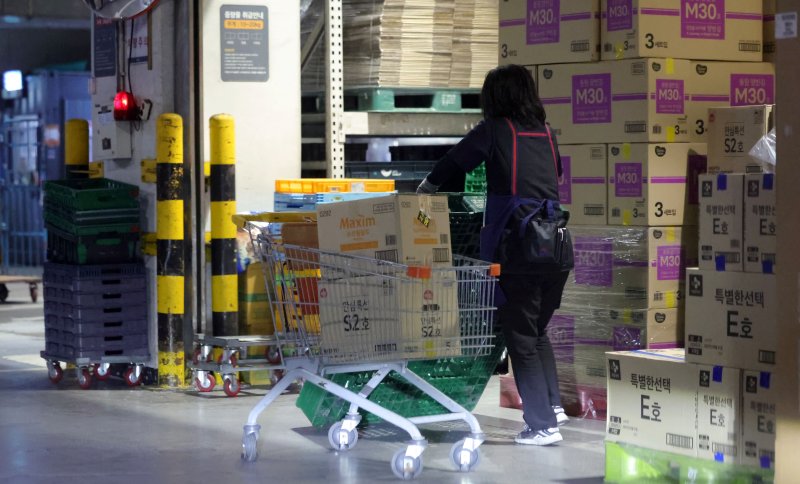
First, the plan to allow early-morning delivery by large discount stores is a measure crafted by the government and ruling party to curb the monopoly power of platform-based retailers such as Coupang. Specifically, they are seeking to revise the Distribution Industry Development Act so that restrictions on operating hours and mandatory closure days for large discount stores would not apply to deliveries made via e-commerce. The bill has been introduced by Democratic Party lawmaker Kim Dong-a.
Small business owners are reacting sharply. From the review stage, they have held protest rallies and voiced collective opposition, and even Oh Se-hee, head of the Democratic Party’s National Committee for Micro Enterprises and a lawmaker, has spoken out against the plan. Critics argue that easing regulations on large discount stores may or may not curb Coupang’s dominance, but it will clearly weaken traditional markets and neighborhood small businesses. Some also warn that it will cement an oligopoly shared by platform companies and large discount stores. For this reason, small business groups say that coexistence measures such as financial support cannot offset the damage.
However, many within the government and ruling party say there is no effective tool to regulate Coupang’s monopoly, and that the only way to disperse the risks exposed by the recent personal data leak scandal is to strengthen large discount stores as competitors. Public support is also high. In a regular opinion poll released on the 13th by the Korea Society Opinion Institute (KSOI), 62.5% of respondents said they favored allowing early-morning delivery by large discount stores. Only 18.7% were opposed, while 18.8% withheld judgment.
The cited poll was conducted on the 9th and 10th with 1,004 respondents nationwide via wireless automated response (ARS). The margin of error is ±3.1 percentage points at the 95% confidence level. Further details are available on the website of the Central Election Poll Deliberation Commission.
Broader definition of workers pushes labor costs up...sugar levy expected to fuel inflation
If enacted, the Basic Act on Working People and the sugar levy are expected to significantly increase costs for small business owners.
The core of the Basic Act on Working People is to presume platform workers such as delivery riders, as well as freelancers and dependent contractors, to be workers. Alongside this, the government and ruling party are also pushing legislation to expand the scope of the Labor Standards Act to cover workplaces with fewer than five employees. In that case, not only would the wage bill for small businesses rise, but their social insurance contributions would also increase.
In response, major small business organizations such as the Korea Federation of Micro Enterprises (KFME) and the Korea Foodservice Industry Association held a press conference at the National Assembly on the 10th calling for the plan to be withdrawn. They argued, “If the Basic Act on Working People takes effect and dependent contractors and freelancers are recognized as workers, business owners will have to bear about 5.05 million won in additional statutory costs per person each year,” adding, “That exceeds 20% of the average annual operating profit of small businesses, which is 25 million won, and if retroactive severance pay is also imposed, bankruptcy will be unavoidable.”
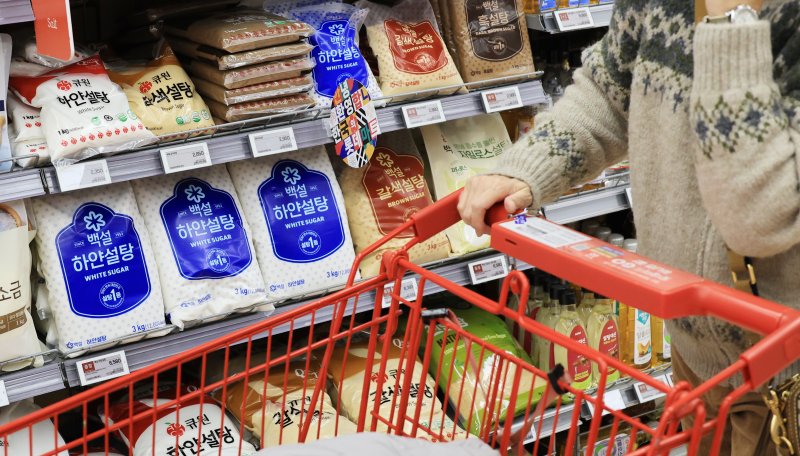
The sugar levy, personally championed by President Lee Jae-myung, has raised widespread concern that it will drive up food ingredient prices. The stated aim is to discourage sugar consumption to improve public health, while using the levy’s revenue to bolster the finances of the National Health Insurance Service (NHIS) and the National Health Promotion Fund. However, the effectiveness of such measures is still debated even in countries that have adopted sugar taxes, and the risk of upward pressure on prices is considered substantial.
Concerns were voiced even at a policy forum the Democratic Party held on the 12th to build public consensus. Jung Ji-yeon, secretary-general of the Korea Consumer Federation, warned during the discussion, “If this leads to higher prices for beverages and snacks, people may see it not as a health policy but as a price policy.” Lee Sang-uk, a director at the Korea Food Industry Association (KFIA), also noted, “For the public, it is practically indistinguishable from a tax, and debates over the effectiveness of sugar taxes continue overseas as well.”
[email protected] Kim Yoon-ho Reporter