"What good is KOSPI 5,000 if money isn’t flowing?" Sluggish spending amid recession and high prices chills consumption [Another Day of Closed Shops2]
- Input
- 2026-02-17 06:00:00
- Updated
- 2026-02-17 06:00:00
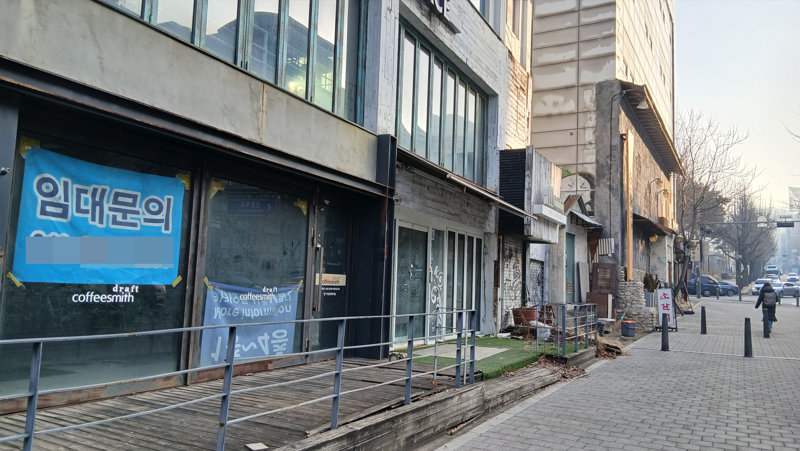
The sighs of shop owners echoing through their empty kitchens after closing time have become a familiar scene. The record-high number of business closures among the self-employed is far more than just a statistic.Behind those numbers lie entire retirement savings, tuition set aside for children’s dreams, and the last line of defense for many families’ livelihoods.We took a closer look at their silent struggle.
[Financial News]#1."Compared to last Lunar New Year, my sales are down another 50%. I was in the red last month," said Jeong, 37, who sells products for seniors online, letting out a deep sigh when asked about the "holiday bump." Lunar New Year, Chuseok, and Parents’ Day used to be peak seasons for Jeong, but this year’s Lunar New Year actually brought in less revenue than usual.#2.The situation is no different for Hyun, 34, who runs a dessert café in Incheon. Hyun once enjoyed a boom thanks to the so-called "two-layer chewy cookie" craze, but now feels firsthand that the trend has passed. "My sales are down to a third of what they used to be. I used to get quite a few orders for holiday gift sets, but this year I didn’t get a single one. Far from a holiday boost, my sales are actually worse than on regular days, and I don’t know what to do," Hyun lamented.The Korea Composite Stock Price Index (KOSPI) has surged well past the 5,000 mark and the stock market looks booming, yet that money is not flowing into the real economy. Self-employed business owners are saying in unison, "We’ve never seen a downturn like this." With the weak won driving up raw material costs, many say they cannot even raise prices for fear of losing the few regular customers they still have.
Holiday season? Recession leaves small business owners sighing
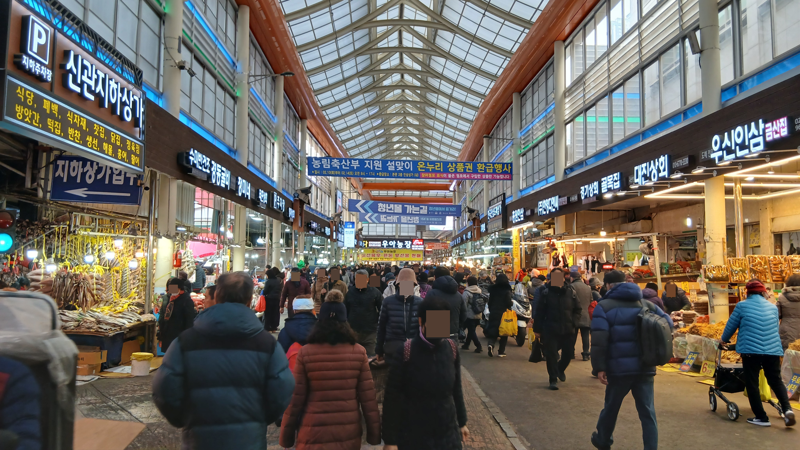
There is a common saying about the "holiday rush" or "Lunar New Year boom," and many self-employed owners greeted the holiday with high hopes. On January 12, just before the Lunar New Year break, Gyeongdong Market in Dongdaemun District, Seoul, was packed with shoppers buying food for ancestral rites. But for many other types of small businesses that had been counting on the holiday season, things looked very different. With the economy frozen, their sighs are only growing heavier.
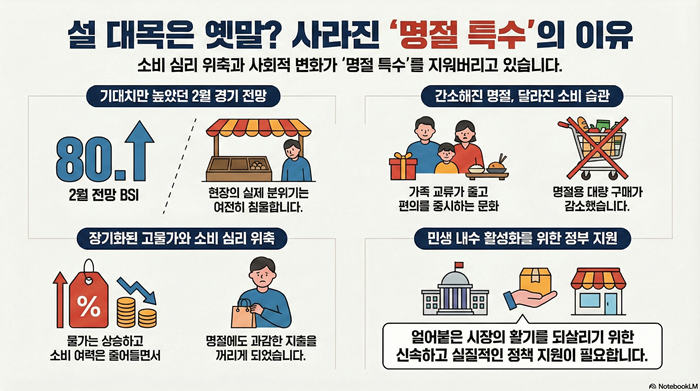
According to the "Survey on Small Enterprise Market Trends for January 2026" released on the 1st by the Small Enterprise and Market Service, the Business Survey Index (BSI) outlook for February among small business owners stood at 80.1, up 4.0 points from the previous month. The BSI quantifies business owners’ subjective views on performance and plans to gauge overall economic trends. A reading above the baseline of 100 indicates expectations of improvement, while a reading below 100 signals expectations of deterioration.
Although the figure is still below the baseline of 100, the rebound ahead of the Lunar New Year reflected expectations among small business owners that they would see a short-term recovery in sales during the holiday period. In reality, however, many who had been counting on the holiday rush say they have not felt any such boost because of the subdued economy.
Cha Nam-soo, head of policy at the Korea Federation of Micro Enterprises (KFME), noted, "In the past, things would start to heat up about two weeks before Lunar New Year, but that’s not the case now. Compared to before, activity has shrunk considerably." He added, "The rise in the BSI reflects expectations, but the mood on the ground is gloomy and does not match that sense of hope."
Recession, high prices, and changing holiday customs are dampening consumer sentiment
Expertssay the management difficulties facing small business owners are not just the result of a temporary downturn, but stem from a fundamental shift in our society’s consumption habits. They point out that simplified holiday customs, a prolonged period of high inflation, and weakened consumer sentiment have combined to erase the kind of "holiday boom" seen in the past. Small business owners are running up against structural limits that make it hard for them to adapt to these new market conditions.
Lee Eun-hee, a professor of consumer studies at Inha University, said, "I think the biggest factor is that holiday culture has changed somewhat since COVID-19. Family gatherings and interactions during the holidays have changed a lot." She went on, "Because families are not getting together as much, there is less need to make holiday-specific purchases. As convenience-oriented behavior becomes entrenched, people simply buy what they need, when they need it."
Choi Cheol, a professor of consumer economics at Sookmyung Women’s University, explained, "If you look at consumer spending statistics, the seasonal pattern of higher spending around holidays is still there. In the past, the holiday boom was very pronounced, but the fact that it no longer stands out as much is a matter of relative comparison." He added, "Consumer sentiment is currently very subdued, and high inflation has persisted for a long time even after the pandemic," referring to the recently announced consumer price increase for January.
According to the "Consumer Price Trends for January" released by the Ministry of Data and Statistics (KOSTAT) on the 3rd, last month’s consumer price index was 118.03 (2020=100), up 2.0% from the same month a year earlier.
Professor Choi assessed, "Because consumer sentiment is so severely weakened, people find it hard to spend even during the holidays." He continued, "The seasonal swings in consumer spending have become much less pronounced. Since business is already worse than before, small business owners feel that holidays are no exception."
Slow recovery in consumer sentiment: Government urged to step in and revive domestic demand and livelihoods
Professor Choi said, "As a result, small business owners perceive today’s economy as much tougher and feel it is hard to enjoy the kind of holiday boom they once did. Frozen consumer sentiment recovers slowly and takes time."
Cha, the policy chief,warned, "When the market is depressed and lacks vitality, it only makes conditions even harsher."He went on, "The government needs to design campaigns and promotional policies that draw consumers back into offline markets, using tools such as Onnuri gift certificates and local currency vouchers," andurged, "Even now, the government must move quickly to revitalize domestic demand and protect people’s livelihoods in the marketplace."
[email protected] Kim Su-yeon Reporter