Lunar New Year Dishes Raise Red Flags for Kidney Disease Patients
- Input
- 2026-02-15 08:30:00
- Updated
- 2026-02-15 08:30:00
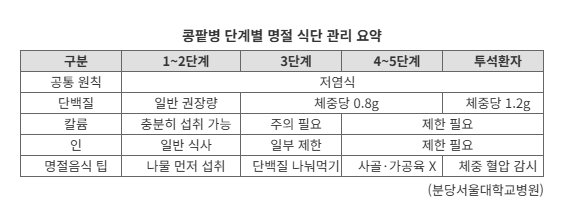
Kim Se-jung, a professor in the Department of Nephrology at Seoul National University Bundang Hospital, advised, "Patients with kidney disease need to clearly understand the dietary principles for their disease stage and selectively choose holiday foods accordingly. " Chronic kidney disease is classified into stages 1 through 5. Stages 1 and 2 are considered early, stage 3 is the intermediate stage when complications begin to appear, and stages 4 and 5 are advanced stages close to dialysis or transplantation.
A low-sodium diet is the basic rule that applies across all stages. Salty foods raise blood pressure and cause fluid retention, which places extra strain on the kidneys.
From stage 3 onward, protein intake also needs to be controlled. Excess protein leads to a buildup of uremic toxins, while cutting back too much can cause muscle loss and malnutrition.
8 grams of protein per kilogram of body weight per day. For example, an appropriate single serving would be roughly a ping-pong-ball-sized portion of meat, one slice of fish, or one egg.
In stages 4 and 5, patients must additionally restrict potassium and phosphorus. In the early stages, potassium can be consumed adequately, but in advanced stages it should be reduced because of the risk of hyperkalemia.
Foods high in phosphorus, such as bone broth, multigrain rice, and processed products like ham, are best avoided. 2 grams per kilogram of body weight.
How should patients eat tteokguk and braised short ribs? A single bowl of tteokguk contains about two-thirds of the recommended daily sodium intake. Using bone broth in the soup can also increase phosphorus and cholesterol intake.
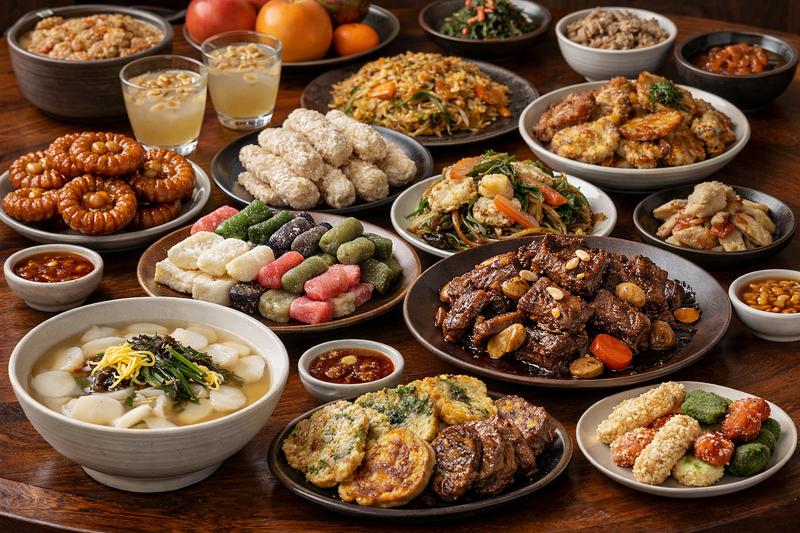
AI-generated image. During the Lunar New Year holidays, tables are filled with high-calorie, high-sodium dishes such as tteokguk (rice cake soup), braised short ribs, and assorted pan-fried foods. For most families this can be an enjoyable meal, but for people with impaired kidney function it may trigger a worsening of their condition.
Traditional desserts such as sikhye (sweet rice punch), yakgwa (deep-fried honey cookies), and yugwa (fried rice puffs) also require caution. One cup of sikhye has about the same calories as half a bowl of rice.
For fruit, an appropriate portion per meal is about half an apple or pear, or around five cherry tomatoes. For stage 4 and 5 patients who need to limit potassium, it is relatively safer to soak seasoned vegetables in water first to remove some of the potassium before eating.
For braised short ribs, discard the first boiling water before cooking, and for pan-fried foods, using an oven or air fryer to reduce oil can be helpful. If your body feels swollen or your shoes suddenly feel tight after the holidays, it may be a sign of excessive sodium intake.
Blood pressure and body weight should be checked more frequently than usual. Stage 4 and 5 patients who consume too much potassium should watch for symptoms such as palpitations or irregular heartbeat.
For dialysis patients, significant weight gain between sessions can lead to low blood pressure or severe fatigue during dialysis, so even closer monitoring is required. Professor Kim stressed, "Rather than trying to endure everything, it is more realistic to serve food in small bowls and keep kidney-friendly dishes within easy reach," adding, "Understanding and encouragement from family members play a major role in maintaining long-term dietary control.
"
AI-generated image. During the Lunar New Year holidays, tables are filled with high-calorie, high-sodium dishes such as tteokguk (rice cake soup), braised short ribs, and assorted pan-fried foods. For most families this can be an enjoyable meal, but for people with impaired kidney function it may trigger a worsening of their condition.
vrdw88@fnnews.com Kang Jung-mo Reporter