Government: "Economic Recovery Has Continued for Four Months... Domestic Demand Improving, Semiconductor Exports Strong"
- Input
- 2026-02-13 10:05:11
- Updated
- 2026-02-13 10:05:11
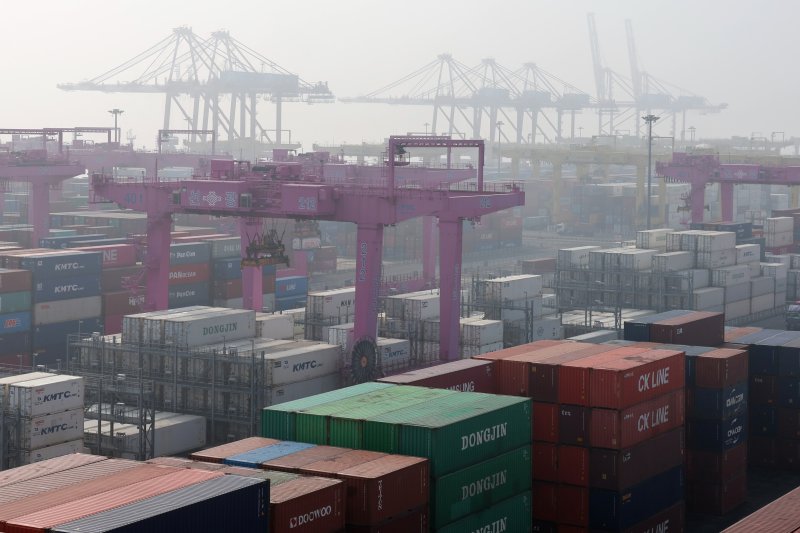
[Financial News] The government assessed that the economic recovery has continued for four straight months, supported by improving domestic demand and robust semiconductor exports.
In the February issue of its report "Recent Economic Trends (Green Book)," published on the 13th, the Ministry of Finance and Economy stated, "Recently, our economy appears to be maintaining a recovery trend, driven by improvements in domestic demand such as consumption and strong exports centered on semiconductors." This means the government has maintained its "economic recovery" assessment for four months in a row since November last year.
The government analyzed that indicators which had surged sharply in the third quarter of last year underwent a temporary adjustment in October due to base effects. However, it judged that the recovery trend has resumed since November.
Looking at industrial activity in December, overall industrial production increased 1.8% year-on-year. Construction output rose 4.2%, while the service sector and manufacturing and mining output also grew by 3.7% and 1.8%, respectively.
Retail sales indicators were also solid. Although sales of durable goods declined in December, higher sales of semi-durable and non-durable goods pushed overall retail sales up 0.9% from the previous month. Compared with a year earlier, retail sales rose 1.2%.
Cho Sung-joong, Director of Economic Analysis at the Ministry of Finance and Economy, explained, "Higher domestic sales of passenger cars and a favorable consumer sentiment index acted as positive factors for retail sales, while the larger decline in card spending at discount stores served as a negative factor."
Employment showed a somewhat weaker trend. The number of employed people in January increased by 108,000 from a year earlier, but the gain was smaller than in the previous month, when employment rose by 168,000. The unemployment rate stood at 4.1%, up 0.4 percentage points from the same month last year.
Inflation eased slightly but remained in the 2% range. In January, consumer prices rose 2.0% year-on-year, as the pace of increase in agricultural, livestock, and fishery product prices slowed. More specifically, prices for agricultural, livestock, and fishery products climbed 2.6% from a year earlier, with the increase moderating due to a larger drop in vegetable prices and higher slaughter volumes for livestock. Petroleum product prices were flat, while prices for personal services rose 2.8% from a year earlier.
Cho noted, "Overall industrial production has increased for two consecutive months, and preliminary indicators for January this year are also showing a favorable trend, so a positive trajectory is expected." He added, "However, employment difficulties persist, particularly in vulnerable sectors, and uncertainties remain regarding the pace of recovery in construction investment and the impact of U.S. tariff measures."
He went on to say, "Globally, there are concerns about a deterioration in the trade environment due to tariffs imposed by major countries and heightened geopolitical uncertainty, which could prolong volatility in international financial markets and energy prices and slow trade and growth." He emphasized, "To spread the momentum of economic recovery going forward, we will swiftly implement the economic growth strategy for 2026."
[email protected] Kim Chan-mi Reporter