[Editorial] People Power Party’s refusal to meet the President only pushes cooperative governance further away
- Input
- 2026-02-12 18:16:26
- Updated
- 2026-02-12 18:16:26
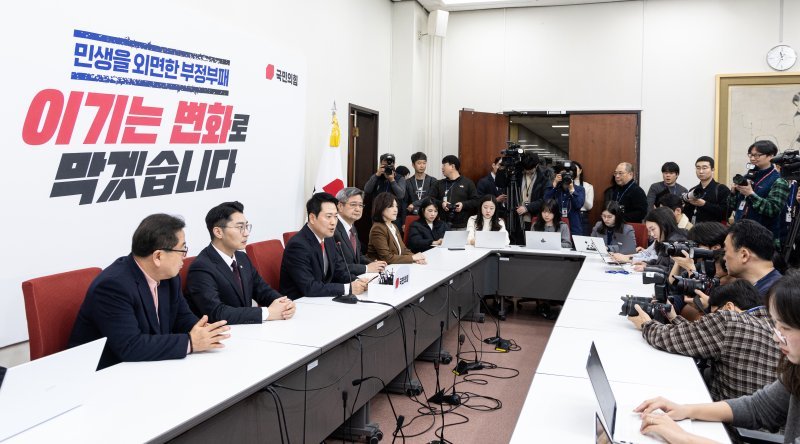
Jang’s boycott appears to be a protest against the Democratic Party of Korea, which the previous day pushed through the bill to increase the number of Supreme Court justices and the so-called "Constitutional Complaint Act," effectively creating a fourth level of appeal, at the Legislation and Judiciary Committee of the National Assembly without the People Power Party present. The People Power Party has sharply condemned these bills as "an attempt to secure a not-guilty verdict for President Lee Jae-myung" and "a declaration of monopoly over judicial power."
Given this backdrop, Jang’s decision not to attend the meeting is not entirely without reasons or justification. In particular, the Constitutional Complaint Act is being railroaded through by the ruling party despite ongoing controversy over whether it is unconstitutional. The fact that the luncheon was scheduled for the very next day naturally invited suspicion. The Office of the President of South Korea, however, has explained that the meeting date was set regardless of the situation in the National Assembly.
Regardless of whether that explanation is convincing, we do not believe Jang’s decision to skip the meeting was the right one. He may well have intended his absence as a form of protest, and it is possible that President Lee and the ruling party share the same views on these bills. Precisely for that reason, however, it would have been more desirable for him to attend and clearly voice his opposition at the table.
People Power Party lawmakers also refused to attend the plenary session convened to pass non-controversial bills. Such non-controversial bills are usually related to people’s livelihoods, and the People Power Party itself does not oppose them. Their boycott will either force the ruling party to pass these livelihood-related bills alone or delay their passage. It is common for a minority opposition party to skip a plenary session when it is certain to lose a vote because it lacks the numbers. Even so, the more responsible choice would be to go on record by casting unanimous votes against the bills.
Dialogue and cooperative governance become more necessary, not less, when confrontation between the ruling and opposition parties is intense. When their positions are already close, cooperation will happen almost naturally without being stressed. If the People Power Party opposes the ruling party’s push to ram through legislation, it would be better to attend the meeting and once again lay out its reasons and arguments, rather than refuse to talk. The ruling party’s one-sided drive will not stop simply because the opposition refuses dialogue.
The People Power Party is a minority opposition party. It must first reflect on why it has failed to win broader public support. Even its own base will not look kindly on a blanket refusal to talk. The only way to defeat the ruling party is to gain the backing of a majority of citizens and secure more seats in the legislature. To do that, the party needs to read public sentiment accurately.
Notifying its absence just a few hours before the meeting is a petty attitude. If the party believes that such emotional political gestures can change the reality of a weak opposition with few seats and low approval ratings, it is badly mistaken. This is a separate issue from whether the public opposes the Constitutional Complaint Act. The opposition party must present itself as more rational and cool-headed.
There will be more chances to meet in the future. Such meetings are one of the very tools of cooperative governance that the People Power Party itself calls for. Like it or not, they need to sit down together. How can there be cooperative governance if they refuse even to meet and talk? We urge the party to accept the President’s next invitation to dialogue and use it to communicate its views. If it cannot even do that, then it should focus on raising its approval ratings and increasing its number of seats, so that it can stand up as a strong opposition party capable of confronting the ruling camp head-on.