Supreme Court Confirms Liability for Chun Doo-hwan Memoir’s Distortion of Gwangju Uprising
- Input
- 2026-02-12 16:34:22
- Updated
- 2026-02-12 16:34:22
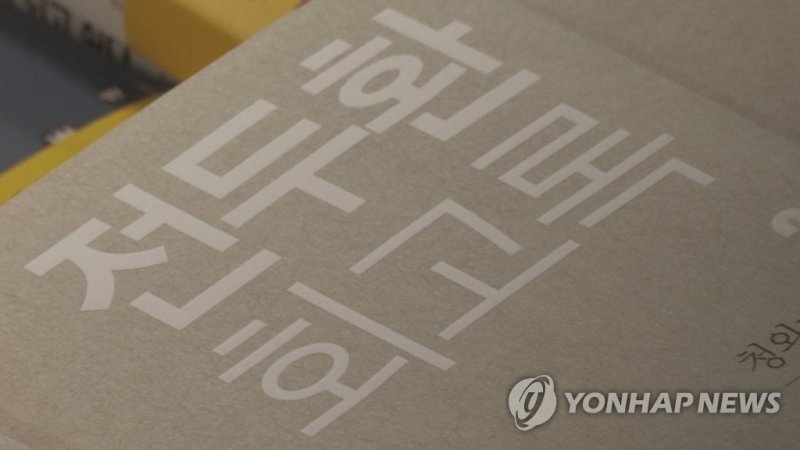
[Financial News] The Supreme Court of Korea has finalized a ruling that the late former president Chun Doo-hwan distorted the Gwangju Uprising (May 18 Democratization Movement) in his memoir, thereby defaming those involved, and must pay them damages. The decision comes nine years after the lawsuit was filed.
On the morning of the 12th, the Supreme Court Third Division, presided over by Justice Lee Heung-gu of the Supreme Court of Korea, upheld a lower court ruling that partially ruled in favor of the plaintiffs in a damages suit filed by four organizations including the May 18 Memorial Foundation and Father Pio Cho’s nephew, Father Cho Young-dae, against former president Chun and his son Chun Jae-guk.
Under the finalized ruling, Chun’s widow Lee Soon-ja and his son Chun Jae-guk must pay 15 million won each to the organizations related to the Gwangju Uprising, and 10 million won to Father Cho, for a total of 70 million won. In addition, the memoir may not be published or distributed unless certain distorted passages are deleted.
The Supreme Court of Korea stated, "Some passages in the memoir contain false statements by Chun Doo-hwan and others, which infringed on the social reputation of the May 18 organizations." It added, "By asserting false facts about helicopter gunfire by martial law troops and using insulting language to disparage Father Pio Cho, they violated the commemorative and emotional interests of his nephew, Father Cho Young-dae."
In the memoir published in April 2017, Chun labeled the Gwangju Uprising as a "riot" and denied that helicopter gunfire took place. He also claimed that he was a "sacrificial offering in a cleansing ritual to heal the Gwangju Incident." In response, Father Cho’s bereaved family and others filed for an injunction to ban publication and distribution of the memoir, and simultaneously brought a damages suit against Chun, who wrote the book, and his son Chun Jae-guk, who published and sold it.
In September 2018, the court of first instance partially ruled in favor of the plaintiffs, ordering Chun and his son to pay 15 million won each to four organizations related to the Gwangju Uprising and 10 million won to Father Cho Young-dae. It also ordered that 69 out of 70 contested passages in the memoir be deleted before publication and distribution.
Chun and his family appealed the ruling, but in September 2022 the appellate court also ordered them to pay the same amounts in damages. Chun, however, died in November 2021 while the second-instance trial was still underway, and his widow Lee Soon-ja succeeded him as a party to the lawsuit.
The appellate court ordered that 51 of the 63 passages it reviewed be deleted in whole or in part.
Both the first and second-instance courts found that claims in the memoir about alleged North Korean involvement, denial of helicopter gunfire by martial law troops, and assertions that the troops used firearms only in the exercise of self-defense were false statements lacking any objective basis. The appellate court in particular also concluded that Chun’s account of deaths caused by an armored vehicle driven by protesters was likewise false.
[email protected] Reporter Kim Dong-gyu Reporter