Supreme Court of Korea: "SK hynix performance bonuses are not part of the average wage"
- Input
- 2026-02-12 11:38:20
- Updated
- 2026-02-12 11:38:20
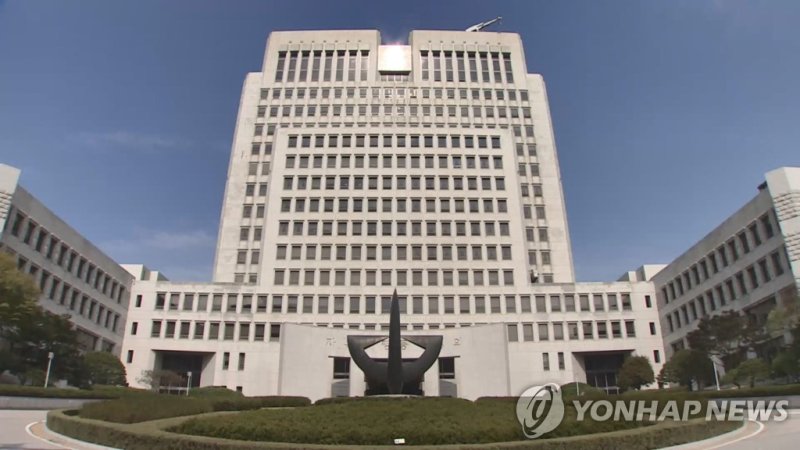
[Financial News] The Supreme Court of Korea has ruled that SK hynix’s management performance bonuses do not constitute wages, and therefore cannot be reflected in the calculation of retirement allowances. The Court noted that SK hynix is not under a legal obligation to pay these bonuses to employees, and that the amounts are determined by factors such as operating profit, which are difficult for workers to control.
On the morning of the 12th, the First Petty Bench of the Supreme Court of Korea, presided over by Justice Ma Yong-ju, dismissed the appeal filed by former SK hynix employees A and B in their lawsuit against SK hynix seeking additional retirement allowances.
A and others argued that the company’s management performance bonuses, namely the productivity incentive and the profit-sharing bonus, which had in effect been paid every year, should be included in the average wage used to recalculate their retirement allowances, and that the company should pay them the difference. The average wage is the daily amount obtained by dividing the total wages received during the three months prior to retirement by the number of days in that period. Based on this figure, the retirement allowance is calculated so that for each additional year of service, the employee receives 30 days’ worth of the average wage.
A joined SK hynix in March 1997 and B in January 1994, and both left the company in 2016. During their employment, A was paid on a monthly salary basis, while B was on an annual salary system. Since 1999, SK hynix has paid management performance bonuses each year after reaching agreements with the production workers’ union. From 2007, these bonuses were divided into a Performance Incentive (PI), paid semiannually based on production volume, and a profit sharing (PS), calculated mainly on the basis of operating profit. However, the criteria, caps, payment rates, and conditions varied from year to year, and in 2001 and 2009, when a decision was made not to pay performance bonuses, no labor-management agreement was reached and no bonuses were paid.
The court of first instance and the appellate court both rejected the claim, finding that the management performance bonuses did not have the legal character of wages. The courts pointed out that neither the Collective Agreement nor the Rules of Employment and pay regulations specified any obligation to pay management performance bonuses, and that whether they were paid and under what conditions changed each year depending on labor-management negotiations. The courts also found it difficult to view the bonuses as being directly linked to the work provided by individual employees.
The court of first instance stated, "Management performance bonuses, including PI and PS, are paid under specific conditions that are determined each year through labor-management agreements, and whether they are paid and at what rate varies according to that year’s production volume or business performance. Therefore, they cannot be regarded as money paid to employees regularly and continuously," and concluded that "they do not fall within the scope of wages that form the basis for calculating the average wage."
The appellate court, which dismissed the appeal, likewise held, "SK hynix’s PI and PS do not have any explicit legal basis for payment in the Collective Agreement, the Rules of Employment, or the pay regulations," and explained, "Because SK hynix decided whether to pay PI and PS and under what conditions through wage negotiations with the labor union, it is difficult to regard payment of these bonuses as fixed or guaranteed."
The Supreme Court of Korea upheld these lower court rulings. It stated, "For a particular internal practice of a company to be considered part of the content of an employment contract, that practice must have been established within the company as a de facto system," and went on to rule, "The annual labor-management agreements entered into by the defendant, SK hynix, were effective only for the year in question, and it appears that the defendant could refuse to enter into any labor-management agreement on management performance bonuses at any time depending on its business situation."
The Supreme Court of Korea further held that performance bonuses based on operating profit or economic value added (EVA) are also difficult to regard as being directly and closely related to employees’ work performance. It noted, "Whether operating profit or EVA is generated, and in what amount, is determined not only by employees’ work performance but also by other factors such as the company’s capital and expenditure levels, cost management, market conditions, and management decisions," adding, "In practice, the payment rate fluctuated widely, from 0% to 50% of annual salary."
[email protected] Reporter Kim Dong-gyu Reporter