Fiscal deficit nears 90 trillion won, national debt jumps 148 trillion to approach 1,300 trillion won
- Input
- 2026-02-12 10:04:07
- Updated
- 2026-02-12 10:04:07
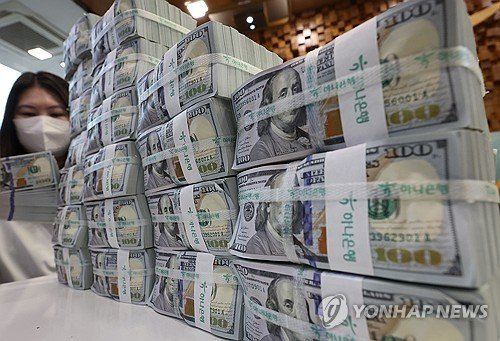
By November last year, the national fiscal deficit had climbed to nearly 90 trillion won, Financial News reported. Central government debt also rose to 1,289 trillion won, an increase of 148 trillion won from the end of the previous year. Expanded fiscal spending and increased issuance of Treasury bonds were cited as key reasons. Since November last year, the average funding rate on Treasury bonds has moved into the 3% range, adding to the government’s interest burden.
On the 12th, the Ministry of Economy and Finance announced that the managed fiscal balance posted a cumulative deficit of 89.6 trillion won as of the end of November. This is 8.3 trillion won higher than the deficit of 81.3 trillion won recorded in the same period a year earlier.
For this year, the government projects the managed fiscal balance, reflecting the second supplementary budget, to show a deficit of 111.6 trillion won, or minus 4.2% of gross domestic product (GDP).
The consolidated fiscal balance, which is total revenue minus total expenditure, recorded a deficit of 43.3 trillion won. The managed fiscal balance is derived by excluding a 46.3 trillion won surplus in social security funds, including the National Pension Service and Teachers' Pension, from the consolidated balance. It is regarded as the key indicator of the government’s underlying fiscal health. A larger managed fiscal deficit means the government must issue more deficit-financing bonds, which in turn increases national debt.
Tax revenue has improved, mainly because corporate tax and income tax receipts have risen sharply.
Total national tax revenue last year came to 373.9 trillion won, up 37.4 trillion won from a year earlier. Strong earnings at semiconductor companies boosted corporate tax receipts by 22.1 trillion won, driving the overall increase. Income tax revenue also grew by 13 trillion won, as higher employment and rising wages lifted labor income tax, and a boom in overseas stock markets pushed up capital gains tax.
However, government spending needs still far exceed tax income, so national debt continues to grow steadily.
As of the end of November last year, central government debt stood at 1,289.4 trillion won, up 148.3 trillion won from 1,141.2 trillion won at the end of the previous year.
This is largely because rigid welfare expenditures such as the Basic Pension, as well as rising interest payments on government bonds and other mandatory spending items that are difficult to cut, are increasing at a faster pace.
To cover the shortfall, the government has been issuing more Treasury bonds. As of January this year, the outstanding balance of Treasury bonds reached 1,176.8 trillion won, surpassing last year’s annual balance of 1,159.4 trillion won and marking a new record high.
The average funding rate on Treasury bonds was 3.18% in January, a sharp rise from the previous year’s average of 2.66%. The rate first climbed into the 3% range in November last year at 3.01%, the first time since 2020, and then rose further to 3.15% in December. The yield on 10-year Treasury bonds, which account for a large share of issuance, has remained in the 3% range since October last year, recording 3.607% at issuance. Higher interest rates translate into greater interest costs on government debt; last year alone, interest payments on government bonds amounted to about 34 trillion won.
These developments are attributed to a combination of factors, including fading expectations of interest rate cuts, a sharp rise in long-term interest rates driven by concerns over Japan’s fiscal deficit, uncertainty over capital outflows, and a decline in the potential growth rate.
[email protected] Jung Sang-geun Reporter