[Editorial] After the Medical School Expansion Plan, Doctors and Government Must End Conflict and Pursue Reform Together
- Input
- 2026-02-11 18:33:59
- Updated
- 2026-02-11 18:33:59
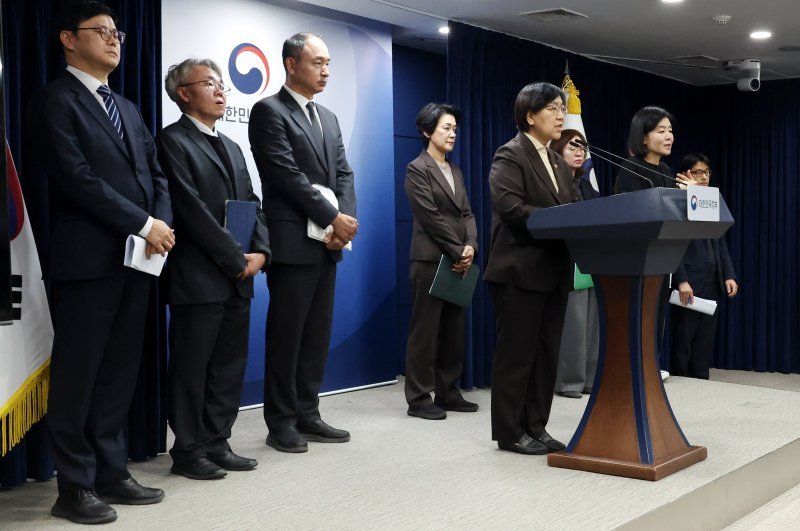
The medical community is pushing back, citing concerns about a decline in educational quality, while civic groups criticize the plan as "falling short of projected needs." A new proposal has emerged after the bitter conflict between doctors and the government and the resulting healthcare disruption, yet tensions remain high.
The debate over expanding medical school seats must not be allowed to return to square one. To prevent that, the government must carefully gather and reconcile the many conflicting views and move decisively to implementation.
The official reason given by the Korean Medical Association (KMA) for its opposition is the practical constraints on medical education. But that is an issue universities themselves must address.
Rejecting even this plan, which the government scaled back to about one-third of last year’s proposal after much deliberation, amounts to sheer self-interest on the part of the medical community. Given how medical professionals have behaved in the face of collapsing regional healthcare, they have little standing to oppose the plan.
Civic groups, for their part, criticize the government for proposing an increase smaller than what demographic projections suggest and say they cannot accept such a limited expansion. Yet the government’s proposal was reached after multiple rounds of discussions among stakeholders, including experts.
It adopts a phased approach that takes into account the realities of medical education. These procedural efforts should not be dismissed. It is impossible to fully satisfy the wishes of the medical community, patients’ families, and civic groups all at once. Since there is broad agreement on the need to increase the number of doctors, a realistic compromise on the exact scale is required. We must not forget that the core aim of this expansion plan is to revive regional healthcare. The imbalance in medical services between Seoul and non-Seoul areas, and between the capital region and the provinces, has become a serious social problem. Even now, emergency patients and pregnant women are suffering because they cannot receive timely care in emergency rooms or obstetrics and gynecology departments. The current plan is designed to address precisely these gaps in essential and regional medical services. All of the additional seats are to be allocated to a regional physician track, under which graduates must work in designated areas for a set period. Even if the overall quota increases, it does not mean that the number of doctors in Seoul or other major cities will immediately rise. Although the medical community has criticized the proposal, it will not be easy for it to mount an all-out campaign of street protests and extreme resistance. The responsible course for the medical community is to work with the government to normalize medical education and strengthen support for essential healthcare. The government, for its part, must quickly prepare measures to secure adequate educational facilities and faculty so that the expansion does not lead to a deterioration in training quality. The confrontation between doctors and the government two years ago left deep scars on our society, and those wounds have yet to fully heal. Such a crisis must not be repeated. That episode also revealed just how powerful the medical community’s cartel can be. Even so, healthcare reform must continue. With patients still suffering in emergency rooms and medically underserved regions, the government cannot simply throw up its hands and give up. The medical community is surely aware of these problems. Its opposition to expansion is not likely to be based solely on protecting its own interests. The government must first gain a clear understanding of what doctors genuinely want and what lies at the heart of the reform agenda.