Kim Keon-hee special counsel appeals first-trial rulings of acquittal and dismissal for Kim Ye-sung and former prosecutor Kim Sang-min
- Input
- 2026-02-11 17:24:31
- Updated
- 2026-02-11 17:24:31
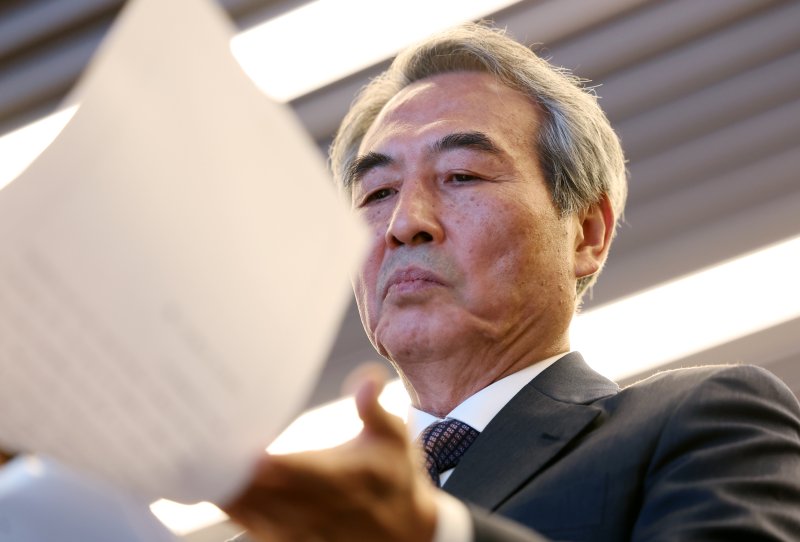
[Financial News] The Kim Keon-hee special counsel’s team, led by Special Counsel Min Joong-ki, has appealed the first-trial ruling that acquitted Kim Ye-sung on some charges and dismissed others. The special counsel also filed an appeal against the first-trial decision in the case of former prosecutor Kim Sang-min, who was accused in connection with a gift of a painting by artist Lee Woo-hwan.
On the 11th, the special counsel’s team submitted a notice of appeal in Kim’s case to Criminal Division 26 of the Seoul Central District Court, presided over by Judge Lee Hyun-kyung. The special counsel stated that it cannot accept either the acquittal on the embezzlement charge under the Act on the Aggravated Punishment, etc. of Specific Economic Crimes or the dismissal of the occupational embezzlement charge. A dismissal of indictment is a decision that ends the case without a ruling on the merits because the prosecution has failed to meet procedural or formal requirements.
Regarding the embezzlement charge under the Act on the Aggravated Punishment, etc. of Specific Economic Crimes, for which the court entered an acquittal, the special counsel argued that it was a "typical case of corporate fund embezzlement." The office explained that, according to Supreme Court of Korea precedent, even in a one-person company the corporation and its shareholder are separate legal entities, so if corporate funds are used for personal purposes without proper procedures, the crime of embezzlement is established.
The special counsel also disputed the lower court’s view of the transaction in which Kim sold Be My Car shares held in the name of a paper company for 4.6 billion won and then transferred 2.43 billion won of the proceeds to IMS Mobility CEO Cho Young-tak, ostensibly as a loan. Taking into account Cho’s lack of repayment capacity, the absence of collateral, and contradictions in the loan agreement, the office argued that this was merely a nominal loan in form only.
The special counsel also challenged the dismissal of the occupational embezzlement charge, insisting that the facts in question "were uncovered in the normal course of an investigation conducted under the special counsel act." The office stressed that it launched the probe in response to the so-called "Butler Gate" scandal, which alleged that Kim had raised 18 billion won in investments from large corporations and others by invoking First Lady Kim Keon-hee’s influence, and therefore it was essential to trace how the investment funds were used. It added that extending the investigation to the flow of funds in other related corporations was unavoidable and did not amount to using a separate case to pressure the defendant.
Previously, the first-trial court acquitted Kim of embezzlement under the Act on the Aggravated Punishment, etc. of Specific Economic Crimes. Citing the fact that CEO Cho successfully completed the share sale and generated 4.6 billion won in profit for the corporation, the court found that there was no intent of unlawful appropriation in taking part of the funds. As for the occupational embezzlement charge, it dismissed the indictment on the grounds that the alleged conduct was a personal offense unrelated to the original "Butler Gate" allegations and that it lacked sufficient connection to the scope of the search warrants.
On the same day, the special counsel also appealed the first-trial ruling in the case of former prosecutor Kim Sang-min. In that case, Kim was acquitted on the main charges related to allegedly giving First Lady Kim Keon-hee a painting by artist Lee Woo-hwan as a gift in return for favors, but received a suspended prison sentence for having an acquaintance cover the lease payments on a campaign vehicle.
Regarding the acquittal on the painting-related charge, the special counsel argued that the first-trial court’s conclusion—that it could not rule out the possibility that the First Lady’s brother, Kim Jin-woo, had purchased and kept the painting with his own money—was unreasonable and contrary to common sense.
The office further contended that, in relation to the allegation that lease payments for the vehicle were paid on Kim’s behalf, the claim that 35 million won in political funds had been returned was poorly supported by evidence and not credibly explained, amounting to a misapprehension of facts and misinterpretation of the law. It also argued that the sentence imposed was unduly lenient.
[email protected] Choi Eun-sol Reporter