Prosecution will not appeal acquittal of Kolon honorary chairman Lee Woong-yeol in Invossa scandal
- Input
- 2026-02-11 17:22:42
- Updated
- 2026-02-11 17:22:42
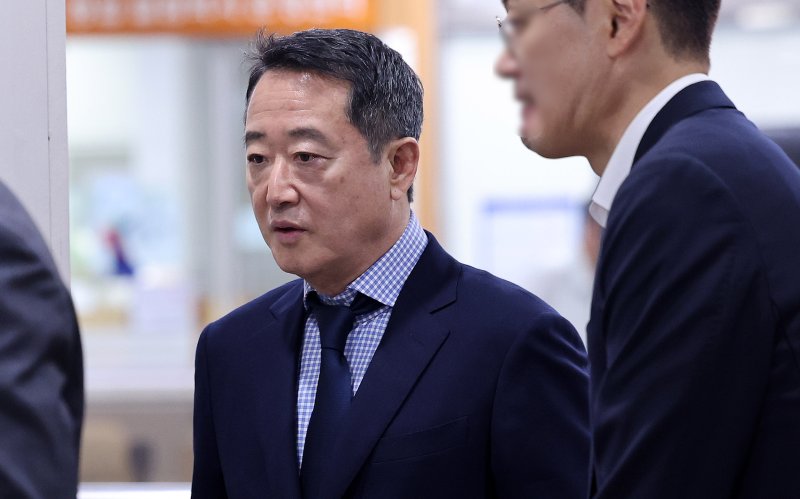
[Financial News] The prosecution service has decided not to file an appeal against Lee Woong-yeol, honorary chairman of Kolon Group, who was indicted on charges of involvement in alleged manipulation of the ingredients of the osteoarthritis gene therapy Invossa-K (Invossa) and was acquitted in the appellate court.
On the afternoon of the 11th, the Seoul High Prosecutors’ Office announced to the media, "In the Invossa case, in which a not-guilty verdict was handed down at the appeals trial today, we have decided not to file an appeal against former Kolon Group chairman Lee Woong-yeol and all the other defendants, taking into account the evidentiary record and the likelihood that an appeal would be granted."
The prosecution service had investigated Lee on the view that, between November 2017 and March 2019, the second component of Invossa was manufactured and sold using kidney-derived cells rather than the cartilage cells approved by the Ministry of Food and Drug Safety (MFDS), and that about 16 billion won was thereby defrauded from patients.
Lee was also charged with violating the Financial Investment Services and Capital Markets Act for allegedly giving false explanations or concealing facts about the second component’s cell type, the suspension of clinical trials in the United States, and his ownership of shares under borrowed names, and then listing Kolon TissueGene, a subsidiary of Kolon Life Science, on KOSDAQ.
In addition, he was accused of granting stock options in Kolon TissueGene worth about 4 billion won to two principal investigators in April 2011 to secure their help with domestic clinical trials of Invossa by Kolon Life Science, and then providing the shares to them free of charge in April 2017.
On the 5th, the court dismissed the prosecution’s appeal against Lee, who had been charged with violating the Financial Investment Services and Capital Markets Act, and upheld the not-guilty verdict from the first trial.
The panel of judges acknowledged that "in the process of developing a new drug, which is inherently highly uncertain, the opaque nature of the defendants’ corporate decision-making and business practices clearly contributed to aggravating the problem," but concluded that "there is insufficient evidence to recognize the defendants’ criminal liability."
The panel of judges went on to state, "The so-called 'mix-up over the origin of the cells' was a main cause of the Invossa scandal, but it is recognized as having arisen from negligence rather than intent," adding, "We can agree with the lower court’s finding that there is not sufficient proof of the facts alleged in the indictment."
The prosecution service had initially indicted Lee and others on the theory that they knew the cells were kidney-derived rather than cartilage cells and concealed this fact. In the appeals trial, however, prosecutors supplemented the indictment to allege dolus eventualis, arguing that the defendants at least recognized the possibility that the cells might not be cartilage cells. The court nevertheless rejected this argument as well.
[email protected] Reporter Kim Dong-gyu Reporter