More Brutal Than America’s Mistake: The ‘Sin of Being Third’... Short Track Speed Skating Loses Its Fairness [2026 Milan]
- Input
- 2026-02-11 11:00:00
- Updated
- 2026-02-11 11:00:00
[Financial News] Short track speed skating is often called a sport of variables. Races are decided by 0.01 seconds, and the skater in last place on the final lap can suddenly win it all. We are drawn to that unpredictability. But what we witnessed in Milan on the 10th was not a variable. It was a contradiction.
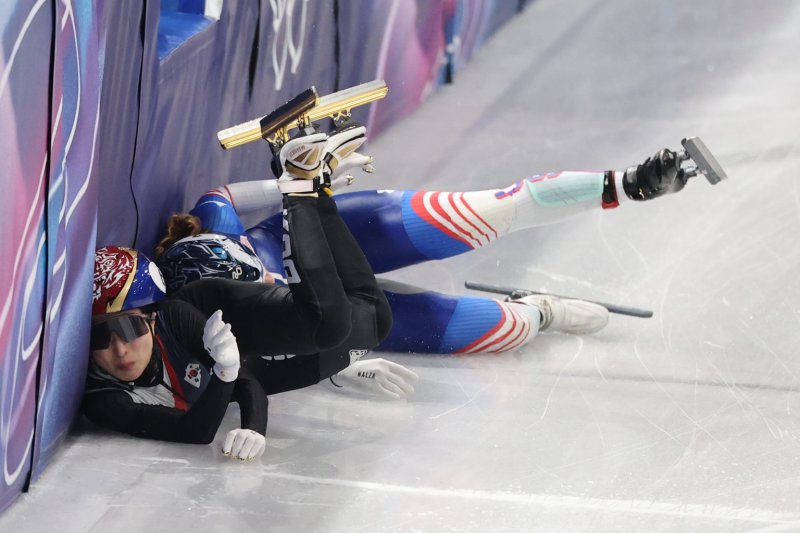
The Korean short track team was eliminated in the mixed relay semifinal. The result was elimination, but the process is hard to accept. To be absolutely clear, this column is not about blaming Corinne Stoddard, the American skater who fell. She attacked the corner to overtake Canada and move into the lead, and simply lost her balance and slipped in the process. It was an unfortunate mistake, but there was no malicious intent.
The problem came after that. Stoddard’s mistake inexplicably took out Korea’s Kim Gil-li, who was following behind. She tried to avoid the crash, but there was literally no space to escape. It was an unavoidable accident. Yet the judges did not grant an advance to Korea, the clear victim. Their one and only reason: "At the time of the incident, Korea was in third place."
This is clearly an outdated and lazy rule. By the judges’ logic, short track races must be based on the premise that the standings at the moment of an accident are identical to the final results. Anyone who knows even a little about short track understands how absurd that assumption is.
The race had just passed the halfway point. The gap between Korea and the leading group was not large. On top of that, Korea is a powerhouse ranked No. 2 in the world. The team includes Kim Gil-li and Choi Min-jeong, two of the best finishers in the sport. Considering the number of laps remaining and Korea’s strength, the possibility of surging from third to first was more than realistic.
So on what authority did the judges declare Korea’s chance of a comeback to be zero? Are they fortune-tellers who can see the future? "You were in third place at the time, so even without interference you would have finished third."
This ruling is a form of retrospective violence that completely disregards the Korean team’s potential and effort, as well as the very dynamism of short track as a sport.
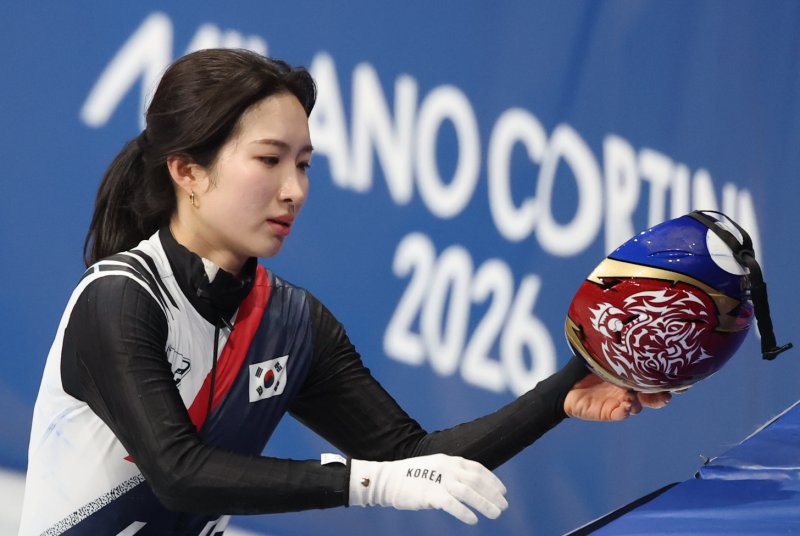
Rules exist to guarantee fairness. Yet the current advance rule places the burden not on the skater who caused the crash, but on the victim.
Who came up with this standard of the so-called ‘sin of being third,’ which says that unless you are in first or second place, you have no right to be reinstated even if you are taken out unfairly?
If Korea had been more than a lap behind the leaders, the decision would have been easier to accept. Or if Korea had been directly involved in causing the fall, that too would be understandable. But this was clearly an accident caused by an external factor. In such a case, the judges should consider not just the standings at that instant, but the overall context of the race and the distance remaining, and give the victimized team another chance. That is what the Olympic spirit and fair play are supposed to mean.
The American skater’s mistake is part of the game. But a rule that eliminates the team that suffered damage is a flaw in the system. The International Skating Union (ISU) needs to reflect deeply on this tragedy in Milan.
Telling an unfairly harmed team, "You were in third place then anyway," cannot seriously be called fairness. As long as this outdated rule remains unchanged, short track will continue to be a sport governed not by skill, but by luck and the arbitrary judgment of referees.
jsi@fnnews.com Jeon Sang-il Reporter