"This is so unfair! What, the ice melted because of the crowd?" Baffling U.S. analysis trips up Korea [Milan 2026]
- Input
- 2026-02-11 07:05:02
- Updated
- 2026-02-11 07:05:02
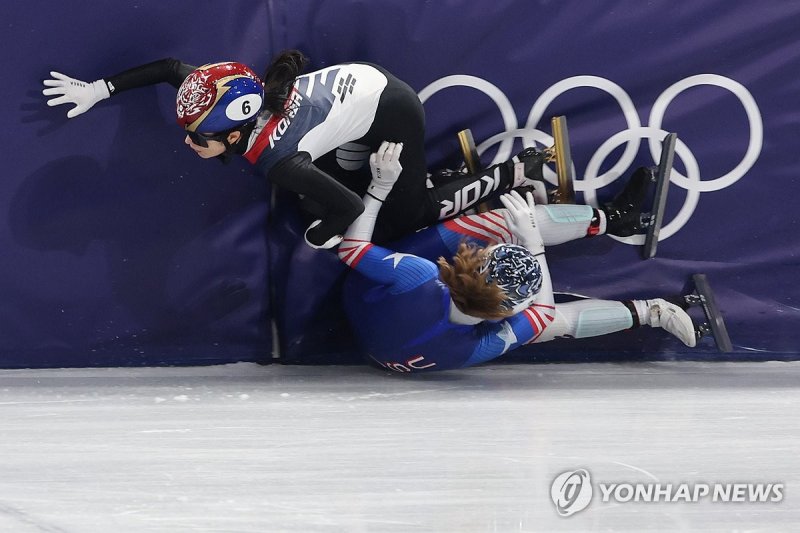
In Olympic short track speed skating, ice conditions are always a hot-button issue. In a sport decided by thousandths of a second, the hardness of the ice and the state of its surface have a huge impact on skaters’ mechanics. But what happened on February 10 (local time) at Milan Ice Skating Arena was too harsh in its outcome to be dismissed as a simple "ice issue."
The Korean short track team was denied a place in the final of the mixed 2,000m relay at the 2026 Milan–Cortina d’Ampezzo Winter Olympics after getting caught up in a fall by a U.S. skater in the semifinal. The problem lies in how the U.S. team later analyzed the cause of the crash. They pointed to the "environment" rather than their own mistakes.
Right after the race, the U.S. team’s comments sounded almost like a technical debrief. In a mixed-zone interview, Andrew Heo said, "The ice here is duller than where we usually train," and added, "With so many spectators, the indoor temperature went up and I think that made the ice softer."
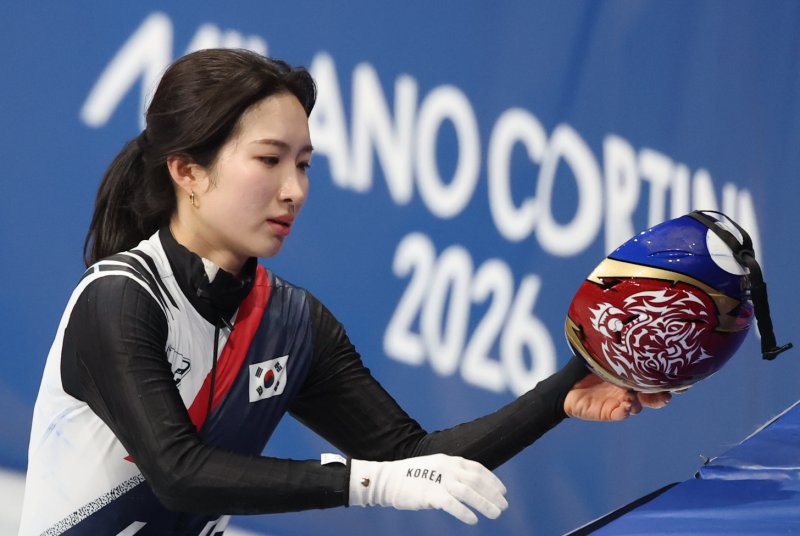
According to his explanation, as the ice softened he could not properly load power onto his blades, lost his edge, and then lost balance. Another team member, Brandon Kim, also remarked, "Because we’re sharing the rink with figure skating, there probably wasn’t enough time to adjust the ice," indirectly criticizing the organizers’ operations.
In fact, this event has drawn criticism from the start because figure skating and short track share the same venue, making it difficult to fine-tune the hardness of the ice for both disciplines.
However, these so-called "environmental factors" were the same for every country on the start line that day. All the teams skated on the same ice, in the same temperature, in front of the same crowd. Yet it was only the U.S. team that repeatedly lost balance and went down, which is telling in itself.
In the earlier quarterfinal, the United States had already made a similar mistake when Corinne Stoddard fell on her own. Thanks to a chain collision among rival teams, they were fortunate enough to advance to the semifinal in second place in their heat. But that shaky skating ultimately led to the crash that took out the Korean team in the semifinal.
Short track experts consistently stress that "at the Olympic level, ice conditions are an uncontrollable variable, and the ability to adjust your stride and maintain balance to match those conditions is precisely what we call skill."
If the ice is soft, skaters need to respond by changing their cornering angles or distributing pressure differently through their blades.
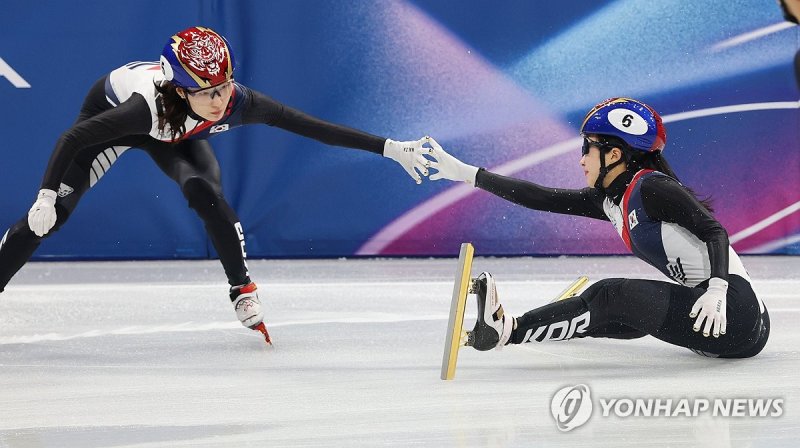
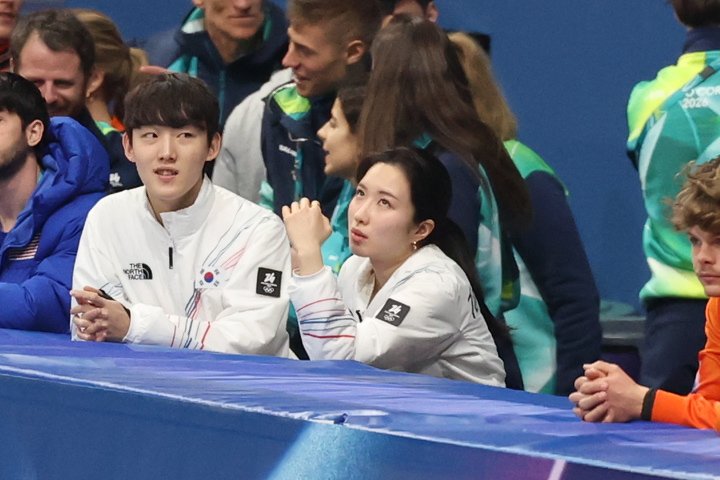
The U.S. skaters said, "We can’t change the ice conditions, so all we can do is give our best."
They are not wrong. Yet it is regrettable that their "best" translated into a failure to adapt to the ice, and that the consequence was stripping athletes from other countries—who had prepared for four years—of a chance to fight for medals.
Can you really chalk it up to nothing more than "higher indoor temperatures" when the same skater falls in the same pattern from the quarterfinals through to the semifinals?
Sport is unforgiving when it comes to results.
Whatever the cause, repeated mistakes are not remembered as "variables" but as a reflection of ability.
And the butterfly effect of that shaky performance has landed squarely on the shoulders of the Korean team.
jsi@fnnews.com Jeon Sang-il Reporter