"Multi-homeowners have decided to sell"... Surge in listings from Gangnam spreading to Gangbuk
- Input
- 2026-02-11 06:00:00
- Updated
- 2026-02-11 06:00:00
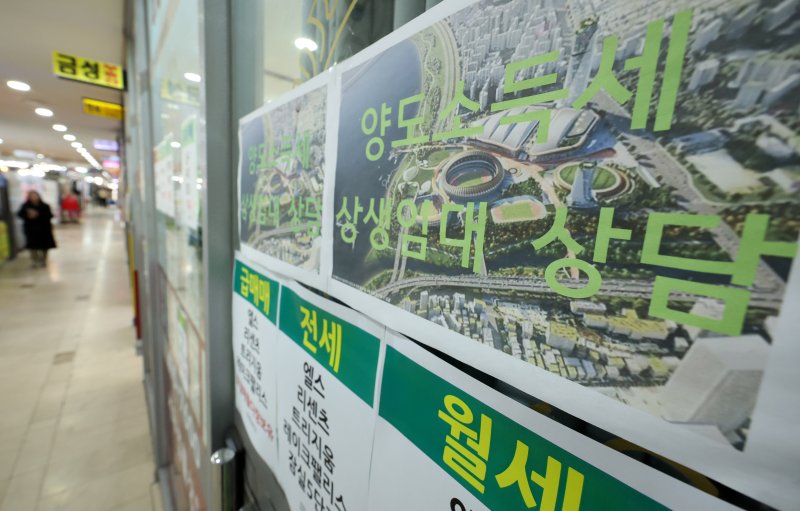
Using January 23, when President Lee Jae-myung officially confirmed the end of the capital gains tax relief for multi-homeowners, as a reference point, only four districts have seen a decline in listings. Among the 21 districts where listings increased, the Han River Belt areas showed relatively large gains: Songpa (20.5%), Seongdong (20.5%), Gwangjin (13.8%), Seocho (12.3%) and Mapo (11.5%). More recently, however, the upward trend in listings has also spread to outer districts such as Dobong District (3.1%), Jungnang District (2.9%), Seodaemun and Nowon Districts (2.2% each), and Eunpyeong District (1.3%).
As the burden of growing supply mounts, some complexes have recorded price drops in actual transactions over the past two weeks. The adjustment is particularly noticeable in the Gangnam area, where prices had surged sharply over the last one to two years. A 178-square-meter unit at Seocho Donga Tower in Seocho District changed hands for 1.28 billion won, 520 million won below the peak price of 1.8 billion won recorded in March 2025. A 59-square-meter unit at Songpa Pine Town Complex 8 in Songpa District was sold for 1.3725 billion won on January 31, about 310 million won lower than the previous peak in December last year (1.68 billion won. At DH Xi Gaepo in Gangnam District, an 84-square-meter unit also traded for 3.75 billion won, 150 million won below the year-end price (3.9 billion won), even after accounting for floor differences.
Even so, many observers say it is hard to interpret this as a steep overall price decline. An industry official noted, "In complexes where prices have risen sharply in a short period, more sellers are willing to accept some downward adjustment to get their properties sold," adding, "Because cumulative gains are already large, there is relatively little psychological resistance to deals that are 200 to 300 million won below the peak."■ In Gangbuk, adjustments starting with large units that are slower to tradeIn Gangbuk, unlike the Gangnam area, it is still rare to see asking prices cut by several hundred million won at a time. Instead, price adjustments are beginning with larger units, which tend to have lower transaction turnover and liquidity. A fire-sale listing for a 114-square-meter unit at Samgaksan I-One in Mia-dong, Gangbuk District, dropped from 800 million won on January 10 to 780 million won on January 26. That is 70 million won below the most recent actual transaction price of 850 million won on January 7. Considering that 84-square-meter units in the same complex are still listed for over 800 million won, many see this as evidence that price cuts are starting with the larger units.
At Bukhansan I-Park in Dobong District, the asking price for a 134-square-meter unit was reduced by 100 million won in just three days, from 1.43 billion won to 1.33 billion won. A 114-square-meter unit at Mia Doosan We’ve Trézioum in Gangbuk District also saw its asking price adjusted from 1.15 billion won to 1.1 billion won.
Meanwhile, Deputy Prime Minister and Minister of Economy and Finance Koo Yun-cheol said at a Cabinet meeting that, in connection with the end of the capital gains tax relief for multi-homeowners, the government will grant a grace period of four to six months between contract signing and final payment and registration. If there is a tenant in place, the owner-occupancy requirement will be deferred for up to two years. Nam Hyuk-woo, a real estate researcher at Woori Bank, said, "As so-called 'tenant-occupied listings' with remaining lease terms can now be put up for sale, the pool of tradable properties has expanded," and added, "Listings are also expected to increase to some extent in mid- to lower-tier areas of Seoul, including units automatically deregistered from long-term rental business programs and tenant-occupied properties held by gap investors."
[email protected] Jeon Min-kyung Reporter