LG Family’s Eldest Daughter Acquitted in First Trial Over Alleged Insider Trading: Court Calls Case an “Overreaching Prosecution”
- Input
- 2026-02-10 16:16:16
- Updated
- 2026-02-10 16:16:16
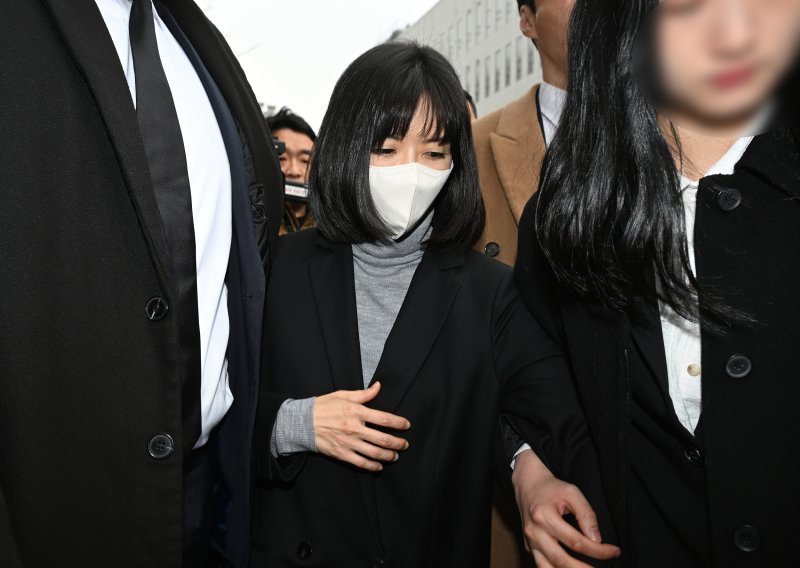
Financial News reported that Koo Yeon-kyung, head of the LG Welfare Foundation and eldest daughter of the late former LG Group chairman Koo Bon-moo, was acquitted at the first-instance trial on charges of earning hundreds of millions of won in illicit gains by using undisclosed information.
On the afternoon of the 10th, Criminal Division 13 of the Seoul Southern District Court, presided over by Judge Kim Sang-yeon, acquitted both Koo and her husband, Yoon Kwan, head of BRV (BlueRun Ventures), of charges of violating the Financial Investment Services and Capital Markets Act.
The court stated, "It is difficult to render a guilty verdict based solely on the circumstantial facts asserted by the prosecutor, and they are far from sufficient to support the charges," calling the case "an overreaching prosecution." The judges found that the circumstantial facts did not provide overwhelmingly superior proof regarding the motive for the crime, the choice of means, the process leading up to the alleged offense, or the defendants’ behavior before and after the trades.
Prosecutors had indicted Koo on allegations that she bought about 650 million won worth of shares and obtained approximately 105.66 million won in illicit gains after hearing in advance from Yoon that BRV, where he served as chief investment officer, would raise more than 50 billion won from KOSDAQ-listed biotech company Mezzion through a paid-in capital increase in April 2023.
However, prosecutors failed to secure direct evidence such as recorded conversations between the couple. Instead, the indictment alleged that the undisclosed information was conveyed orally during a family trip to Europe or at a birthday dinner for Yoon’s mother.
They also pointed to Koo’s bold attitude when purchasing Mezzion shares—such as instructing a securities firm employee by phone to use all available cash in her account and allowing high-priced and large-volume orders—as circumstantial evidence.
The court, however, found that Koo had previously on several occasions placed orders using her entire cash balance with an upper price limit, and that the amount she invested in Mezzion was up to about 5 billion won less than her trades in other stocks. It therefore concluded that her trading pattern in Mezzion was not unusual.
Prosecutors further argued that Koo’s concentrated purchases of four stocks, including Korea Zinc, in which BRV Capital and Daol E&C—entities in which Yoon was substantially involved in management—had invested, also constituted circumstantial facts. The court rejected this, stating, "It is difficult to see Koo as having received investment advice from Yoon."
The court noted, "There is a time gap of about five months between the timing of their trades and Koo’s purchases of Mezzion shares." It continued, "The prosecutor argues that the overlap in stocks such as Korea Zinc is meaningful, but Koo had been investing in those shares even before they did. While they sold and realized profits, Koo either incurred losses or continued to hold the shares. At the time, Korea Zinc was also attracting attention from ordinary investors due to the appeal of its secondary-battery business and other factors."
The court added that, given that one particular stock invested in by Daol E&C had posted a return of about 500%, there was no special circumstance suggesting that Yoon would have recommended Mezzion instead of that stock.
Koo’s act of recommending that LG Welfare Foundation employees buy shares in Mezzion and other stocks was likewise not accepted as circumstantial evidence. The court held, "She merely mentioned which stocks she had bought in the course of conversation when employees showed interest," and added, "If she had in fact bought shares based on illegally obtained undisclosed information, there would have been no reason for her to expose such information to her staff."
The judges also found it highly plausible that Koo, who majored in social welfare and now runs welfare programs, decided to invest in Mezzion shares based on information obtained through acquaintances or other channels, rather than through insider information from her husband.
At the final hearing held last December, prosecutors had asked the court to sentence Koo to one year in prison, a fine of 20 million won, and forfeiture of about 105.66 million won, and to sentence Yoon to two years in prison and a fine of 50 million won.
During that hearing, defense attorneys argued, "The method and timing of the alleged transmission of material nonpublic information are described only vaguely," and said, "It is not convincing that the defendants would risk criminal punishment for a gain that does not even amount to 0.01% of their assets."
In her final statement, Koo said, "I know how dangerous it is to have access to inside information about my husband’s work, and I have respected that by not discussing investments with him," adding, "If I had heard anything that could be misunderstood, I would have chosen not to invest precisely to avoid any suspicion."
[email protected] Park Sung-hyun Reporter