National Tax Revenue Rose by 1.8 Trillion Won Last Year, Avoiding a Shortfall for the Third Consecutive Year
- Input
- 2026-02-10 11:00:00
- Updated
- 2026-02-10 11:00:00
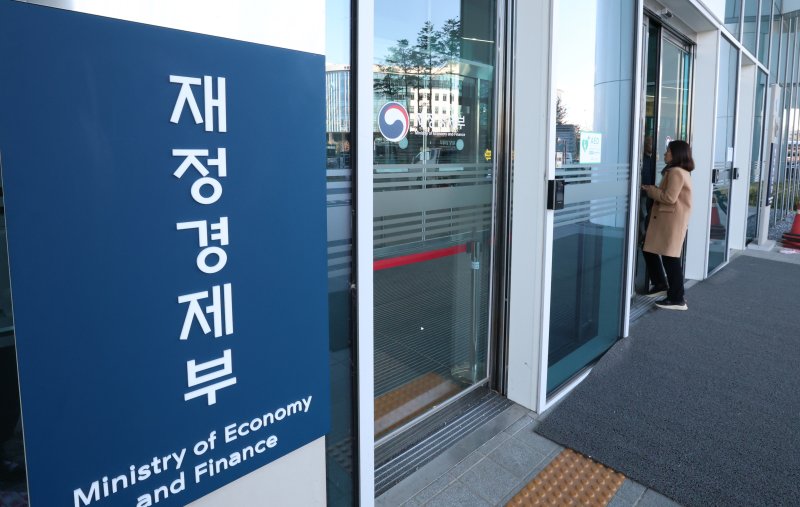
[Financial News] The Ministry of Finance and Economy announced on the 10th that it finalized the revenue and expenditure results for fiscal year 2025, closing the general revenue and general expenditure accounts at the Korea Public Finance Information Service in a meeting attended by Second Vice Minister of Finance and Economy Heo Jang and Board of Audit and Inspection (BAI) Commissioner Lee Nam-gu.
As a result of the closing, total revenue was confirmed at 597.9 trillion won and total expenditure at 591 trillion won. The settlement surplus, which is the difference, came to 6.9 trillion won, and after deducting 3.7 trillion won in carried-over funds, the consolidated surplus was finalized at 3.2 trillion won.
In particular, in fiscal year 2025, national tax revenue exceeded the original budget for the first time after two years of large tax shortfalls. Based on this, the government actively executed the expenditure budget, resulting in the highest budget execution rate for expenditures in the past five years.
Total revenue amounted to 597.9 trillion won, down 2.1 trillion won from the budgeted 600 trillion won. Of this, national tax revenue reached 373.9 trillion won, an increase of 1.8 trillion won from the budgeted 372.1 trillion won, driven by improved corporate performance. Non-tax revenue was 224 trillion won, a decrease of 3.9 trillion won compared with the budgeted 227.9 trillion won.
On the expenditure side, 591 trillion won was executed out of the adjusted expenditure budget of 604.7 trillion won. Thanks to active execution of budgets aimed at boosting economic vitality and stabilizing livelihoods, the expenditure budget execution rate reached 97.7%, the highest level in the past five years. Accordingly, unused funds, calculated by subtracting the executed 591 trillion won and 3.7 trillion won in carryovers to the next year from the 604.7 trillion won in adjusted expenditure, came to 10 trillion won. This is a decrease of 10.1 trillion won from the previous year’s 20.1 trillion won and marks the lowest level in five years.
The consolidated surplus, obtained by deducting total expenditure and carryovers from total revenue, was 3.2 trillion won, consisting of 100 billion won from the general account and 3.1 trillion won from special accounts. The general account surplus will be handled in accordance with the National Finance Act after the State Council finalizes a disposal plan, while surpluses in special accounts will be booked as revenue in each special account under their respective governing laws.
Based on these closing results, the government plans to prepare the National Settlement of Accounts Report, reflecting the settlement results of various funds, and submit it to the State Council in April. After undergoing a settlement audit by the BAI, the government intends to submit the National Settlement of Accounts Report to the National Assembly by the end of May.
Vice Minister of Finance and Economy Heo Jang noted, "Amid internal and external uncertainties last year, the government supported economic recovery through active fiscal management, including two supplementary budgets and swift execution." He added, "As a result, the government’s contribution to annual economic growth reached 0.5 percentage points, making it a year in which the government’s role was more significant than ever."
[email protected] Seo Young-jun Reporter