"Please Let Us Make Some Money" Retail Investors Swept Up in FOMO Turn to Ultra-Short-Term Borrowed Bets
- Input
- 2026-02-10 05:55:34
- Updated
- 2026-02-10 05:55:34
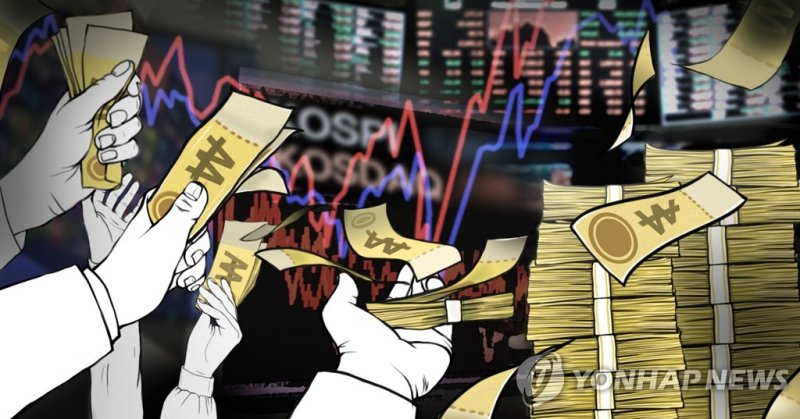
According to Financial News, retail investors, gripped by FOMO (fear of missing out) that they might be left behind, are taking on aggressive leveraged bets and exposing themselves to the risk of forced liquidation. As concerns grow over a potential artificial intelligence (AI) bubble and volatility in the domestic stock market intensifies, the danger is rising that leveraged positions such as unpaid margin transactions and margin loans will be forcibly unwound.
Data from the Korea Financial Investment Association (KOFIA) on the 10th showed that as of the 4th, unpaid margin balances in brokerage accounts had reached 1.26 trillion won. This is the highest level since 2006, when regulators and the industry launched a sweeping crackdown in response to a surge in such balances. On the following day, the 5th, unpaid balances still hovered above the 1 trillion won mark at 1.0094 trillion won.
Ultra-short-term leverage that must be settled within two trading days of purchase
Unpaid margin balances refer to amounts left outstanding when individuals borrow funds from securities firms to buy stocks but fail to repay them. These unpaid margin transactions are a form of ultra-short-term leverage that must be settled within two trading days of the purchase date, and are often called "ultra-short-term debt-fueled investing." If investors do not repay the funds by the deadline, the brokerage executes forced liquidation, selling the investor's shares without consent.
Such borrowing can amplify returns, but when share prices fall it becomes a dangerous double-edged sword. Because the stocks serve as collateral, a drop in prices can push the collateral value below required levels, triggering forced sales and inflicting heavy losses. In a downturn, stocks bought on unpaid margin are especially vulnerable: even after being sold, the proceeds may not fully cover the debt, leaving unpaid receivables. Many investors wait for a rebound, only to see their positions ultimately wiped out through forced liquidation, creating a vicious cycle.
Margin loan balances above 30 trillion won seen as a ticking time bomb
In fact, the scale of forced liquidations has been climbing sharply this month. After the Korea Composite Stock Price Index (KOSPI) plunged by about 300 points on the 2nd, forced liquidations surged to 15.9 billion won on the 3rd. From the 2nd to the 5th, daily forced liquidation amounts consistently exceeded 10 billion won.
Outstanding margin loans, which have surpassed 30 trillion won, are also being flagged as a potential trigger for market turmoil. In margin trading, if the collateral ratio falls below the maintenance level, the underlying stocks are automatically sold. When a bear market persists, collateral values decline in tandem, causing the number of accounts subject to forced liquidation to grow exponentially.
As of the 4th, outstanding margin balances stood at a record 30.9351 trillion won, meaning debt-fueled investing through securities firm loans has broken through the 30 trillion won threshold. The figure edged down slightly to 30.7867 trillion won the next day as the market weakened, but it remains near all-time highs. The burden on the market is particularly heavy because margin trading is heavily concentrated in large-cap blue chips such as Samsung Electronics (1.9484 trillion won) and SK hynix (1.6658 trillion won).
[email protected] Han Seung-gon Reporter