[Editorial] Hardline Conservative Takaichi’s Landslide: Japan–South Korea Cooperation Must Stay on Track
- Input
- 2026-02-09 18:20:38
- Updated
- 2026-02-09 18:20:38
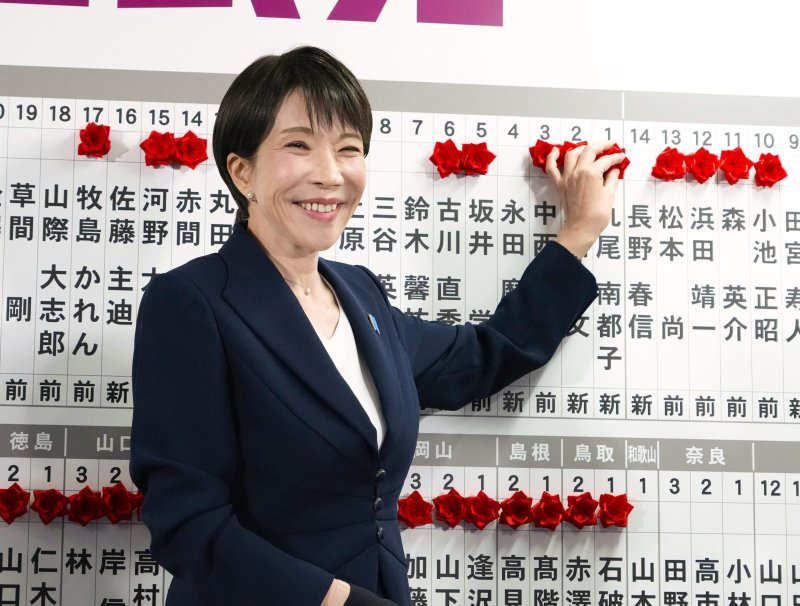
Takaichi’s popularity, which has spread even among younger voters, along with high approval ratings for her cabinet, helped drive the election victory. A “Message from Party President Takaichi” posted on the LDP’s YouTube account has racked up 100 million views, an extraordinary figure for a political video. It is also reported that the distance she traveled on the campaign trail exceeded 12,000 kilometers. Wherever she went, crowds flocked to see her, and some rallies were said to resemble idol pop concerts.
Right after she dissolved the House of Representatives, public opinion on Takaichi was far from uniformly positive, but she turned the tide by championing a vision of a “strong and prosperous Japan.” Foreign media have analyzed that her firm stance in response to China’s military expansion, tensions in the Taiwan Strait, and growing security concerns helped rally public support. Many Japanese voters, feeling an existential threat amid the unstable situation in Northeast Asia, appear to have coalesced around Takaichi. Her message of a robust economy, including responsible but active fiscal spending and bold investment, also appealed to voters.
Prime Minister Takaichi is expected to press ahead with building a stronger Japan. She has already decided to revise the three key national security documents within the year to bolster defense capabilities, and this year she scrapped some restrictions on arms exports, pledging to greatly expand exports of defense equipment with lethal capabilities. She is also interested in creating a National Intelligence Agency, envisioned as a Japanese version of the Central Intelligence Agency (CIA), and in enacting an anti-espionage law that has raised concerns about expanded state surveillance.
She has further announced plans to review Japan’s Three Non-Nuclear Principles, which ban the possession, production, and introduction of nuclear weapons. In the longer term, she is expected to accelerate efforts to revise the pacifist Constitution and turn Japan into what would effectively be a “war-capable state.” A constitutional amendment is difficult for now because the ruling bloc lacks a majority in the House of Councillors, but it could become a realistic prospect after the 2028 upper house election.
Takaichi’s push for constitutional revision and her pronounced rightward shift could heighten tensions among neighboring countries. Japan’s military buildup also reflects its response to the United States, which has been urging regional actors through its national defense strategy to “take responsibility for problems in their own region.” Even so, Japan’s rearmament inevitably increases geopolitical risks in Northeast Asia and could affect the hard-won recovery in Japan–South Korea relations. President Lee Jae-myung and Prime Minister Takaichi have built warm ties through shuttle diplomacy, meeting in Gyeongju last year and again this year in Japan. These newly restored cordial relations must not be allowed to go off track.
Amid the fierce U.S.–China rivalry for hegemony, there are many areas where Japan and South Korea can generate synergy through cooperation. The two countries need to work closely together on securing supply chains for rare earth elements (REE) and other critical minerals, and on forming a joint front regarding U.S. tariffs. Collaboration in advanced industries such as semiconductors, artificial intelligence (AI), and hydrogen fuel cell vehicles (FCEVs) is also a key task. Historical disputes and other obstacles remain, but the two sides must harness the power of cooperation and pragmatism to open a better future.