An Aging Korean Society: "We Need AI"
- Input
- 2026-02-10 14:00:00
- Updated
- 2026-02-10 14:00:00
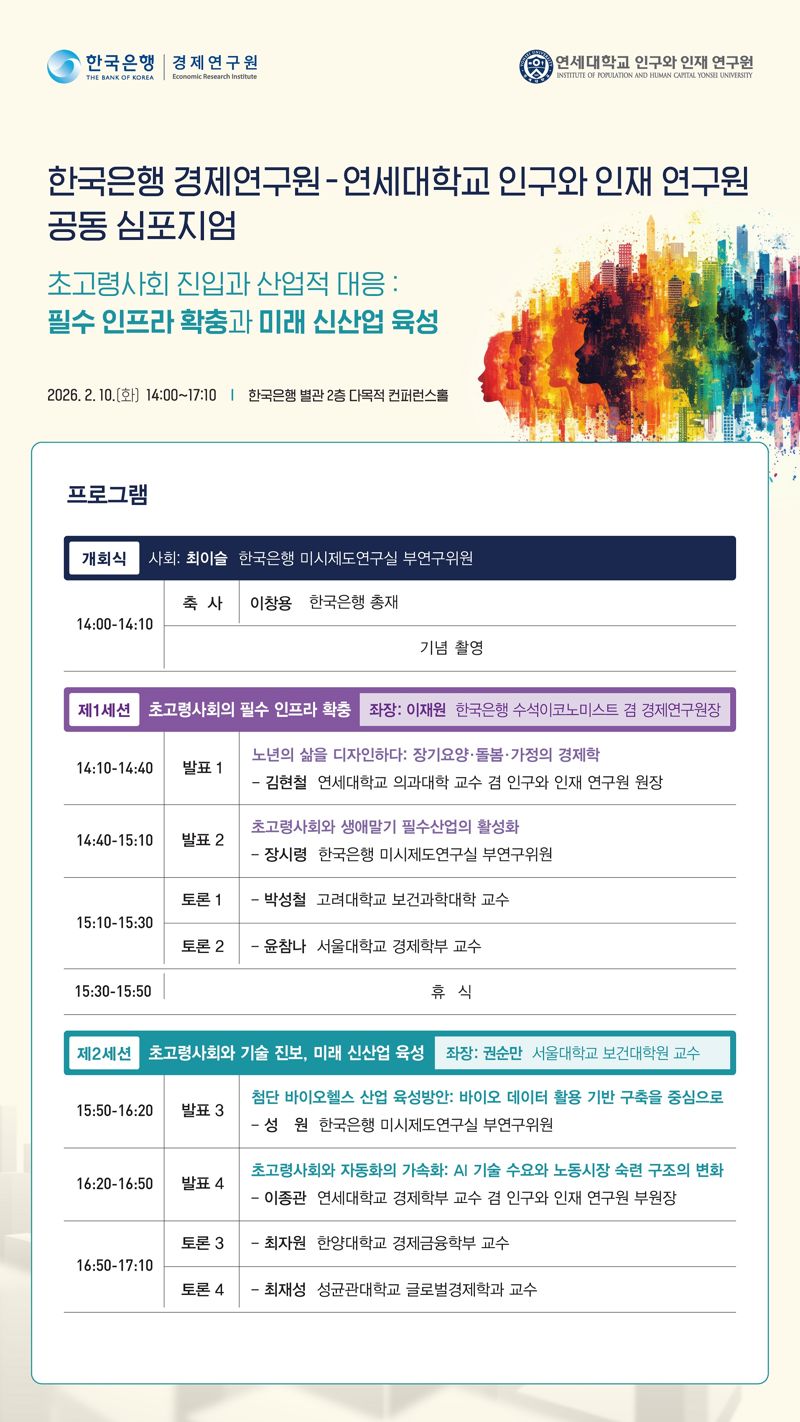
On the 10th, at the annex of the Bank of Korea (BOK) in Jung-gu, Seoul, Kim Hyun-chul, a professor at the College of Medicine, Yonsei University, delivered the first presentation at the joint symposium of the Economic Research Institute of the Bank of Korea and Yonsei University’s Institute for Population and Talent. He stressed, "To cope with the shortage of care workers, we should accept foreign care labor in the short term and, in the mid to long term, expand investment in care robots and AI technologies."
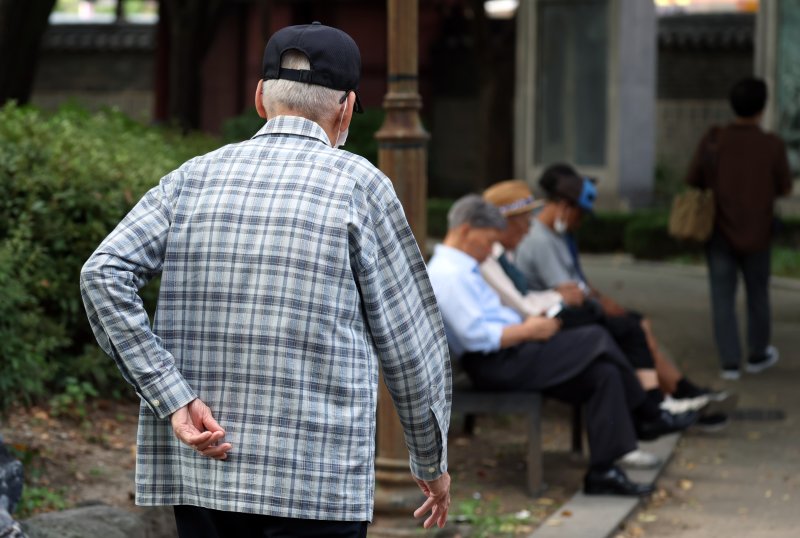
Professor Kim diagnosed that the health and quality of life of older adults are deteriorating due to phenomena such as grandparenting in later life and so-called "old caring for the old" support, where elderly people care for other elderly people. He pointed out, "To respond to a super-aged society so that older adults can live with dignity and families can sustainably bear the burden of care, we must create an environment in which people can age in place, in the communities where they have been living."
Lee Jong-gwan, a professor in the Department of Economics, Yonsei University, viewed labor shortages caused by population aging as a factor that is accelerating corporate investment in automation. In his assessment, this shift is leading not so much to an overall decline in employment as to a reorientation of labor demand toward high-skilled workers.
He said, "To prevent a reduction in early career opportunities for young people due to automation, universities need to strengthen practical AI education." He added, "Support must also be provided in parallel to ease productivity declines and technological gaps at small and medium-sized enterprises that are lagging in adopting robots and other automation technologies."
Sung Won, head of the Microeconomic Policy Division at the Economic Research Institute of the Bank of Korea, presented a report titled "Strategies to Foster the Advanced Biohealth Industry: Focusing on Building a Bio-Data Utilization Infrastructure." He proposed establishing a "nationally authorized open bio-data system." Under this system, data use would be approved only for research that, after prior review, meets the public-interest criteria set out in law, and such approved research would be exempt from prior consent requirements while being supported in data distribution.
He noted that the use of biohealth data in Korea is highly restricted and identified "misaligned incentives" as the fundamental cause. The risks and costs of data use are borne by data subjects—individuals—and data holders such as hospitals, while the benefits are dispersed among data users, including companies and researchers, and society as a whole.
Jang Si-ryeong, head of the Microeconomic Policy Division at the Bank of Korea, suggested that to increase the supply of end-of-life essential services such as elderly care facilities and cremation facilities, the incentive structure should be redesigned to expand private-sector participation. In metropolitan areas where demand is concentrated, supply is constrained by high real estate costs. She advised that these bottlenecks could be eased by compensating providers, for example by allowing imputed rent costs to be charged to users as non-reimbursed expenses, thereby opening up blocked supply channels.
At the symposium, panel discussions were led by Park Sung-chul, professor at the College of Health Science, Korea University (Discussion 1); Yoon Cham-na, professor in the Department of Economics, Seoul National University (Discussion 2); Choi Ja-won, professor in the Department of Economics and Finance, Hanyang University (Discussion 3); and Choi Jae-sung, professor in the Department of Global Economics, Sungkyunkwan University (Discussion 4). Earlier, Governor of the Bank of Korea Lee Chang-yong delivered congratulatory remarks.
[email protected] Kim Tae-il Reporter