KDI: "Housing supply below recent three-year average, nationwide rents and deposits rising faster"
- Input
- 2026-02-09 12:00:00
- Updated
- 2026-02-09 12:00:00
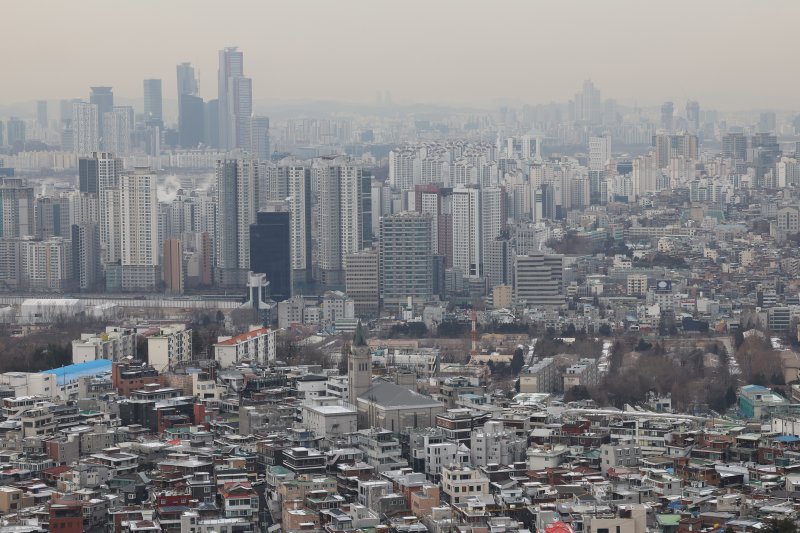
Financial News reported that the state-run Korea Development Institute (KDI) diagnosed that "while home sale prices are on the rise, especially in the Seoul metropolitan area, jeonse deposits and monthly rents are climbing sharply across the country."
In the February Economic Trends report released on the 9th, KDI stated that in the housing market, "because annual housing supply, measured by housing completions, has been lower than in an average year, rental prices have risen more sharply in both the Seoul metropolitan area and non-metropolitan areas."
According to KDI, both home sale prices and rents, including jeonse and monthly rents, continue to post strong gains. In December last year, home sale prices in the Seoul metropolitan area rose from 0.45% to 0.46% month-on-month, while prices in Seoul jumped from 0.77% to 0.80%.
The rental market also saw broader price increases in both the Seoul metropolitan area and non-metropolitan areas. In the Seoul metropolitan area, jeonse deposits rose from 0.38% to 0.42%, and monthly rents climbed from 0.35% to 0.39%. Outside the metropolitan region, jeonse deposits increased from 0.12% to 0.15%, and monthly rents from 0.12% to 0.16%.
KDI evaluated that "last year, annual housing completions totaled 166,000 units in the Seoul metropolitan area and 177,000 units in non-metropolitan areas, below the 2022–2024 averages of 221,000 and 204,000 units, respectively, and this is acting as a factor pushing prices upward."
Looking at the broader economy, KDI judged that overall production is continuing a modest upward trend, led mainly by the service sector.
KDI noted that "although investment is somewhat sluggish, exports are showing a modest increase centered on semiconductors, while consumption is on an improving trajectory." The institute has maintained the characterization of "improving consumption and rising production" for four consecutive months since November last year.
More specifically, the trends in consumption, production, and investment are gradually improving.
Consumption is slowly emerging from its slump thanks to better household income and cumulative interest rate cuts, and consumer sentiment remains high at 110.8 as of December last year. In particular, passenger car sales surged into double-digit growth, from 5.4% to 12.6%, helping overall retail sales increase from 0.8% to 1.2%. Reflecting this improvement in consumption, KDI assessed that "most service industries are recording relatively solid growth."
On the production side, KDI said that as the recovery in services continues, total industrial output is showing a modest upward trend.
As of December last year, service-sector output rose 3.7%, with most segments, including wholesale and retail trade, which grew 9.1%, showing a rebound. This in turn pushed overall industrial production growth from 0.4% to 1.8%.
Exports are buoyant in semiconductors, but many other industries remain weak.
In December last year, semiconductor export prices surged 39.9% year-on-year as supply lagged behind demand, while inventories fell 31.5%. KDI assessed that "although the growth in export volumes is undergoing some adjustment, the sharp rise in semiconductor prices is driving strong growth in export values."
Over the same period, automobile export prices fell 3.5% as external demand weakened, while inventories increased 7.8%.
KDI also judged that consumer prices are remaining stable at 2.0% in January, roughly in line with the government’s inflation target of 2%.
By contrast, uncertainty has increased due to sluggish facility investment and construction activity, as well as tariffs imposed by the United States that are weighing on exports.
Although the decline in construction work completed has narrowed to single digits, from -16.6% to -4.2%, the sector remains stuck in a downturn, weighed down by weak property markets in regional areas.
Facility investment is also continuing to fall. Due to a base effect from transport equipment investment having plunged 57.9% year-on-year, overall facility investment in December last year declined by 10.3%.
As of December last year, construction-sector output saw its contraction narrow from -16.6% to -4.2%, but the sector remains in a slump.
KDI stated, "Despite a surge in demand for semiconductors, supply constraints have led to a slight decline in manufacturing output," adding that "external uncertainties have increased somewhat, including the possibility of higher U.S. tariffs and greater volatility in oil prices."
Labor market conditions have not improved much.
With government-funded job programs coming to an end, the number of employed people in December last year stood at 168,000, down from 225,000 a year earlier.
Among workers aged 60 and older, who account for a large share of government-supported jobs, employment fell from 333,000 to 241,000. As a result, the employment rate for those 60 and over slipped from 46.5% to 46%, while their unemployment rate rose from 2.5% to 3.6%.
For people in their 20s, both the labor force participation rate, from 63.4% to 64.5%, and the employment rate, from 59.6% to 60.2%, increased. The number of economically inactive young people who reported they were "just resting" fell by 70,000. On this, KDI commented that "although the unemployment rate among those in their 20s rose from 6.0% to 6.8%, it is difficult to interpret this as a deterioration in labor market conditions."
[email protected] Jung Sang-geun Reporter