What We Learn from the Sensual Transgression of ‘Moulin Rouge’ [Eom Hyun-hee’s Thinking Theater]
- Input
- 2026-02-09 09:03:29
- Updated
- 2026-02-09 09:03:29
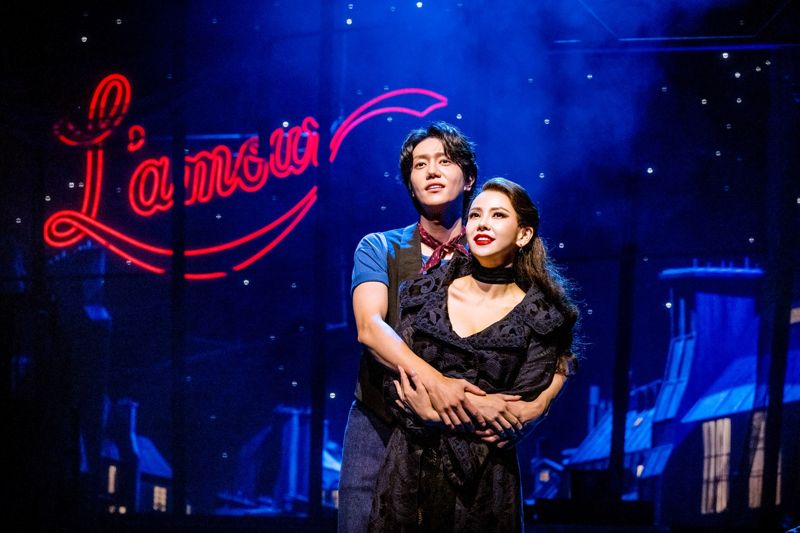
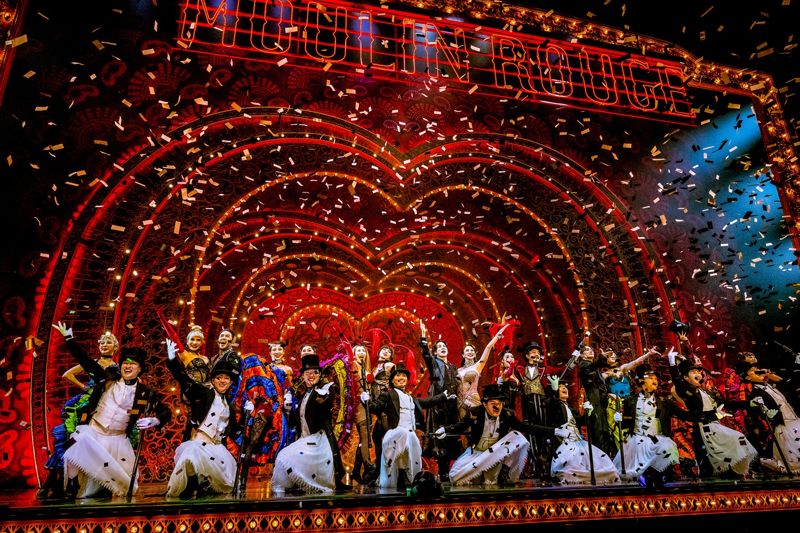
[Financial News] The ending of the musical “Moulin Rouge” can be read as a familiar tragedy: the death of a heroine stricken with illness. Yet there is something that resonates beyond that conventional conclusion. Why do we feel not only pity but even respect for the dancer (a courtesan) who chooses to die onstage, and for her companions? Those who hold a funeral for her on the stage are, like her, people who are unruly, uncontrollable, half-mad or precarious: men and women who dance erotic routines, a producer who is also a pimp, a transgender performer, foreigners, and a con artist who is also an artist.
The musical “Moulin Rouge” (2018), based on the 2001 film, was first introduced to Korean audiences at Blue Square in 2022 and has been revived since November 2025. True to its reputation, the staging is explicit and bold. Evoking the decadent, pleasure-seeking cabaret Moulin Rouge of 1898, the show presents the sleekly stylized physical and sexual energy of bare bodies—women’s thighs, men’s abs and buttocks. Dancers stroll about in corsets and underwear, holding long, thin cigarette holders; cancan and striptease numbers appear alongside a tightly choreographed, tension-filled tango duet. Costumes that reveal the body and choreography that visually assert its presence fill the stage, and a dense sensuality and eroticism permeate these scenes. As a licensed production, “Moulin Rouge” stands out in a local theater landscape where sexual themes are often taboo, making works that foreground eroticism hard to come by.
The story unfolds through a love triangle between Satine, the star of Moulin Rouge; the young man Christian, who loves her; and the Duke, who seeks to possess her. It is a classic structure built around love, yet the work seems to drape a slightly romantic name—love—over raw impulses of longing and desire. Christian’s desire for Satine shifts from ecstatic love into the madness of abandonment, and that transformation drives the scenes. Satine and Christian, played by Kim Ji-woo and Hong Kwang-ho, hold the stage with technically assured acting and vocals.
The show is a jukebox musical that weaves together existing pop songs, often blending several into a single number with striking finesse. The composition feels technically impressive and seems to be an attempt to infuse a period setting with a texture closer to the present. As changing rhythms and melodies stand in for shifting emotions, the songs trace a tightrope of yearning, resentment, renewed desire, and despair. However, some viewers note that the patchwork of familiar songs can make it harder to fully immerse themselves in the characters’ inner lives.
“Moulin Rouge” presents characters who are honest about their desires and who love themselves as they are. For that reason, they stake their lives on protecting “their own show, messy, filthy beyond measure, and the greatest,” and this struggle unfolds alongside the triangle of Satine, Christian, and the Duke. The choreography that distills conflict into simple movements is taut and sensually brilliant. If the phrase “the show must go on” applies to their stage, it does so in a deeply seductive way. For people inside the fences of society—those who must wear masks and obey norms and rules to be accepted—the outsiders of Moulin Rouge teach lessons about “being oneself,” “freedom and choice,” “will and liberation.” These are what we encounter when we move beyond the show’s sensuality, desire, and eroticism.

jashin@fnnews.com Shin Jin-a Reporter