Will Japan’s Stock Market Climb Further on Takaichi’s Landslide? Super-Long-Term Yields a Wild Card [LDP Landslide in Japan]
- Input
- 2026-02-09 07:44:16
- Updated
- 2026-02-09 07:44:16
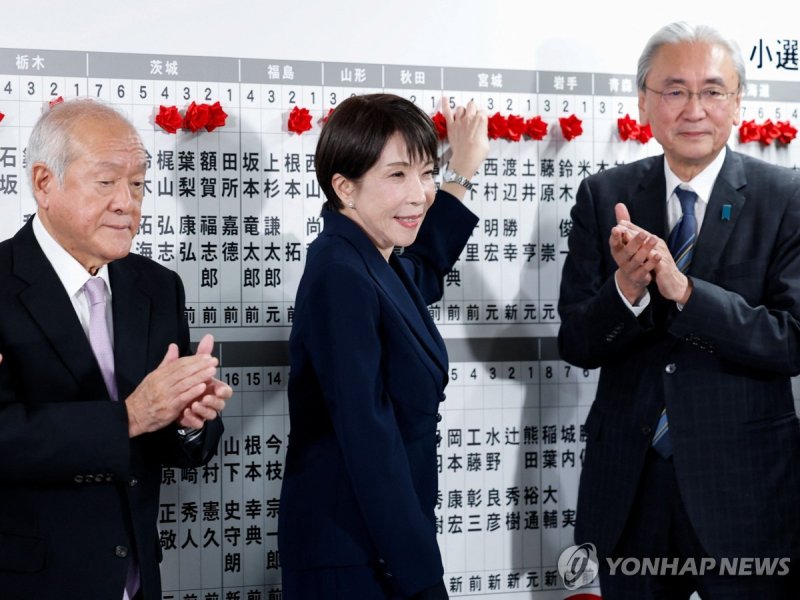
In the general election for the House of Representatives of Japan held on the 8th, the ruling Liberal Democratic Party (LDP) won 316 seats, the largest number since the end of the Pacific War, securing more than two-thirds of the chamber’s 465 seats. Markets are now focused on how this landslide victory will affect financial markets. Analysts see a strong possibility that Japanese stocks will continue to rise and the yen will remain weak. However, some warn that if concerns over fiscal deterioration under Prime Minister Sanae Takaichi’s expansionary policies trigger a sharp jump in government bond yields, the upside for equities could be capped.
■ Will Takaichi’s landslide drive stocks even higher? Defense and food stocks seen as winnersAccording to the Nihon Keizai Shimbun (Nikkei) on the 9th, the LDP’s sweeping victory in the House of Representatives election the previous day has significantly increased the likelihood that the Nikkei 225 will rise in Tokyo trading on Monday. On the last trading day before the election, Friday the 6th, the Nikkei 225 closed at 54,253. That is about 19% higher than on October 3 last year, before Takaichi was elected LDP president.
Over the same period, the gain far outpaced the roughly 7% rise in the Dow Jones Industrial Average in the United States.
Indeed, in overnight trading on the Osaka Exchange in the early hours of the 7th, the day before the election, Nikkei 225 futures surged. March futures climbed 2,080 points, or 4%, from the previous session to 56,490. Nikkei noted that this points to a strong likelihood of broad-based gains when the stock market fully reopens on the 9th.
This underscores the high expectations for the Takaichi Cabinet’s plans to strengthen Japan’s defense capabilities and pursue aggressive fiscal expansion.
Prime Minister Takaichi has already pledged to revise Japan’s three key national security documents within the year to bolster defense. She also plans to scrap some restrictions on arms exports this year, greatly expanding the scope for exporting defense equipment with lethal capabilities. She is also eyeing the creation of a National Intelligence Agency, often described as a Japanese version of the Central Intelligence Agency (CIA), to enhance intelligence-gathering, and is interested in enacting an anti-espionage law that critics fear could tighten state surveillance.
In the longer term, she may push to revise Japan’s pacifist constitution, a long-cherished goal of former Prime Minister Shinzo Abe, effectively turning Japan into a country that can wage war.
On the economic security front, fiscal expansion and tax cuts are expected to gain momentum.
In its election manifesto, the LDP pledged to pursue what it calls responsible, proactive fiscal policy, carrying out bold and strategic "crisis-management investment" and "growth investment." Through this, it said, it will boost employment and incomes and thereby build a “strong economy.”
More specifically, the party plans to channel funds into economic security, artificial intelligence (AI), semiconductors, quantum technologies and the content industry to secure new engines of growth.
The manifesto also calls for accelerating discussions on exempting food products from the consumption tax for two years.
Shingo Ide, chief equity strategist at NLI Research Institute (NLI), noted, "In addition to defense-related stocks, there is a possibility that funds will flow into food stocks on expectations of a cut in the consumption tax."
■ Yen weakness expected to persist, with intervention risk around 160 per dollarIn the foreign exchange market, many expect the yen to remain weak for the time being.
Marc Chandler of Bannockburn Global Forex forecast, "For now, markets are likely to probe how much further yen weakness and dollar strength can go."
The yen–dollar exchange rate ended last week at 157.20 yen per dollar. After U.S. authorities conducted a so-called "rate check"—an informal inquiry into market rates—the rate had briefly strengthened to 152.10 yen per dollar, but it has since weakened by about 5 yen.
Daisuke Ueno, chief foreign-exchange strategist at Mitsubishi UFJ Morgan Stanley Securities, predicted, "If the yen–dollar exchange rate approaches 160 yen per dollar, heightened caution about possible currency intervention will likely make it difficult for further yen depreciation to continue."■ Long-term yields as the key swing factor for stocks; a spike could lift goldThe main factor that will shape the stock market’s trajectory is the path of long-term Japanese government bond (JGB) yields.
If yields on super-long-term JGBs, which are highly sensitive to fiscal deterioration, were to jump sharply—meaning prices fall—this would put upward pressure on yields across other maturities and could weigh on the stock market.
However, some argue that because the ruling party has greatly increased its seat count, it will feel less pressure to accept the opposition’s calls for excessive fiscal expansion, which could ease upward pressure on yields in the medium term. Nikkei wrote, "Going forward, yields are expected to move up and down depending on the pace of discussions and the feasibility of cutting the consumption tax on food."
The outcome of this House of Representatives election could also affect gold prices.
Analysts warn that if concerns over fiscal expansion intensify and selling of Japanese government bonds accelerates, this could feed into a rise in global interest rates.
In that scenario, U.S. Treasury securities—like gold, considered a safe-haven asset—could also come under selling pressure, prompting safe-haven flows into the gold market instead.
Market analyst Itsuo Toyoshima predicted, "If Japanese government bonds are sold off, there is room for gold prices to rise sharply during Asian trading hours on the 9th."
sjmary@fnnews.com Seo Hye-jin Reporter