"Once Called the Shadow of Cabbage Boy"... Asthmatic Pyeongchang Kid Becomes Korea's 400th Olympic Hero at 37 [2026 Milan]
- Input
- 2026-02-09 05:00:00
- Updated
- 2026-02-09 05:00:00

[Financial News] "Who on earth is that guy?"
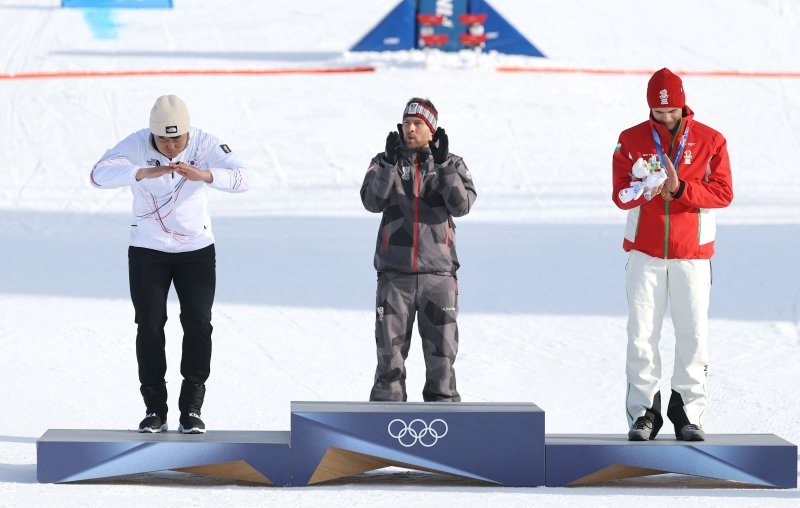
Spectators in Livigno, Italy, murmured in disbelief. An Asian veteran had just sent world No. 1 and home hero Roland Fischnaller packing in the quarterfinals. At 37, he climbed his first Olympic podium and became the man who delivered South Korea’s 400th Olympic medal.
In truth, most of us barely knew him. He had always stood in the shadow of "Cabbage Boy" Lee Sang-ho, and few believed he was anywhere near medal contention. But when you trace the snowboarding life of Kim Sang-gyeom (37, High1), this silver is less a "miracle" than the inevitable result of years of quiet, relentless work.
Kim, a mountain kid from Pyeongchang in Gangwon Province, suffered from severe asthma as a child. His parents urged him to take up sports in the hope he would grow stronger. He first tried track and field. Gasping for air, he pushed through the pain and gradually built up his lungs and stamina.
Fate came calling in middle school. The school started a snowboard team, and his PE teacher approached him. "Sang-gyeom, want to try riding a board?" That one question changed everything. Captivated by the rush of slicing through white slopes, the boy traded his spikes for snowboard boots. It was the birth of a first-generation Korean alpine snowboarder.
Kim Sang-gyeom became a trailblazer for Korean snowboarding. He signaled his potential by winning the Winter Universiade in Turkey in 2011, then went on to become the first Korean ever to compete in the parallel giant slalom at the 2014 Winter Olympics in Sochi. He was eliminated in qualifying. It was a lonely challenge that almost no one noticed.
Then came the 2018 Pyeongchang Winter Olympics on home snow. He sharpened his sword for the moment, but the spotlight fell not on him, but on his junior Lee Sang-ho. As Lee sparked a "Cabbage Boy" craze by winning Korea’s first Olympic snowboard silver, Kim simply stood by and applauded. At the Beijing Winter Olympics in 2022, he again went out in qualifying. People started saying, "Kim Sang-gyeom is done."
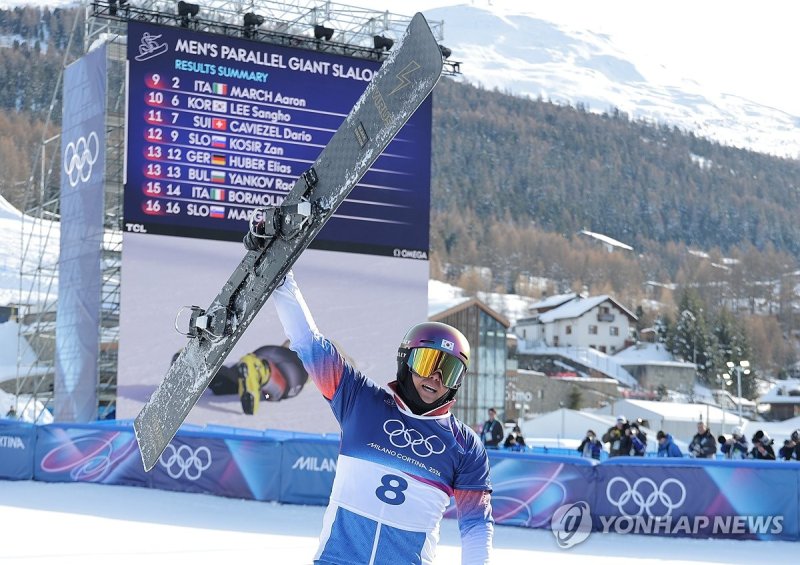
But Kim Sang-gyeom’s clock was ticking backwards. While others in their mid-30s were contemplating retirement, his skills were just beginning to blossom.
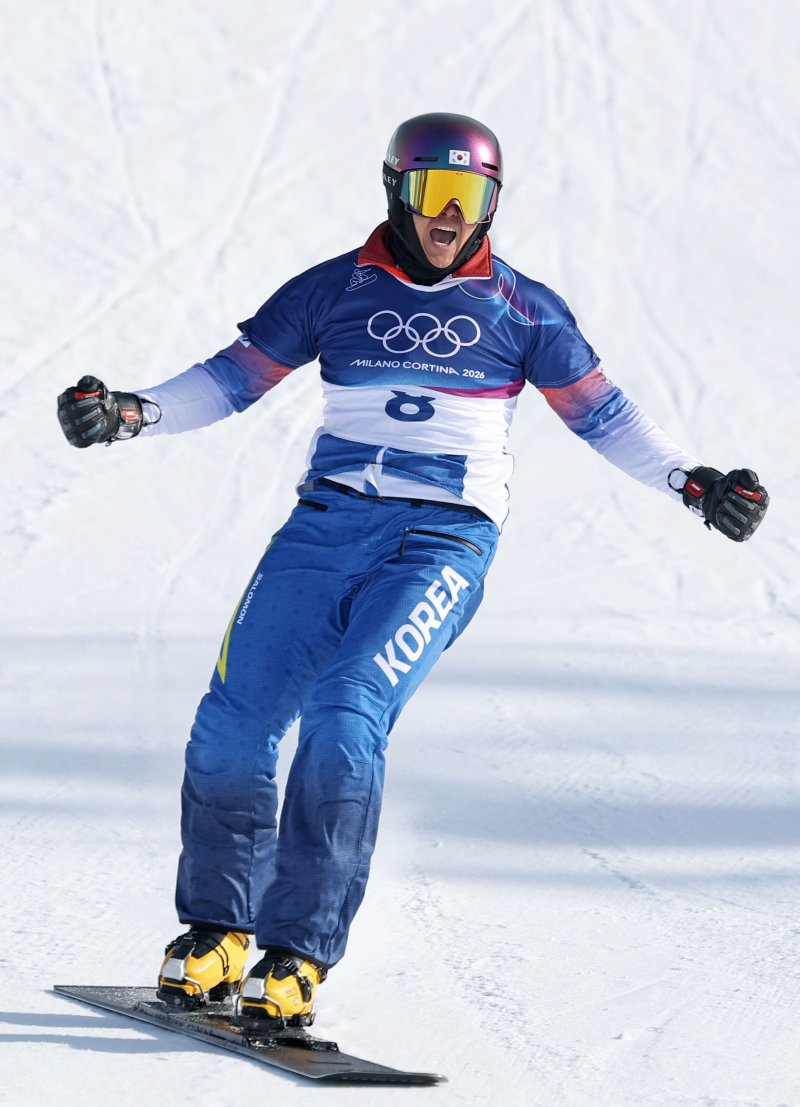
In January 2024, at 35, he captured his first-ever World Cup silver medal, then added a bronze in March. They say late-blooming flowers are the most beautiful. He refused to give up, and in his fourth Olympic appearance in Milan, he cut down the world’s top riders one after another and finally stepped onto the podium.
A 37-year-old silver medalist. In most sports, that is an age close to retirement, almost like a sporting sixty-something. In this discipline, though, he can still be seen as a youngster.
The man who beat Kim in the final, gold medalist Benjamin Karl of Austria, is 40. Fischnaller, the world No. 1 whom Kim knocked out in the quarterfinals, is an astonishing 45.
In alpine snowboarding, where reading ever-changing conditions and snow texture is everything, Kim’s 37 years are far from old. In fact, his true prime may only just be beginning.
From a boy wheezing with asthma to the man who claimed the 400th medal in Korea’s Olympic history. The 12-year drama Kim Sang-gyeom has written on the snow proves once again a simple truth: if you grit your teeth and hang on to the very end, perseverance wins.
jsi@fnnews.com Jeon Sang-il Reporter