[Editorial] As Security and Non-Tariff Issues Deepen Korea–U.S. Frictions, Legislation Must Be Fast-Tracked
- Input
- 2026-02-08 18:18:59
- Updated
- 2026-02-08 18:18:59
The agreement reached at the South Korea–United States summit last October was possible only because tariffs and security were handled as a package. South Korea made concessions to the U.S. on trade issues, and in return secured security benefits in shipbuilding, nuclear power and the construction of nuclear-powered submarines. Yet Washington, citing delays in legislation at the South Korean National Assembly, has expressed dissatisfaction and is showing little enthusiasm for implementing the security package.
If the United States raises tariffs, even for a relatively short period, South Korean companies will inevitably suffer. No matter how much one may resent President Donald Trump’s "whims," there is ultimately no choice but to respond as flexibly as possible to U.S. demands.
The National Assembly, of course, must move quickly on legislation related to the tariff deal. It is fortunate that the People Power Party has withdrawn its request for parliamentary ratification and agreed to cooperate in reviewing a special act, clearing the way for passage of the Special Act on Investment in the United States. Seoul needs to act without delay and demonstrate to Washington its determination to carry out the agreement.
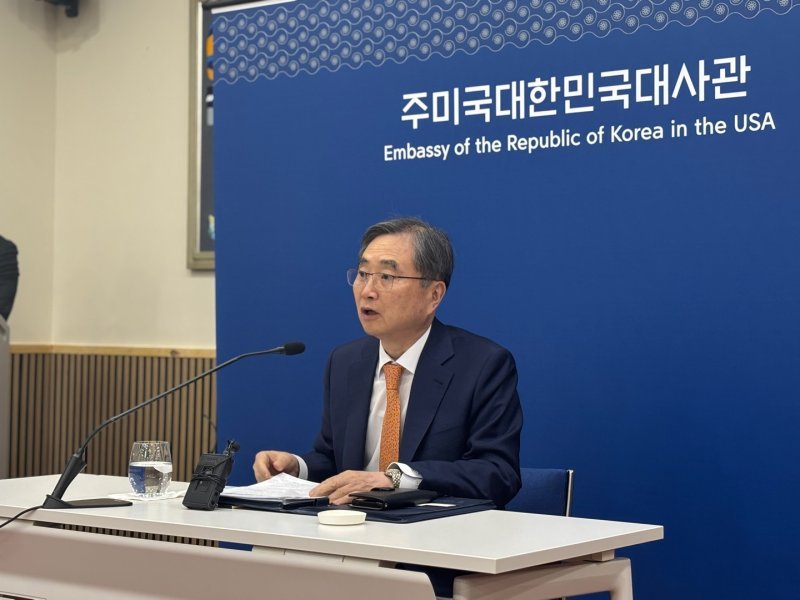
Another problem is that the United States is now tying non-tariff issues to the tariff negotiations. There are signs that disputes will spread to matters such as network usage fees, digital platforms and agricultural quarantine. It is said that during Minister Cho’s visit, U.S. Secretary of State Marco Rubio and others conveyed this emerging stance of the U.S. government quite bluntly.
In the tariff negotiations, the two countries explicitly pledged to ensure that U.S. companies would not face discrimination or unnecessary barriers under South Korea’s laws and policies on digital services, including network usage fees and regulations on online platforms. Washington is now demanding concrete action consistent with that written commitment. This naturally encompasses the South Korean government’s punitive measures against Coupang, a U.S.-incorporated company.
In an international order governed by power, there are many things we simply cannot do our own way. Situations arise in which the government cannot follow public opinion to the letter. It is understandable that South Koreans feel resentment toward U.S. Big Tech firms such as Google, which do business here without paying what many see as fair taxes, while at the same time demanding access to high-precision map data.
Yet blindly accepting every U.S. demand would also be dangerous. Some argue that handing over detailed map data would inflict serious, long-term damage and losses on South Korea. The government must weigh such concerns in a comprehensive way and conduct negotiations so as to protect the national interest as much as possible.
Once again, the ultimate and highest standard is the national interest. Under the principle of maximizing gains while minimizing losses, we must concede what must be conceded and secure what must be secured. This was the strategy our officials clearly demonstrated in last year’s negotiations with Washington. In "Season 2" of the tariff talks, they must show the same strategy, mindset and persistence in explaining and persuading the U.S. side. Diplomacy and trade are fields where principles do not always prevail, and where emotional reactions have no place.