Why Target Strangers? How the Arsonist Behind the '15 Casualties' in a Dongdaemun Multi-Family Home Carried Out the Crime
- Input
- 2026-02-10 08:44:15
- Updated
- 2026-02-10 08:44:15
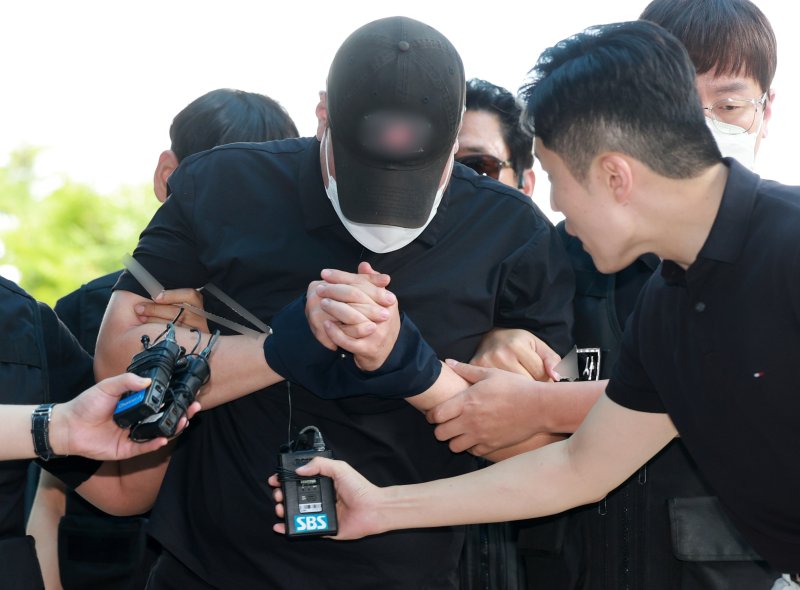
According to the legal community on the 10th, Criminal Division 11 of the Seoul Northern District Court, presided over by Judge Lee Dong-sik, sentenced the 37-year-old defendant Oh to 27 years in prison on July 30 on charges of arson of an occupied building resulting in death and injury. Oh was indicted for setting fire to a pile of waste paper stacked on a handcart in the parking lot of a four-story multi-family home in Jegi-dong in Dongdaemun District, Seoul, on the night of August 12 last year, causing the deaths of two residents and injuring 13 others.
The incident was triggered by a trivial dispute. Oh set fire to the waste paper on a handcart belonging to a resident, identified as A, with whom he had minor conflicts. Starting in November 2024, he hurled insults at A as A pushed the handcart home from work and repeatedly picked fights, saying things like, "Is there some reason you made eye contact with me?", "Why are you pulling that cart?", and "What do you do for a living?"
On one occasion, Oh followed A as far as the inside of the shared entrance, insulting him, hitting him on the neck, and issuing threats, prompting A to call the police. Whenever he ran into A, Oh continued to harass him, asking, "Do you even know how to drink?" and "Why don't you move out?" While A was out late at night watching a movie, having left a pile of waste paper in his handcart, Oh carried out the arson.
Oh denied the crime, claiming he did not remember setting fire to the waste paper and had only smoked a cigarette. He admitted that he had stayed near the handcart in the underground parking lot but insisted he never ignited the pile of paper. He further argued that even if the paper had caught fire, he had been so drunk that he lacked the intent to commit arson.
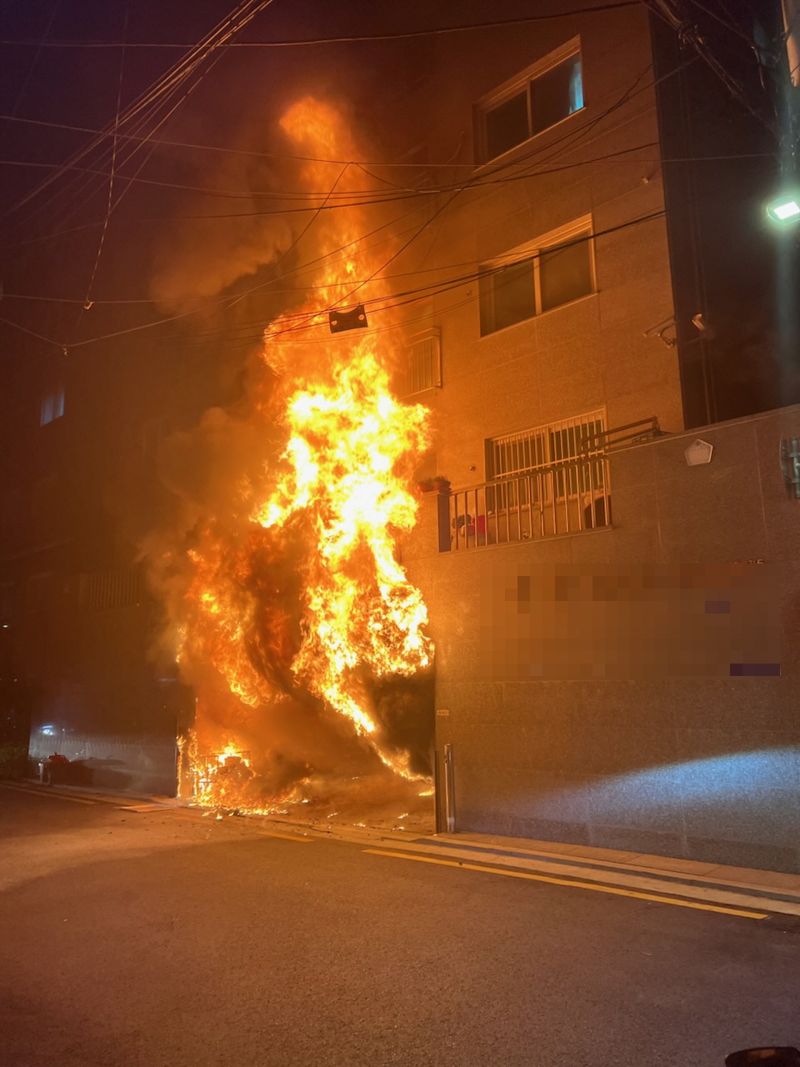
The court, however, rejected his claims. Closed-circuit television (CCTV) footage captured circumstances strongly suggesting that Oh set fire to the handcart loaded with paper. From the early stages of his detention, prosecutors worked with police and fire authorities to secure evidence, analyze the video, and conduct psychophysiological tests, ultimately substantiating his involvement.
Oh repeatedly changed his statements. In his first police interrogation, he said, "On my way to work at dawn, I did not even see the villa where the incident occurred, and I did not know there had been a fire until my mother contacted me." But in his third interrogation, he reversed himself, saying, "On my way to work, I drove past the side of the villa and realized there was a fire."
He also claimed that he might have accidentally pressed the power button on an electric lighter while wiping its wick. When investigators pointed out that the CCTV would not show a flame if only the power was on, he abruptly changed his story again, saying, "I think I shone a flashlight." Around the time of the crime, he was using two mobile phones, but he submitted only one and kept changing his explanation about the whereabouts of the other device.
Two residents of the villa died and 13 were injured as a result of the fire. One victim, identified as B, died during treatment from carbon monoxide (CO) poisoning and third-degree burns over the entire body. Another victim, C, died of shock caused by severe burns. The 13 other injured residents suffered various harms, including cardiac arrest requiring resuscitation and asthma and other conditions that required about 12 weeks of treatment. Property damage exceeded 100 million won.
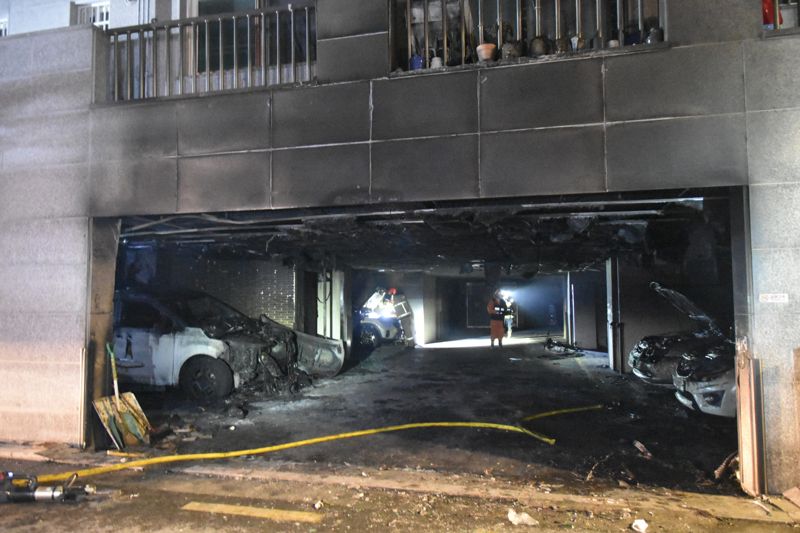
The ignition point was inside the parking lot, and the pile of waste paper that caught fire was near the entrance. This created a high risk that the flames would spread to the ceiling and throughout the building. Airflow was strong, and there were many combustible materials nearby, such as vehicles, waste paper, and discarded items. Three sides of the building, except the front, were blocked by concrete, and each section had a gable roof, which prevented residents from escaping via the rooftop.
The court held that a heavy sentence was necessary in light of the circumstances of the crime and the extent of the harm. The panel stated, "Over a trivial dispute with a neighbor, the defendant set fire to a villa where victims with whom he had no prior acquaintance were living, resulting in many casualties and significant property damage." It continued, "After the crime, he attempted to flee and, from the investigative stage through trial, has offered only unreasonable excuses and made no effort to compensate the victims, so the circumstances after the offense are not favorable."
At the same time, the court considered several factors in his favor. It found that he appeared to have acted with indirect intent rather than a clear purpose to cause death or injury, and there was no indication that he specifically intended the victims to die or be harmed. It also noted that he had otherwise led a diligent life, consistently engaging in volunteer work and charitable giving, that his family and acquaintances had petitioned for leniency, that he had no prior criminal record other than a fine, and that structural defects in the villa—such as inadequate fire safety and evacuation facilities—also contributed to the scale of the damage.
On the 4th, Oh appealed the first-instance verdict. Prosecutors, who had initially sought a life sentence, also filed an appeal the same day, arguing that the sentence was unduly lenient. The question of his responsibility and the appropriate punishment will now be reconsidered by the appellate court.[email protected] Seo Ji-yoon Reporter