"233, 243, 261, 310?" What Report Card Will Takaichi Receive? [Japan Lower House Election]
- Input
- 2026-02-08 09:58:00
- Updated
- 2026-02-08 09:58:00
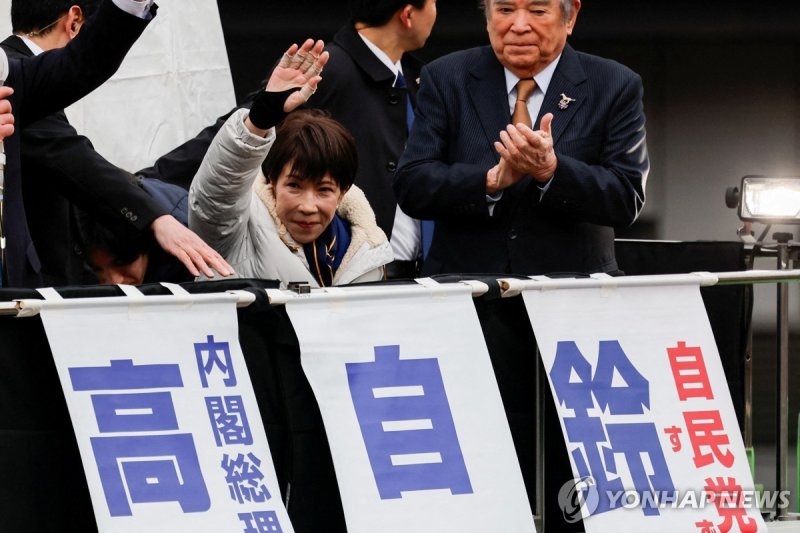
As Japan holds a House of Representatives election on the 8th to gauge public confidence in Prime Minister of Japan Sanae Takaichi, attention is focusing on how many seats the ruling parties will secure. There are projections that the ruling Liberal Democratic Party (LDP) could win not only a simple majority of 233 seats on its own, but also an "absolute stable majority" of 261 seats. If the LDP’s seats are combined with those of its coalition partner, the Japan Restoration Party, the bloc could reach 310 seats, the threshold both for resubmitting bills rejected by the House of Councillors and for initiating constitutional amendments. The number of seats in the House of Representatives is a key factor determining the stability of any administration. Below is a breakdown of the four critical seat counts both ruling and opposition parties are watching.1) 233 seats: Passing budgets and bills in the House of RepresentativesFirst, 233 seats, a simple majority in the 465-seat House of Representatives, is the minimum needed to pass budgets and ordinary bills in the lower house. Before the election was officially called, the LDP held 198 seats and the Japan Restoration Party 34, for a combined 232 seats. Only when counted on the basis of parliamentary groups did they reach the 233-seat majority.
A majority in the House of Representatives is also the minimum condition for a prime minister to be reappointed at the special Diet session following the election.
If the ruling parties control a majority in the lower house, the budget can come into force even if it is voted down in the House of Councillors, once a certain period has passed, Nihon Keizai Shimbun (The Nikkei) explained on the same day. In that case, it would become easier for the administration to push ahead with core policy agendas such as Takaichi’s pledge of "responsible, proactive fiscal policy."
However, even if the ruling bloc secures a majority in the House of Representatives, it will still be in the minority in the House of Councillors. Under those circumstances, cooperation from opposition parties in the upper house would be essential to pass ordinary legislation.
If the ruling parties fail to win a majority in the lower house, it is highly likely to trigger a debate over the prime minister’s political future. On the 27th of last month, Takaichi reiterated that she would resign if the ruling bloc falls short of a majority.2) 243 seats: Monopoly over standing committee chairsIf the ruling parties secure 243 seats, known as a "stable majority," managing the Diet becomes much easier. With that number, they can hold a majority of members on all 17 standing committees and effectively monopolize the committee chair positions.
Deliberations on the fiscal 2026 budget are expected to take place at the special Diet session convened after the election. The chair of the Budget Committee, where wide-ranging policy debates on the budget are held, has traditionally been drawn from the opposition. If the ruling bloc wins a stable majority in this election, it would, at least in theory, be able to take the Budget Committee chairmanship away from the opposition.
During a campaign stop in Saitama Prefecture on the 3rd, Takaichi complained, saying, "The Budget Committee chair is from the opposition, and no matter how many ministers raise their hands, all the questions come to me." The Takaichi Cabinet compiled a record-high 122.3092 trillion yen draft budget for fiscal 2026 (April 2026 to March 2027) late last year.3) 261 seats: Ruling party can pass bills on its ownA total of 261 seats constitutes an "absolute stable majority," allowing the ruling party effectively to control the Diet on its own. In the 2021 House of Representatives election, the LDP alone secured this absolute stable majority. With that many seats, ruling party lawmakers can pass bills without relying on the discretion of committee chairs.4) 310 seats: Ability to override vetoes and initiate constitutional amendmentsThree hundred ten seats represent two-thirds of the 465 seats in the House of Representatives. With that level of support, the lower house can override the House of Councillors if it rejects a bill, and it also meets the requirement to initiate a national referendum on constitutional amendments.
In the past, the ruling bloc has won more than 310 seats in the 2005 "postal privatization dissolution" snap election and the 2014 "Abenomics dissolution" election. However, the LDP alone has never held 310 or more seats.
If the ruling parties win this election, Takaichi is expected to be smoothly re-elected as prime minister at the special Diet session likely to be convened around the 18th, and then launch a new cabinet. With a stable political base, the new cabinet would gain the momentum to push ahead forcefully with its promised policies.
During the campaign, Takaichi repeatedly stressed "responsible, proactive fiscal policy," arguing that she would grow the Japanese economy through investment and build a "strong economy."
In foreign and security policy, she is likely to press ahead with a conservative agenda, including the early revision of the three key national security documents to strengthen defense capabilities, easing restrictions on defense equipment exports, creating a National Intelligence Agency, enacting an anti-espionage law, and amending the Constitution.
The Japan Restoration Party has positioned itself as the accelerator for these hawkish policies, which could give additional momentum to their implementation.
If the Takaichi Cabinet moves to revise Article 9 of the Constitution, which renounces war and the use of force and prohibits maintaining war potential and the right of belligerency, and accelerates the buildup of Japan’s defense capabilities, the country would effectively be on a path toward becoming a "war-capable state" for the first time in roughly 80 years since the end of the Pacific War.
However, even if the ruling camp secures the two-thirds threshold in the House of Representatives needed to initiate constitutional amendments, it is unlikely to move immediately to revise the Constitution.
To submit an amendment proposal, at least two-thirds of members in both the House of Representatives and the House of Councillors must approve it, but the LDP and the Japan Restoration Party together currently fall short of a majority in the upper house. The next House of Councillors election is scheduled for 2028.
Voting for the House of Representatives will end at 8 p.m. today, after which ballot counting will begin immediately.
[email protected] Seo Hye-jin Reporter