Seoul and Gyeonggi Delayed for Five Years... Their Trash Went to Other Regions [Lee Yu-beom’s Eco & Energy]
- Input
- 2026-02-07 06:00:00
- Updated
- 2026-02-07 06:00:00
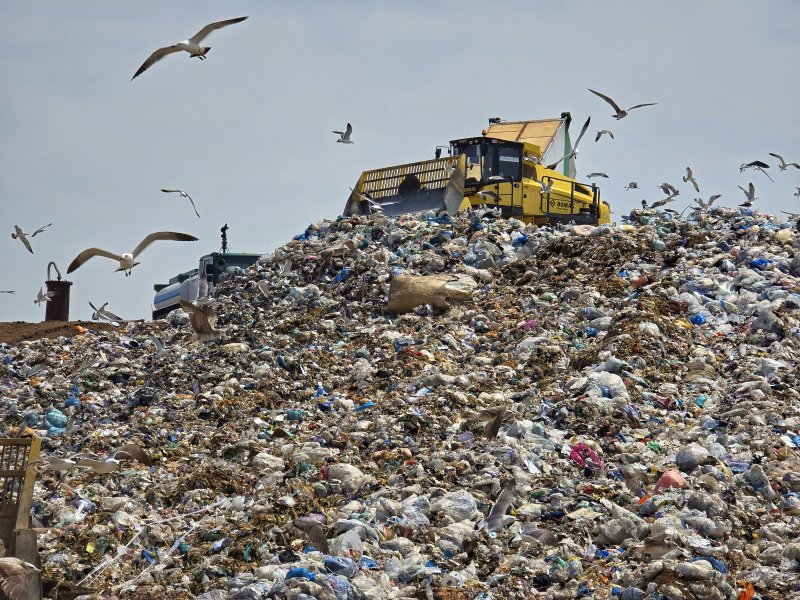
According to Financial News, the ban on direct landfilling of municipal waste in the Seoul metropolitan area, which took effect on January 1, has now entered a full-fledged phase of conflict between local governments. A feared "waste crisis" has been avoided since the policy was implemented. However, as large volumes of waste from the Seoul metropolitan area are being shipped to non-capital regions, disputes are intensifying among local governments over who should bear the responsibility, costs and environmental burden of waste disposal. Observers also argue that this is not simply a matter of "where the trash goes." They say the environment authorities, as well as Seoul and Gyeonggi Province, bear significant responsibility for their complacent response during the five-year grace period.
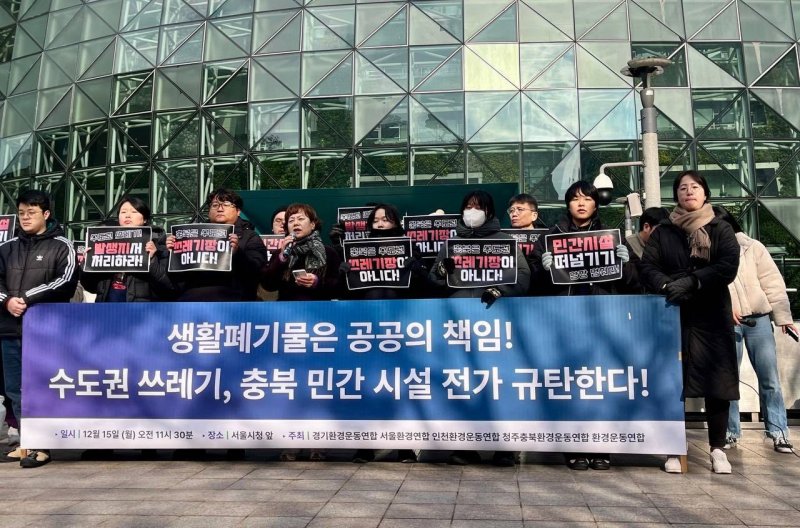
Seoul and Gyeonggi failed to build even a single incineration plant during the five-year grace period
According to the Ministry of Climate, Energy and Environment and other sources on the 7th, the revision of the Enforcement Rules of the Waste Management Act, which bans direct landfilling of waste starting January 1, 2026, was completed in 2021, granting roughly a five-year grace period. The premise of the policy was clear. During that period, local governments in the Seoul metropolitan area were expected to expand their own incineration and resource recovery facilities and establish a system that could treat waste without direct landfilling.After the system was finalized in 2021, Seoul and Gyeonggi Province announced a series of plans in 2022 and 2023 to build new incinerators and expand existing ones. None of these plans, however, progressed to actual groundbreaking. The Ministry of Environment, the National Assembly and experts repeatedly warned that "without expanding facilities, outsourcing to external incinerators will inevitably increase," but the policy direction remained unchanged.
In 2024, the volume of waste consigned to private incinerators rose sharply. Because treatment capacity within the Seoul metropolitan area did not increase, dependence on private incinerators in non-capital regions such as the Chungcheong region and Gangwon region began to solidify. Even so, no new public incinerator was completed by the time the 2025 implementation date was approaching.
In the months just before the ban took effect, some local governments called for another grace period, but the central government confirmed that it would proceed as planned. As a result, the full ban on direct landfilling came into force in January 2026, even though the necessary facilities were not ready.
When assigning responsibility for the current conflict, the response of the Seoul Metropolitan Government and Gyeonggi Province is always part of the discussion. These two jurisdictions generate the vast majority of municipal waste in the Seoul metropolitan area. It is no exaggeration to say that the choices they made during the grace period largely determined today’s situation.
In Seoul’s case, the construction of a new large-scale metropolitan incinerator was discussed several times, but none of the proposals led to actual construction. Most of the city’s existing incinerators were built in the 1990s, and they have long been criticized for aging equipment and limited capacity. Plans to modernize and expand resource recovery facilities were announced repeatedly, yet they stalled each time at the site selection stage due to strong opposition from local residents. In the end, during the entire grace period, Seoul presented plans to "increase facilities" but never made a concrete decision on "where to build them."
The situation in Gyeonggi Province was not much different. In Gyeonggi, responsibility for waste treatment is fragmented among cities and counties. Under this structure, there was virtually no integrated strategy at the metropolitan level. Some basic local governments regarded the ban on direct landfilling as a central government policy and remained passive about expanding incineration facilities. As a result, there was no coordinated effort to systematically increase treatment capacity for the capital region as a whole.
Experts describe this not so much as a "policy failure" but as the outcome of political avoidance. Incinerators are classic NIMBY facilities. Once a local leader decides on a site, they must endure residents’ backlash and significant political costs. During the grace period, postponing decisions may have seemed like the more rational choice politically than taking on that burden. However, analysts note that the cost of those choices surfaced all at once when the system finally took effect.
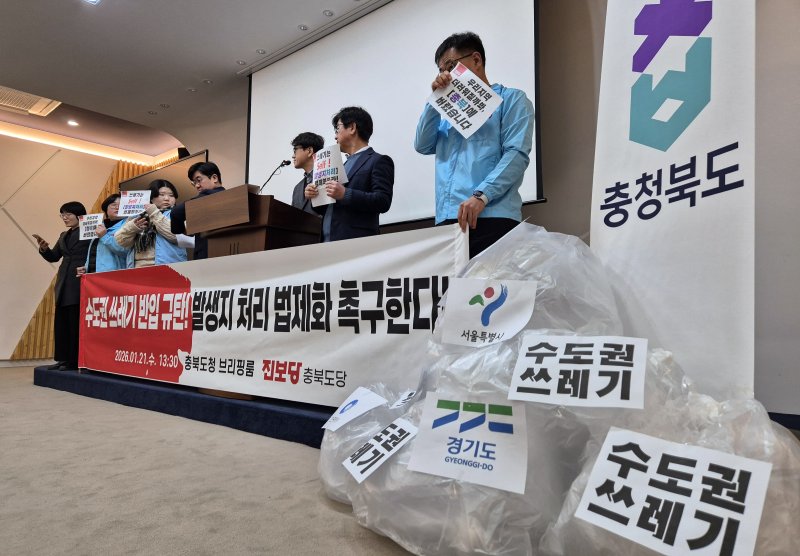
Avoiding a "waste crisis" at the cost of long-distance incineration
As of 2026, about 477,534 tons of municipal waste from the Seoul metropolitan area (Seoul, Gyeonggi Province and Incheon) were consigned to private incinerators. Of this, roughly 23.1 percent, or 110,370 tons, were reportedly treated at private incinerators outside the capital region. A large share of this waste is being transported to private incinerators in non-capital regions such as the Chungcheong region and the Gangwon region. Some local governments are said to have signed contracts to send their waste hundreds of kilometers away.
On the surface, it may appear that the authorities have faithfully followed the intent of the system. Yet critics argue that this approach circumvents one of the basic principles of environmental policy: the principle that waste should be treated where it is generated. The Seoul metropolitan area avoided stricter regulations by choosing to outsource treatment, and the burden was shifted to non-capital regions.
From the perspective of local governments in the capital region, there are few options. If waste treatment were to halt, it would immediately disrupt residents’ daily lives. Experts therefore see this as "a case where environmental policy has produced environmental inequality." The Seoul metropolitan area concentrates population and consumption, but while it postponed the difficult decision to expand treatment facilities, the burden was transferred to regions with smaller populations and weaker fiscal capacity.
This kind of long-distance incineration is now provoking a swift backlash in non-capital regions. Some local governments and residents in the Chungcheong region are strongly protesting, asking, "Why should we handle waste generated in the Seoul metropolitan area?" In areas where private incinerators are clustered, increased truck traffic, odors and concerns about air pollution are overlapping, rapidly fueling local resentment.
Many also argue that the central government bears a significant share of responsibility for how the policy was implemented. Incinerators are typical facilities that residents do not want nearby, so it is difficult to avoid opposition during the site selection process. The central government, however, failed to establish either binding coordination mechanisms or a sufficiently robust compensation framework. The system was designed at the central level, but the political costs were effectively pushed down to local governments.
This created a paradox in which, during the grace period, "doing nothing" became the most rational choice. From a policy standpoint, expanding facilities was necessary. Politically, however, postponing decisions was safer, and that delay has now translated into the conflicts we see today.
The remaining task: redesigning metropolitan responsibility
The confusion exposed after the ban on direct landfilling took effect is not simply due to a shortage of incinerators. More fundamentally, it shows that the current responsibility structure—under which each local government is left to handle waste generated within a single, integrated living sphere like the Seoul metropolitan area on its own—has reached its limits.
The system was implemented on a metropolitan scale, but preparation and burdens were scattered across basic and upper-tier local governments. As a result, areas without facilities send their waste elsewhere, while the receiving areas shoulder the complaints. This is how the conflict has unfolded.
Under the current structure, Seoul, Gyeonggi Province and Incheon each draw up their own plans, and when problems arise, they sign agreements promising to "work together." In reality, even the agreement signed by the three metropolitan governments and the central government to implement the landfill ban offers little guarantee of enforcement.
Experts therefore argue that metropolitan waste management plans should be upgraded from mere "recommendations" to binding, quasi-statutory plans. They add that when outsourcing to external facilities is unavoidable, the costs and environmental burdens must be calculated transparently, and a meaningful compensation system must be put in place for host communities. Beyond simply paying treatment fees, they say, compensation models should be linked to improving the local environment. Many also stress the need for long-term efforts to reduce waste generation and increase recycling.
Climate, environment and energy are like two sides of the same coin. Depending on how energy is produced, it can accelerate global warming, while changes in climate and the environment, in turn, affect energy demand and supply.[Lee Yu-beom’s Eco & Energy]is a weekly Saturday column that brings readers in-depth coverage of climate, environmental and energy issues that are inseparable from one another. Subscribe to the reporter’s page to receive the column more conveniently.
[email protected] Lee Yu-beom Reporter