[Editorial] Only Now Are Hypermarkets Allowed Dawn Deliveries; Mandatory Closures Must Also Go
- Input
- 2026-02-05 18:48:06
- Updated
- 2026-02-05 18:48:06
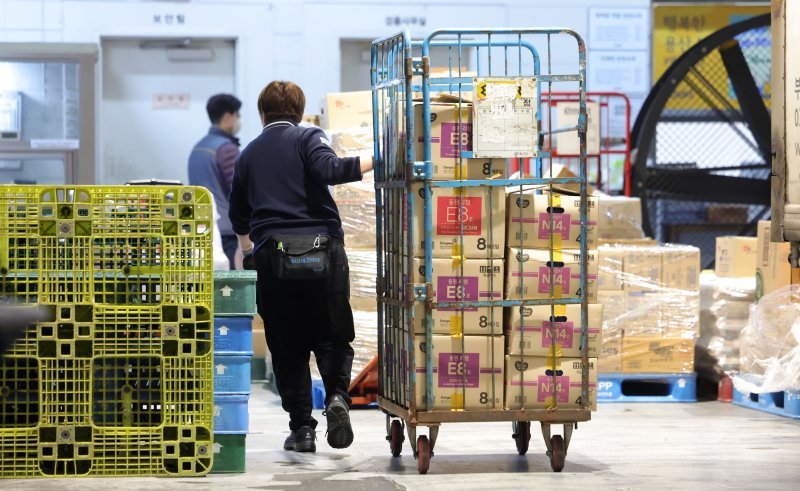
It is fortunate that a regulation so out of step with the times is finally on track to be eased, but it is hard not to say this comes far too late. Restrictions on late-night operations at hypermarkets were introduced in the name of protecting traditional markets and neighborhood businesses. The rules date back to 2012, when large hypermarkets dominated the retail landscape. The government tried to shield traditional commercial districts by imposing tough operating limits on hypermarkets, but the outcome was the opposite of what was intended.
Mandatory operating restrictions and forced closure days for hypermarkets reduced offline foot traffic and instead accelerated the growth of the online market. The major turning point for the Korean retail and distribution market coincided with this period. While hypermarkets, shackled by regulatory chains, were forced to move against the tide, online-based retailers free from such limits soared. Coupang’s near-monopoly in e-commerce is a direct by-product of the government’s misguided distribution regulations.
Discussions on lifting late-night operating restrictions for hypermarkets likely began after Coupang’s massive personal data leak exposed the risks of leaving a distribution monopoly unchecked. Analysts and critics have long pointed out that it is the online sector, not traditional markets, that benefits from regulations on hypermarkets. The very idea of reviving traditional commercial districts by tying down hypermarkets was absurd from the start. In the end, both large hypermarkets and traditional markets were left to wither. In that gap, the upstart Coupang grew into a distribution giant.
The government and ruling party are reportedly discussing amendments to the Distribution Industry Development Act while leaving in place the rule mandating two closure days per month. At the same time, the labor sector continues to demand a ban on dawn deliveries, citing the health of delivery workers. These outdated regulations and demands should be cleared away without delay. There is no reason to lift late-night operating restrictions while keeping mandatory closure days intact. If offline hypermarkets are to function as a real alternative to online retailers, the compulsory closure rule must naturally be scrapped. Given how consumer lifestyles have changed, banning dawn deliveries is simply not realistic. Delivery workers themselves are rebelling against the labor union, saying that if dawn deliveries are blocked, they will lose their livelihoods. If the union keeps digging in its heels, it will only deepen social conflict.
In the United States, Walmart used its brick-and-mortar stores as a base for technological innovation and succeeded in checking Amazon’s dominance. Reinvented as a tech company, Walmart recently surpassed the once-unthinkable market capitalization threshold of 1 trillion dollars, previously reserved for Big Tech. If the heavy nails of regulation are pulled out, Korean retailers will also be able to pursue more bold experiments and new challenges. The government and political circles must decisively unlock the distribution sector.