Vietnam Loves Tteokbokki, America Loves Chicken: The Global Map of K-Dining Has Changed
- Input
- 2026-02-05 11:00:00
- Updated
- 2026-02-05 11:00:00
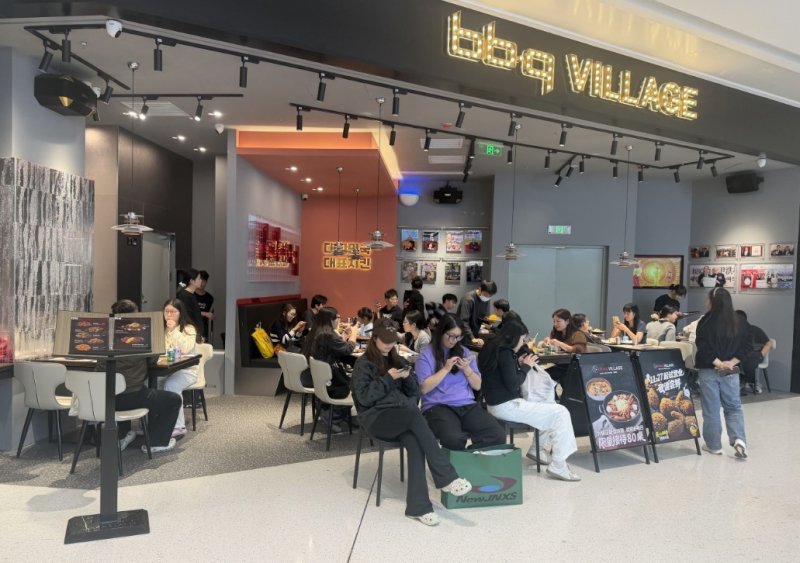
Korean dining brands are riding the Korean Wave to expand their footprint across the globe. They are not just entering new markets, but achieving real growth in sales and store numbers, firmly establishing the status of K-food worldwide.
According to the 2025 Survey on Overseas Expansion of Restaurant Companies released on the 5th by the Ministry of Agriculture, Food and Rural Affairs (MAFRA) and the Korea Agro-Fisheries & Food Trade Corporation (aT), Korean restaurant companies are now operating 4,644 outlets in 56 countries, including the United States, China and Vietnam, building a track record of commercial success in global markets.
The survey found that Korean restaurant companies are achieving both quantitative and qualitative growth overseas, consolidating their fundamentals while expanding at a steady pace. In particular, companies that reported higher sales at their overseas stores over the past year showed notably strong growth.
Over the past five years, the number of companies operating abroad fell from 134 to 122, and the number of brands from 147 to 139. However, the number of destination countries increased from 48 to 56, signaling wider global reach, and the number of overseas outlets run by Korean dining brands rose from 3,722 in 2020 to 4,644 in 2025, an increase of about 24.8%.
The countries with the largest number of Korean outlets are the United States (23.8%), China (17.9%), Vietnam (13.7%), the Philippines (6.3%) and Thailand (5.0%). Traditional strongholds in Southeast Asia such as Vietnam and the Philippines still account for a high share at 36.2%. At the same time, expansion into North America, including the United States and Canada (27.4%), and into Europe, including the United Kingdom and France, has accelerated, turning these regions into new areas of opportunity.
The most striking finding in this survey is the shift in core markets. In 2020, China was the clear leader with 1,368 outlets, but that number dropped sharply to 830 in 2025 due to intensifying local competition. By contrast, the U.S. market more than doubled over the same period, reaching 1,106 outlets and emerging as a new strategic hub for K-dining. Experts say this marks a transition from an era of sheer volume growth, driven by China and Southeast Asia, to a phase of qualitative growth in advanced dining markets like the United States, where brands are generating solid profits with offerings such as fried chicken and bakery products.
Success in the United States has been led by mega brands. bb.q Chicken and Bonchon Chicken have been at the forefront of the K-chicken boom, while Paris Baguette and Tous les Jours have built a K-bakery belt across the country.
Japan, where Korean dining brands have grown by more than 68%, shows how K-dining has evolved from serving mainly Korean expatriates into a core content of the so-called fourth wave of the Korean Wave among local MZ (millennial and Gen Z) consumers. The main drivers behind Japan’s rise into the top 10 markets were chicken and beverage or K-dessert concepts.
Vietnam has also maintained a strong position, with the number of outlets there growing 37.2% compared with 2020. In particular, Lotteria and Dookki Tteokbokki have successfully established new categories such as K-burgers and K-snack foods, and are cited as leading examples of diversification in the sector.
Among Korean brands operating overseas, chicken specialty restaurants and bakeries continue to rank first and second by share, while Korean restaurants are in third place and pizza, hamburger and sandwich chains have moved into fourth. Chicken (1,809 outlets) and bakeries (1,182 outlets) together account for about 64% of all overseas locations, once again confirming that these two segments are the twin engines of K-dining’s global growth.
Based on the survey results, MAFRA plans to step up tailored support for each stage of overseas expansion, provide package support that links restaurant brands with exports of food ingredients, and expand country- and region-specific market information, in order to help K-dining take firm root in global markets.
Jeong Gyeong-seok, Director General for Food Industry Policy at MAFRA, stated, "The overseas expansion of restaurant companies is not just about opening more stores; it is a key pillar in enhancing the competitiveness of Korean food culture and the broader food industry." He added, "We will back K-dining so it can continue to grow in the global market by providing practical support that reflects on-the-ground needs."
[email protected] Seo Young-jun Reporter