TSMC to Mass-Produce 3-Nanometer Chips at Second Plant in Japan
- Input
- 2026-02-05 09:17:10
- Updated
- 2026-02-05 09:17:10
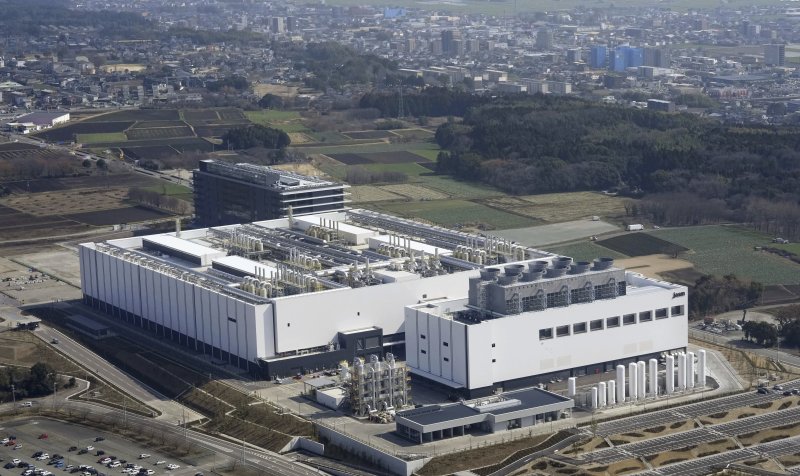
TOKYO, Financial News — Taiwan Semiconductor Manufacturing Company (TSMC), the world’s largest contract chipmaker, has recently drawn up a plan to mass-produce cutting-edge 3-nanometer (nm, one-billionth of a meter) semiconductors at its second plant in Kumamoto, Japan, and has conveyed this plan to the Japanese government. The government believes the project will significantly strengthen Japan’s chip manufacturing capabilities and intends to consider additional support for TSMC.
The Yomiuri Shimbun reported this on the 5th, citing government sources.
TSMC had initially planned to produce 6–12 nm chips at its second Kumamoto plant, with an investment of 12.2 billion dollars. It has now revised the plan to manufacture 3 nm chips instead. As a result, capital expenditure is expected to increase to about 17 billion dollars (approximately 1.583414 trillion yen), higher than the original estimate.
TSMC executives are scheduled to visit the Prime Minister’s Official Residence of Japan on the same day to hand Prime Minister Takaichi the revised business plan in person. They will then discuss the changes with the Ministry of Economy, Trade and Industry (METI).
In general, as semiconductor process technology becomes more advanced and chip features shrink, chips can process data faster and handle larger volumes of information.
Three-nanometer chips are used in AI data centers, autonomous driving systems, and robotics, among other applications. However, Japan currently has no production base capable of manufacturing such advanced chips.
The government expects that, under the revised plan, Japanese chipmaker Rapidus Corporation and TSMC will not directly compete in the same market segment. Rapidus, which is pursuing domestic production of state-of-the-art semiconductors, aims to begin mass production of 2 nm chips in Hokkaido in 2027.
Judging that the revised project will greatly enhance Japan’s semiconductor manufacturing capabilities, the government is also considering additional support for TSMC. It has already decided to provide up to 732 billion yen in subsidies for Kumamoto Plant 2.
As global competition over semiconductor production intensifies, the Takaichi Cabinet has pledged to focus investment on growth sectors such as semiconductors, AI, and digital technologies, and is working to attract chip plants to Japan through subsidies and other incentives.
The location of a semiconductor plant brings large-scale employment and significant economic spillover effects to the surrounding region. The government expects the new plant to serve as a core industrial cluster and play a central role in its regional revitalization strategy.
[email protected] Seo Hye-jin Reporter