Yeo Han-koo: “Swift passage of the Special Act on Investment in the United States will help block U.S. tariff hikes”
- Input
- 2026-02-05 08:40:22
- Updated
- 2026-02-05 08:40:22
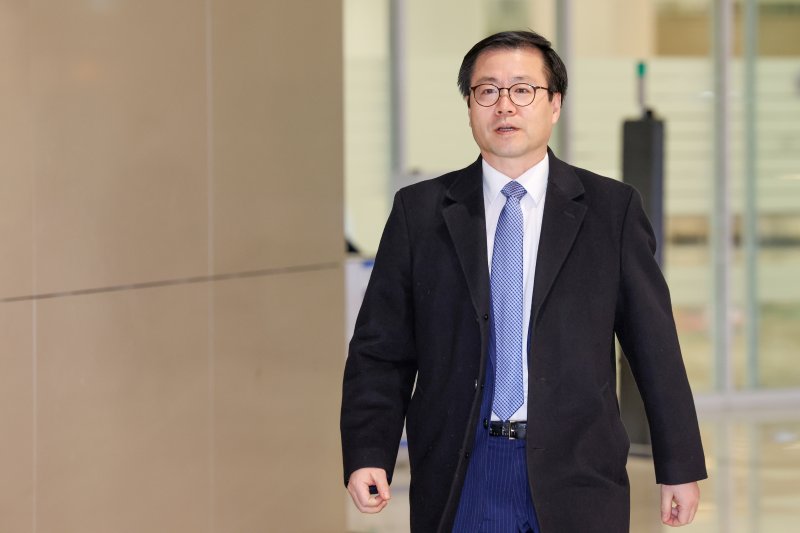
On the 5th, Minister for Trade Yeo Han-koo said that the National Assembly’s decision to form a special committee to handle the Special Act on Investment in the United States and push for its passage within a month "will help prevent the United States from raising tariffs."
Yeo, who completed his trip to the United States to counter mounting U.S. pressure to increase tariffs on South Korea and returned via Incheon International Airport the same day, told reporters that "the main reason the United States has cited for raising tariffs is the delay in enacting the Special Act on Investment in the United States." He added, "The National Assembly’s decision, backed by bipartisan agreement, to speed up the legislative process is clearly a positive signal in persuading the United States."
He explained that during his visit to the United States, which began on the 29th of last month, he focused on meeting successively with the deputy representative of the Office of the United States Trade Representative (USTR), members of Congress and think tank officials to underscore the South Korean government’s commitment to fulfilling its investment pledges in the United States. "I stressed that South Korea intends to faithfully and swiftly implement the tariff agreement," he said, "and I tried to convince them that, given we are acting in good faith, it would be undesirable for this to immediately lead to tariff hikes."
Yeo added that although he was unable to meet directly with his counterpart, Jamieson Greer of USTR, during this trip, they have had five in-person contacts over the past three weeks and plan to continue consultations next week. "Including the representative, we have held three in-depth rounds of talks at various levels, such as director-general level," he noted.
Regarding whether Trump’s plan to raise tariffs will be published in the Government Gazette, Yeo commented, "What matters more than whether it is published in the Government Gazette is whether the tariff increase takes effect immediately or whether there is a grace period of one to two months." He added, "There is still time left for further consultations." Reiterating the government’s basic stance, he said, "We are making it clear to the U.S. side that, given South Korea’s good-faith efforts are ongoing, there is no need for publication in the Government Gazette in the first place."
On issues related to individual companies such as Coupang, he said, "It is difficult to disclose the specific details of trade consultations," but added, "The joint fact sheet agreed by the two countries last November covers not only investment but also various elements such as non-tariff barriers, so careful management is needed to prevent these matters from escalating into friction." He drew a line under some reports that the United States had proposed energy-sector investments in South Korea, saying, "We have not discussed that issue with USTR."
Yeo said he felt firsthand how tense the global trade environment has become while he was in Washington, noting that "a large-scale trade deal between the United States and India was being concluded, and agreements over critical minerals between the United States and the EU, Japan and Mexico were proceeding simultaneously." He stressed, "In the midst of such uncertainty, it is important to respond calmly and with composure."
He went on to say, "Building on the trust accumulated between South Korea and the United States and on South Korea’s strategic importance, we must continue consultations with the national interest as our top priority." He reiterated, "At this stage, the most urgent task is the swift passage of the Special Act on Investment in the United States."
[email protected] Park Ji-young Reporter