Korean Wave IP Becomes an Industry Beyond Merchandise...Sales Soar 976% in First Year After Program Transfer
- Input
- 2026-02-05 14:06:17
- Updated
- 2026-02-05 14:06:17

[Financial News] A support program for planning and developing products that utilize Korean Wave content intellectual property (IP) has delivered notable results after a complete overhaul of its structure, and is now being highlighted as a successful case of policy remodeling.
According to the Korea Creative Content Agency (KOCCA) on the 5th, the open-track “Support Program for Planning and Developing Products Utilizing Korean Wave IP” recorded total sales of 3.6 billion won from supported projects in 2025. This represents a 976% increase from the previous year’s 340 million won. Notably, 36% of total sales came from overseas markets. In the first year after the program was transferred to KOCCA due to poor performance, it achieved a “quantum leap.”■ Expansion from celebrity-focused IP to all content genresThe “Support Program for Planning and Developing Products Utilizing Korean Wave IP” is based on the Act on the Promotion of the Korean Wave Industry. It aims to plan and develop products through collaboration between domestic content IP holders and domestic companies, while also promoting licensing businesses and helping them enter overseas markets.
In particular, the program supports the entire process so that Korean Wave IP held by small and medium-sized content companies can be organically linked with related industries such as food and beverages, fashion, beauty, and tourism. Support spans from business meetings and prototype production to planning and development, distribution, marketing, and overseas expansion.
A key driver behind the strong performance was the complete restructuring of the program. Previously, support was centered on celebrity IP, which limited both the scope of use and the sustainability of the business. In fact, in 2024, about 75% of supported projects were concentrated on celebrity IP.
To address this, KOCCA expanded the scope of support to include IP across all content genres, such as animation, characters, dramas, webtoons, games, and K-pop. In line with the term “Korean Wave,” overseas recognition was also added as a criterion for IP selection. Beyond product development, overseas distribution and marketing were included in the support items, creating a structure that connects “product development–market testing–performance generation.”
Support amounts were also adjusted to reflect reality. The cap for open-track projects was raised to 150 million won, and matching-track projects to 40 million won, enhancing the program’s effectiveness.
The remodeled program has also proven successful in overseas markets. The Japanese album and merchandise (MD) project of virtual idol group Playve topped the Oricon chart and sold out its concert merchandise in Japan, generating about 2 billion won in sales. Boy group ENHYPEN’s MD also achieved global distribution results by entering 7-Eleven stores in Korea and Taiwan and Don Quijote stores in Japan.
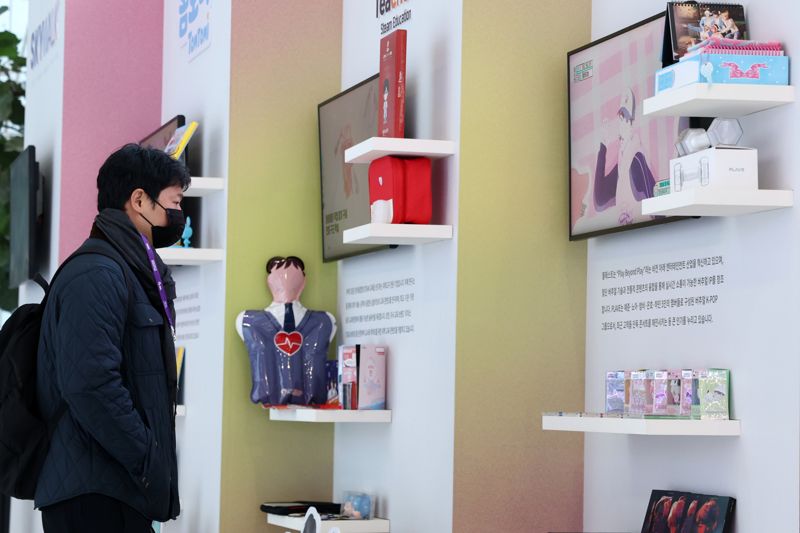
Son Tae-young, Head of the Content IP Strategy Team at KOCCA, said, “Celebrity IP has limitations for continuous commercialization of products due to portrait rights issues and restricted usage periods,” adding, “By expanding the scope to IP across all content genres, we have gone beyond typical merchandise such as dolls and keyrings to develop a wide range of products, including plastic models and medical education kits. This has greatly broadened the scope of IP utilization and business scalability.”
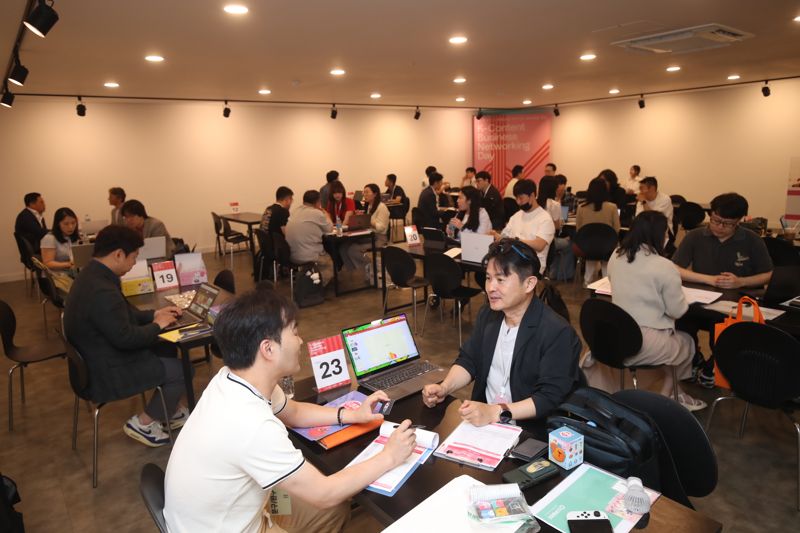
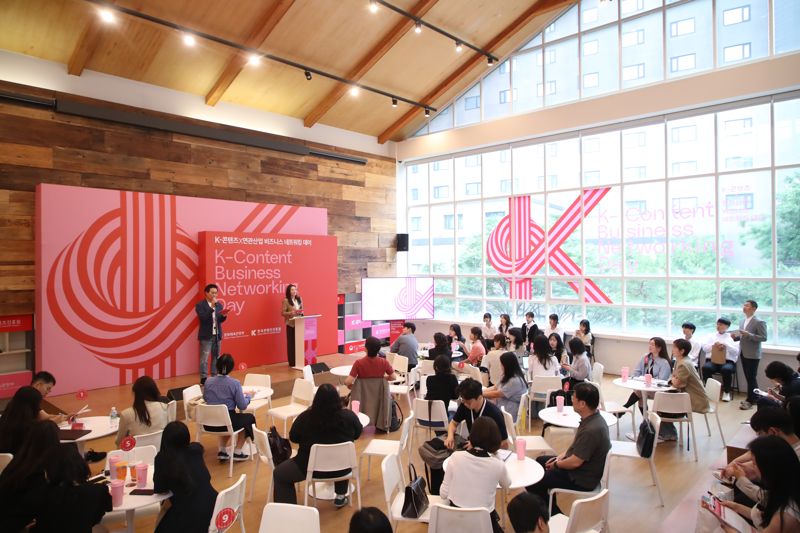
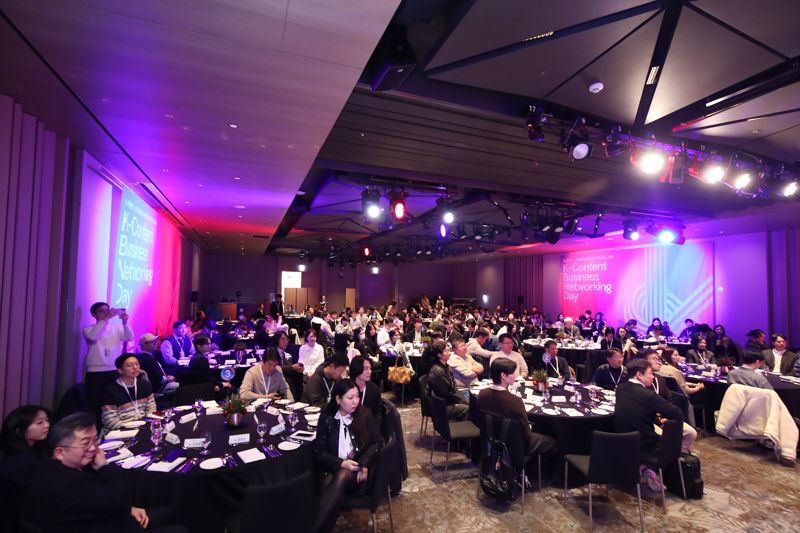
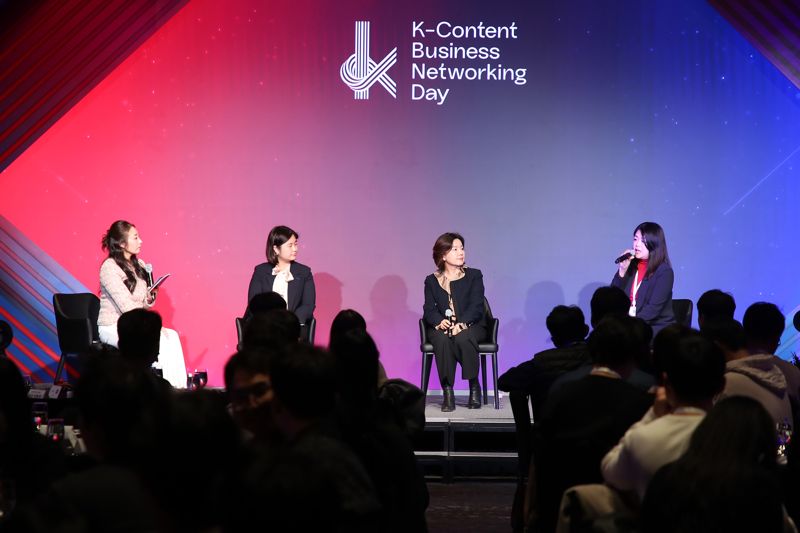
The flexible support system, tailored to a market that has shifted toward fandom-based niche segments, and the strengthening of corporate autonomy are also seen as key factors behind the 976% surge in sales. Expanding consumer touchpoints through pop-up stores was likewise cited as a contributor to the results.■ Business success through a “fast-track” systemThe matching-track program commercializes collaborative projects between content companies and related-industry companies that are paired through the “K-Content X Related Industries Business Networking Day.” Introducing a “fast-track” structure to address the limitations of traditional networking formats has led directly to tangible outcomes.
Previously, networking days had a low proportion of related-industry companies, and there was no follow-up support after the event, making it difficult to move toward actual commercialization. To resolve this, KOCCA created a follow-up matching-track program that directly supports the development of collaborative products.
In the very first year, the program recorded a high competition rate of 4.2 to 1, and a total of six collaborative products were developed. Among them, the “Kids All-in-One Wash Set” using the “Princess Bunny” IP, a next-generation character from Pororo the Little Penguin producer Ocon Studios, was released as a real product just three months after planning began, proving the effectiveness of the fast-track model.
To reduce “mismatched partnerships” between companies, KOCCA conducted a detailed analysis of each company’s needs in advance. It mobilized all available networks, including inter-ministerial consultative bodies, to expand opportunities for exchange, and linked the program with the Seoul Character & Licensing Fair and the Content IP Market. This diversified participation to include companies such as Amorepacific (beauty), HiteJinro (food and beverages), Hyundai Department Store (distribution), and Woori Card (finance). As a result, the number of participating companies rose 185% year-on-year, the number of related-industry companies jumped 338%, and their share among participants increased from 30% to 45%.
The most significant change felt by the industry is that “meetings have turned into reality.” Participants cited the structure that allowed them to move directly from networking to production and distribution as the program’s greatest strength.
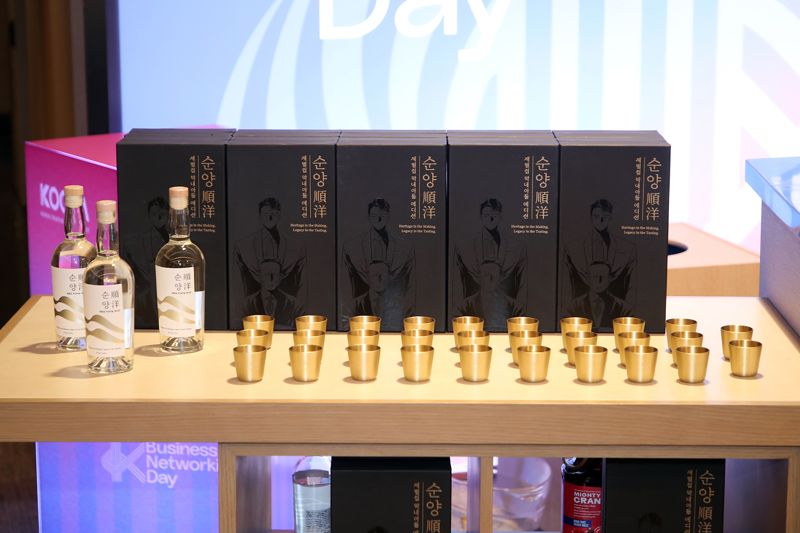
Lee Ji-min, CEO of Daedong Yeoju-do, which introduced the traditional “Sunyang Liquor Set” based on the webtoon “The Youngest Son of a Chaebol Family” from Munpia, said, “Given the high cost burden of planning, development, and production in the traditional liquor sector, sufficient support for these stages played a decisive role in enhancing the final product quality.” He added, “The Networking Day has become not a one-off event, but the starting point for new business opportunities.”
Korean Wave content IP has now become a core element that goes beyond simple consumer goods and is reshaping the structure of the global industrial ecosystem.
A KOCCA representative expressed expectations, saying, “If we grow together with related industries such as food and beverages (F&B), beauty, and distribution, it could have positive effects not only on the overall industry but also on the national economy.”
[email protected] Shin Jin-ah Reporter