US and Iran to Hold Nuclear Talks in Oman on the 6th: Will Tensions in the Middle East Ease?
- Input
- 2026-02-05 07:43:38
- Updated
- 2026-02-05 07:43:38
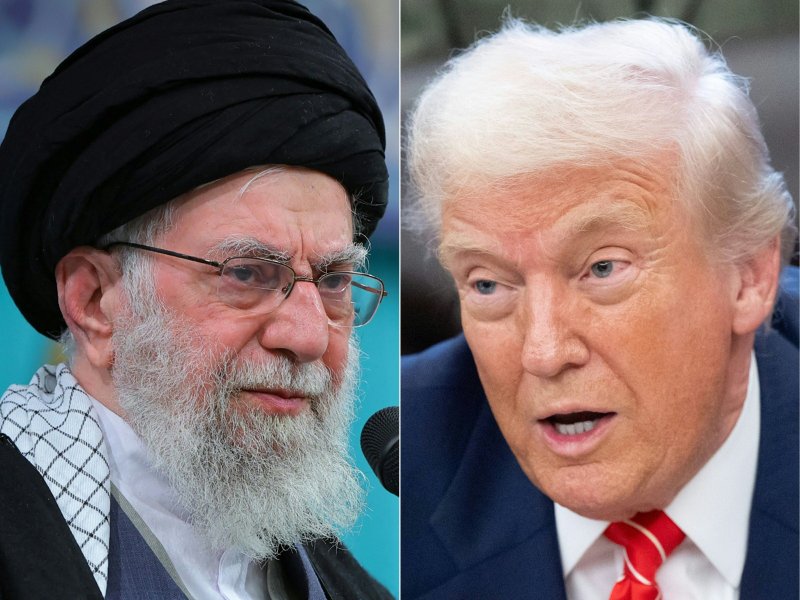
Financial News reported that Iran, which has had strained relations with the United States due to last year’s strikes on its nuclear facilities and this year’s threats of military intervention, has agreed to hold nuclear weapons talks with Washington in Oman on the 6th local time.
Iranian Foreign Minister Abbas Araghchi wrote on the social media platform X (formerly Twitter) on the 4th, saying, “Nuclear talks with the United States are scheduled to be held in Muscat (Oman) at 10 a.m. on the 6th,” and added, “We thank our Omani brothers for making all the necessary preparations.” The Associated Press (AP), citing a US government official, confirmed that the two countries will hold high-level talks in Oman rather than Türkiye. According to the official, leaders of several Arab countries urged Washington to continue nuclear negotiations with Iran. The official noted that the United States is “highly skeptical” about the chances of success, but agreed to accept the change of plans out of respect for its Middle Eastern allies.
Previously, Iran and six countries — the United States, the United Kingdom, France, Germany (the E3), and others — signed the Iran nuclear deal in 2015, formally known as the Joint Comprehensive Plan of Action (JCPOA). Under the agreement, economic sanctions would be lifted if Iran abandoned its pursuit of nuclear weapons. However, during his first term in office in 2018, US President Donald Trump unilaterally withdrew from the deal, arguing that it did not adequately restrain Iran, and reinstated economic sanctions.
After beginning his second term last year, Trump held five rounds of one-on-one denuclearization talks with Iran between April and May, but they produced no tangible results. In response, US forces assisted Israel in bombing Iran’s nuclear facilities in June of last year. The E3 then led efforts at the United Nations in September to restore sanctions on Iran, arguing that Tehran had failed to comply with the nuclear agreement. As a result of its growing international isolation, Iran suffered severe inflation and, from late last year into early this year, was rocked by large-scale anti-government protests.
Trump used those protests as a pretext to threaten possible US military intervention in Iran. At the same time, he stressed that Tehran must come to the table to negotiate giving up nuclear weapons. On the 3rd, Iranian President Masoud Pezeshkian wrote on X that Iran could enter into a nuclear agreement with the United States, saying, “If an appropriate environment is created without threats and unreasonable expectations, I have instructed the foreign minister to pursue fair and equitable negotiations based on the principles of dignity, prudence, and pragmatism.”
The two countries had initially planned to hold the talks in Istanbul, Türkiye, with officials from neighboring Middle Eastern states observing. However, Iran later changed its position and asked the United States to move the venue to Muscat, the capital of Oman.
Axios reported on the 4th that the nuclear talks could fall apart after Washington rejected Tehran’s request to change the venue. On the same day, US Secretary of State Marco Rubio, commenting on Iran’s request, said, “It is still under discussion. Ultimately, what matters most is that the United States is prepared to talk with Iran.” Rubio added, “I am not sure we can reach an agreement with them, but we will try to find out. There is no harm in trying to see whether there is anything that can be resolved.” He went on to say, “If we are to get anything meaningful out of this, certain issues must be on the agenda, including the range of their ballistic missiles, their support for terrorist organizations in the Middle East, their nuclear program, and their treatment of their own people.”
Meanwhile, in an interview with NBC on the 4th, Trump mentioned Iran’s supreme leader, Ayatollah Seyyed Ali Khamenei. He said, “Khamenei should be very worried about his own safety,” implying that the United States still might launch an attack on Iran.
[email protected] Reporter Park Jong-won Reporter