Foreign Investors Suddenly Turn Bearish... Dump Over 1 Trillion Won of Samsung Electronics
- Input
- 2026-02-05 06:28:53
- Updated
- 2026-02-05 06:28:53
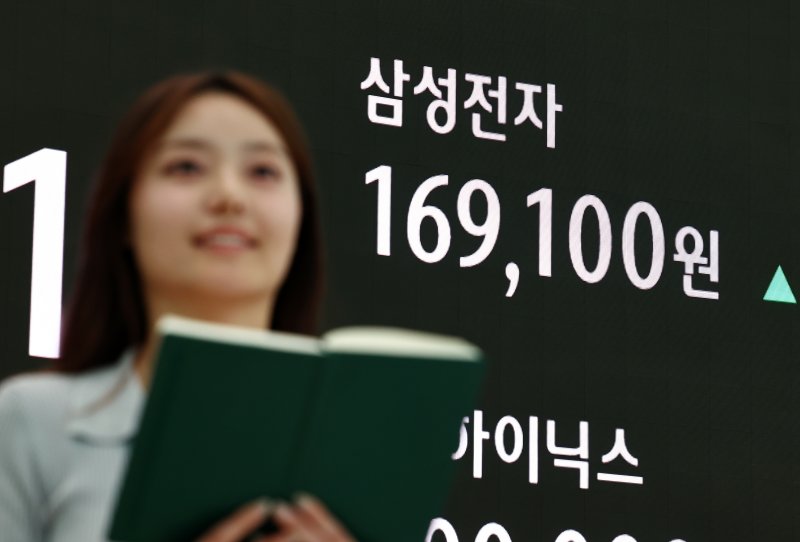
In the domestic stock market, funds waiting to be deployed into short selling are rising rapidly. As the Korea Composite Stock Price Index (KOSPI) has surged more than 20% since the start of the year, concerns are growing that a correction may be imminent. If a large volume of short selling flows in, even small pieces of bad news can sharply increase share-price volatility. On top of this, foreign investors have recently been unloading semiconductor stocks on a large scale.
Securities lending balance hits record 141 trillion won
According to data compiled by the Korea Financial Investment Association (KOFIA) on the 5th, the balance of securities lending transactions in the domestic stock market stood at 141.0999 trillion won as of the 3rd, the highest level on record. This is up 27.21% (30.177 trillion won) from 110.9229 trillion won at the end of last year. The lending balance has been soaring since it surpassed 100 trillion won last September, in step with the strong stock market. On the 2nd alone, it jumped by more than 9 trillion won in a single day to reach the 131 trillion won range. Securities lending is mainly used by foreign and institutional investors who expect share prices to fall and borrow stocks for short selling.
The increase in the securities lending balance signals that more investors are worried about a sharp reversal in stock prices. Since the KOSPI started the year around the 4,200 level and then climbed more than 1,000 points in just one month, the risk of a downward reversal has grown. Short selling based on securities lending is used both to limit potential losses and to generate profits when share prices decline.
In the KOSPI market, the net short-selling balance also exceeded 14 trillion won on the 29th of last month, having increased by nearly 2 trillion won so far this year. The net short-selling balance represents the amount of shares that investors have borrowed and sold but have not yet repurchased and returned. In the KOSDAQ market, the net short-selling balance has likewise been above 7 trillion won since the 26th of last month.
Short selling is largely concentrated in large-cap stocks. On the 3rd, the Korea Exchange (KRX) designated Hyundai Rotem as a short-selling overheated stock. On the 23rd of last month, Samsung Biologics, SNT Energy and Cosmo Advanced Materials were also added to the KOSPI market’s list of overheated short-selling stocks. In the KOSDAQ market, Silicontwo, HPSP, KT Nasmedia, Devsisters and MegaStudyEdu have been flagged as overheated. Lee Sang-hyun, a researcher at Meritz Securities, explained, “Although the scale of short selling has surged recently, high-quality stocks with solid earnings may face relatively lower downside risk.”
Foreign investors dumping Samsung and SK hynix
With the burden from the rapid short-term rally mounting, data from the Korea Exchange (KRX) show that foreign investors have been net sellers of SK hynix and Samsung Electronics more than any other stocks so far this month.
Over the past three trading days, their net selling amounted to 2.719 trillion won and 1.236 trillion won, respectively. SK Square, the largest shareholder of SK hynix, ranked third in net selling with 329 billion won. HANMI Semiconductor, a specialist in semiconductor back-end process equipment, also made the top tier of net-sold stocks with 129 billion won. Hyundai Motor, which had been on an upward trend since the start of the year, ranked fourth with net selling of 229 billion won.
The stock that foreign investors bought the most this month was Doosan Enerbility, with net purchases of 421 billion won. Strong buying also flowed into Taihan Cable & Solution, which ranked fourth with 106 billion won in net purchases. This is seen as reflecting heightened expectations for MANUGA (Make American Nuclear Great Again), a Korea–US nuclear power cooperation project. In line with the global trend of rising defense spending, Hyundai Rotem, in second place with 113 billion won, and Hanwha Systems, in fifth place with 106 billion won, also ranked among the top net buys.
[email protected] Han Seung-gon Reporter