[Editorial] Older People Working, Young People Idle: Time to Expand the Job Pie
- Input
- 2026-02-04 18:39:44
- Updated
- 2026-02-04 18:39:44
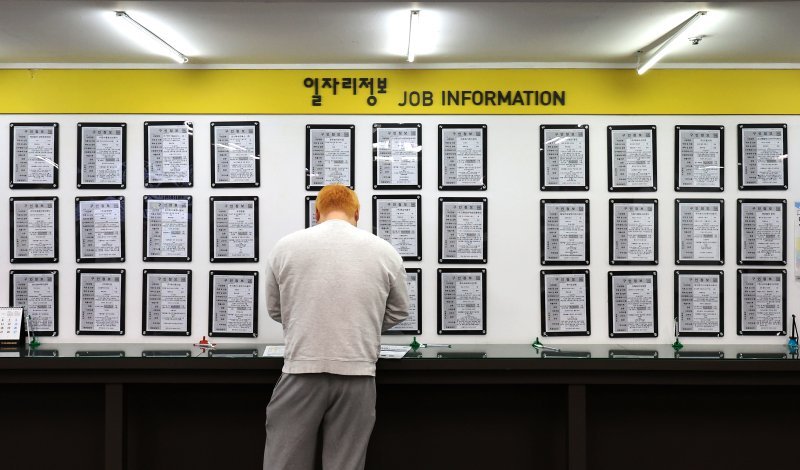
In contrast, employment conditions for young people have barely improved. Last year, the youth employment rate was 45%, down 1.1 percentage points from the previous year. In particular, the number of people in their 30s who are economically inactive and classified as "just taking a break" reached 309,000, the highest since related statistics began. Overall unemployment stood at a seemingly sound 2.8% last year, but once generational differences are taken into account, the labor market’s underlying dynamism is in fact weakening.
The starkly different employment trends for older and younger generations stem from a labor market structure that is especially unfavorable to young people. Companies increasingly prefer experienced and skilled workers who can be deployed immediately, while cutting back on new hires. At the same time, economic slowdown and automation have reduced the number of quality jobs overall. Large corporations are shrinking entry‐level recruitment, which lengthens young people’s job‐seeking period and delays their entry into the labor market. On top of this, mismatches between education and industry needs and the concentration of opportunities in the greater Seoul area are intensifying competition among young people for a limited pool of jobs.
If this intergenerational employment gap becomes entrenched, the burden will spread across society. Young people lose crucial opportunities to build careers and accumulate assets. This in turn leads to fewer marriages and births and weaker consumption, undermining the drivers of economic growth. Older workers, for their part, are often unable to secure stable positions and remain stuck in low‐wage, short‐hour jobs. When the transfer of skills and experience between generations does not function smoothly, corporate productivity and capacity for innovation inevitably decline.
This is not a problem unique to Korea. Around the world, economies are facing a complex crisis of slowing growth, industrial restructuring, and the spread of automation and humanoid robots. Traditional manufacturing and service jobs are disappearing rapidly, while new positions are being created mainly for a small group of highly skilled workers. Productivity is rising, but employment and income are not increasing broadly, making "jobless growth" a reality.
Nevertheless, government measures remain piecemeal, such as simply expanding hiring at public institutions. Such approaches only divide up a fixed number of jobs and do little to revive the overall vitality of the labor market. What is needed is a shift from a structure in which generations compete with one another to one in which they grow together.
The country must create quality private‐sector jobs in new industries and advanced technology fields, while firmly establishing performance- and job‐based wage systems to increase employment flexibility. A comprehensive jobs strategy is also required, combining expanded youth hiring with retraining and transition programs for older workers. Only structural reforms that expand the overall "job pie" can ease generational conflict and build sustainable employment.