You Can’t Boost Births Just by Spending Money: Time to Focus on Quality of Life, Not Headcounts [Editorial Analysis]
- Input
- 2026-02-04 18:36:55
- Updated
- 2026-02-04 18:36:55
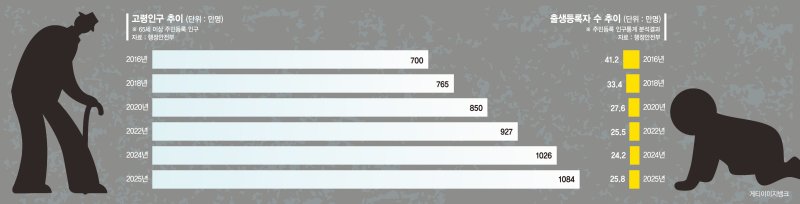

I heard a lecture by David Coleman, an emeritus professor at the University of Oxford, in May 2023. Coleman is a world-renowned demographer who has predicted that Korea could become the first country to face population extinction. In a lecture hosted by the Korean Peninsula Future Population Research Institute, he pointed in particular to the rapid entry of highly educated women into the workforce and the difficulty of balancing work and family as key causes of low fertility. He projected that Korea could disappear by the year 2750 and Japan by 3000, and cited the gap between rapid economic growth and social change, family-centered culture, and patriarchal social structures as common challenges facing both countries.
The risk of national extinction due to low birthrates, along with its causes and possible remedies, has been widely debated. Recognizing diverse family forms such as non-marital births, curbing excessive private education, and stabilizing employment are all important parts of the answer. Yet looking back now, what feels more striking is something I did not fully focus on at the time: Coleman’s claim that there is, in effect, no way to fundamentally overcome low fertility. He remarked, “If I knew the solution, I would have won the Nobel Prize,” and added, “Economic support alone cannot be the answer. It is little different from a Ponzi scheme.” He also noted, “Other countries have not solved this either. Even where the same problems exist, they are being managed rather than resolved.” The key takeaway from Coleman’s population theory is the idea that low fertility is not a phenomenon to be “solved” but one to be “managed.” A shift in perception is needed. Under the shock of phrases like “national extinction,” we may have overlooked what truly deserves attention in the debate on low birthrates.
■ Low fertility and population decline: An outcome of evolution?
We are currently worrying about two seemingly contradictory issues at the same time. On one hand, we fear the disappearance of jobs due to artificial intelligence (AI) and humanoid robots. On the other, we are anxious about population decline caused by low birthrates and aging. Recently, Korea’s four major accounting firms reportedly reduced their annual hiring of new accountants from around 1,100 in 2019 to about 700 this year, a drop of more than 30%. Some argue that jobs are not disappearing, but that AI is simply taking over certain tasks. Even so, by deploying AI to handle basic work previously done by accountants, the firms have cut a combined 200,000 working hours a year—equivalent to the annual workload of about 80 accountants.
As AI use becomes mainstream in law firms, demand for lawyers is also falling sharply. New lawyers have traditionally learned the trade by conducting research, analyzing cases, and drafting initial documents. Now that AI can perform much of this work faster and at lower cost, the legal services market is being shaken at its foundations. Korea’s top 10 law firms reportedly reduced their hiring of new lawyers from 296 in 2022 to 227 in 2025, a cut of 23.3%. There are also reports that more than 30% of law school graduates fail to secure jobs as lawyers. It is clear that in virtually every field, the absolute demand for human labor is declining. In such an era, is low fertility not natural—or even necessary?
The authors of *Empty Planet*, Darrell Bricker and John Ibbitson, stress that population decline driven by low fertility and aging is “not unique to Korea.” “Population decline will soon emerge as a global issue. The only question is which country reaches that point first,” they write. If population decline due to low birthrates and aging is a worldwide phenomenon, perhaps we should accept it as one form of evolution and focus on managing it. Alan Mallach, author of *Smaller Cities in a Shrinking World*, likewise argues that population decline is not a problem to be solved but a condition to be managed. We urgently need to reframe population decline not as a problem to be fixed at all costs, but as a task that must be managed over time.
■ Responding to a (super-)aged society: A shift in mindset
As of December 23, 2024, people aged 65 and older account for more than 20% of Korea’s population, meaning the country has officially entered what the United Nations (UN) defines as a “super-aged society.” To explore how to respond, the *fn Insight* series “How Will Korea Grow Old? A Roadmap to Coexistence” is under way. As part of that project, we recently interviewed three professors: Shin Mi-hwa, Koo Jung-woo, and Lee Ji-hee. Some of the details have already been presented in print and video, and others will follow. Here, I focus on one key theme that emerged from the interviews—“a shift in perception” in an era of population decline driven by low fertility and aging.


■ The goal of population policy: Improving quality of life, not just raising the birthrate
A report released on the 1st by the Korea Institute for Health and Social Affairs (KIHASA) can be read in a similar vein. The report recommends that the new Basic Population Plan, due this year, should move away from its traditional focus on “raising the fertility rate.” It stresses in particular that “population policy should not be pursued in ways that induce or pressure people into specific behaviors, such as marrying or having more children,” and argues that “the goal of population policy should be to improve people’s quality of life, rather than to maintain a certain population size.” The report goes on to say that population planning “must go beyond short-term policies to boost the fertility rate and aim to address the root causes of population issues.” Its conclusion is that Korea must systematically tackle the fundamental factors that increase the burden of childbirth and childrearing—namely employment, housing, and education—and ease regional population imbalances to lay the groundwork for long-term balanced growth.
■ Epilogue
Bricker and others have already declared that “no government in the world has succeeded in bribing women with money to have more children.” Korea and many other countries are pouring resources into in vitro fertilization (IVF) subsidies, child allowances, childcare support payments, parental leave systems, and daycare subsidies in an effort to raise fertility. Yet despite astronomical costs, the impact is minimal and the outcomes uncertain. The authors go so far as to say, “It is repugnant for governments not only to pass the bill on to taxpayers, but also to demand that women have more children for the sake of the nation.” The language is extreme, but it resonates with the KIHASA report.
I fully agree with the report’s argument that population policy should “aim to improve people’s quality of life rather than to maintain a certain population size.” I am not a population specialist, but I suspect that if such policies are sustained, the fertility rate will fall and then eventually reach some point of equilibrium. If we can make our society a place that is truly worth living in, then at some point—say when the population has declined to around 35 million—the birthrate may rebound to a level that maintains the population at that time. “Population decline is not inevitable for every generation or every century. Nor is it something that will continue forever.” “For reasons we cannot yet foresee, there may come a time when people start having more children again.” Worrying now about what might happen in the years 2750 or 3000 is to fret about a future far beyond the horizon of our imagination.
[email protected] Reporter