Generation Shift in Automotive Semiconductors: Japan Moves to End Production Cut Nightmare
- Input
- 2026-02-04 15:40:30
- Updated
- 2026-02-04 15:40:30

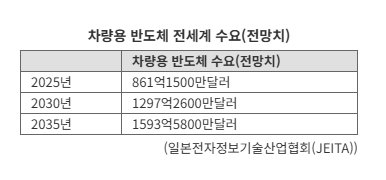
Nikkei reported that, starting in April, a system infrastructure for sharing information on automotive semiconductors with about 20 major chipmakers, including Renesas Electronics, will begin operating under the leadership of the Japan Automobile Manufacturers Association (JAMA). The aim is to immediately identify production sites and make it easier to procure substitutes when supply from a particular country is restricted or when disasters occur.
The system is also intended to identify legacy semiconductors that have been in production for a long time. Products that are no longer suitable for use because a long period has passed since mass production began will be labeled as “not recommended,” prompting automakers to switch to newer semiconductors.
In Japan, automotive semiconductors prioritize safety over performance, so chips produced with equipment introduced in the 1970s and 1980s are still in use. However, there are few alternatives for these parts, which creates significant procurement risk.
Unexpected end-of-life (EOL) decisions for semiconductor production or sudden inventory depletion can disrupt the supply of auto parts, and also discourage new capital investment in production facilities. This raises concerns that Japan’s manufacturing competitiveness in the auto industry could be undermined. During the COVID-19 pandemic, a shortage of legacy semiconductors led to widespread production cuts at automakers.
Observers also note that as chipmakers actively invest in new-generation semiconductors, production volumes of legacy chips are bound to shrink over time.
Toshihiro Mibe, president of Honda Motor and vice chair of JAMA, said, "New investment will be made in very old semiconductor production equipment," adding, "What we have long regarded as our biggest Achilles’ heel will instead become a strength."
Because the automotive supply chain is highly complex, it has been difficult to grasp the overall structure of which subcontracted parts suppliers use which semiconductors. Once the automotive semiconductor information-sharing system is fully implemented, the industry is expected to be able to phase out legacy semiconductors in an organized way and more easily prevent production cuts caused by semiconductor issues.
Alongside the semiconductor information-sharing system, information disclosure within the auto industry will also be strengthened. In its guidelines for stable procurement of automotive semiconductors, released last fall, JAMA stipulated that parts suppliers must be properly notified about the use of electronic components that contain semiconductors.
Until now, there had been some level of information sharing, but in certain cases the information was not sufficiently communicated. Nissan Motor stated, "There have been cases where we did not adequately inform our business partners about expanded use or life extension of existing parts, so we are working to comply with the guidelines."
With regard to automotive semiconductors, Honda Motor experienced production cuts last year after Dutch chipmaker Nexperia halted shipments.
As China-based Wingtech, Nexperia’s parent company, and the Netherlands clashed over control of the company, supply disruptions emerged and Honda implemented production cuts at its North America plants in October and November last year. As a result, its operating profit for the fiscal year ending March 2026 (April 2025–March 2026) is expected to plunge by 150 billion yen (about 1.3912 trillion won).
Nikkei commented, "Semiconductors are a strategically important material in terms of economic security, and any halt in supply would directly affect Japan’s economy," adding, "As the complexity and risks of the parts supply chain increase, cross-industry cooperation is becoming ever more essential."
[email protected] Seo Hye-jin Reporter