Uljin Snow Crab Festival: Feast on Crab, Soak in Hot Springs, and Sail on a Yacht
- Input
- 2026-02-05 17:32:34
- Updated
- 2026-02-05 17:32:34
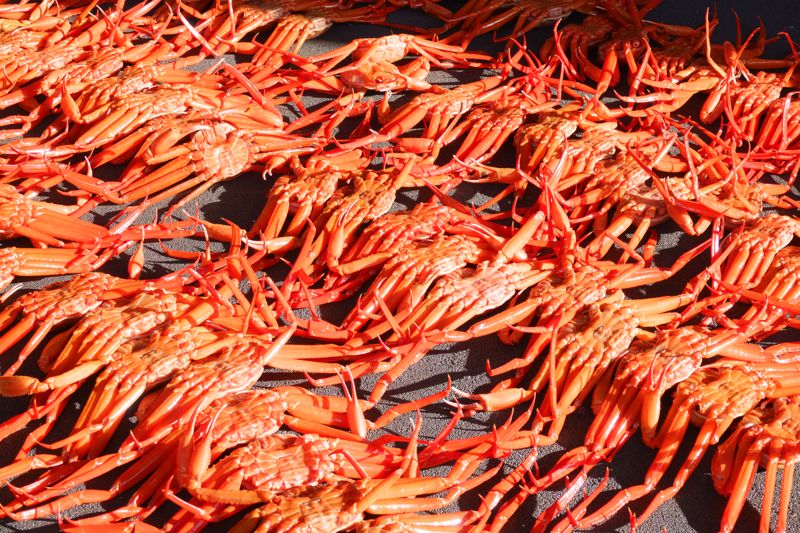
Uljin in North Gyeongsang Province, located along the "spine" of the Korean Peninsula, was once considered a remote area with poor transport links. That perception has changed significantly. The opening of the Donghae Line between Gangneung and Busan last year made access much easier, and this year Korea Train eXpress (KTX) service has also begun. It now takes about four hours to travel from Seoul Station to Uljin via Gangneung Station on the KTX. At the end of this month, many visitors are already planning trips to enjoy the "delicacies of the East Sea" at the 2026 Uljin Snow Crab and Red Snow Crab Festival, which runs from February 27 to March 2. Ahead of the crowds, we visited Uljin, where you can feast on crab, relax in hot springs, and even go yachting.
■ Uljin Snow Crab and Red Snow Crab Festival opens on the 27th
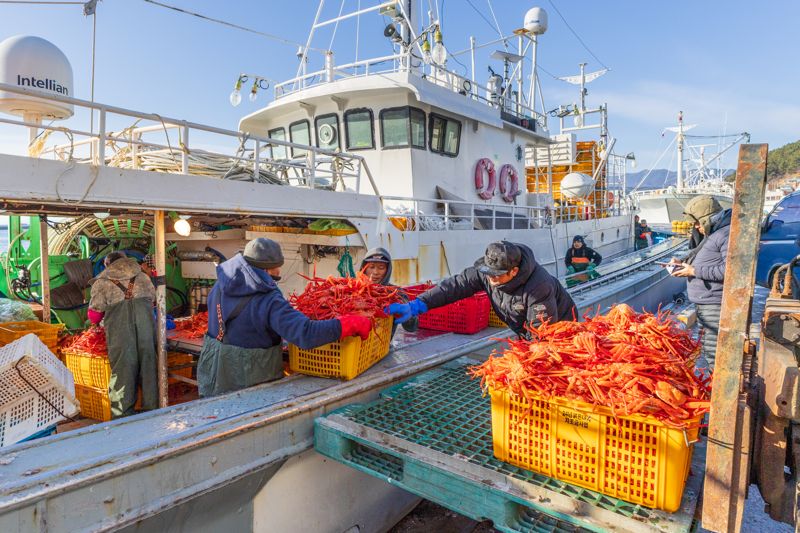
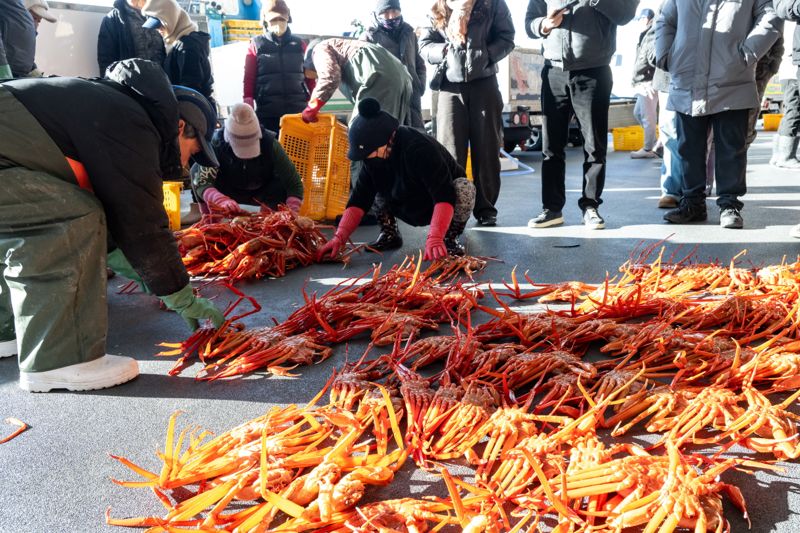
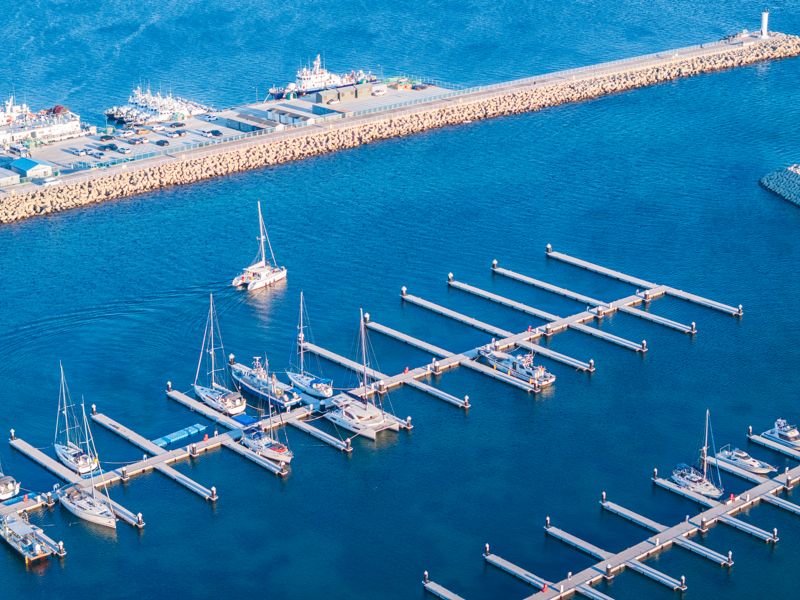
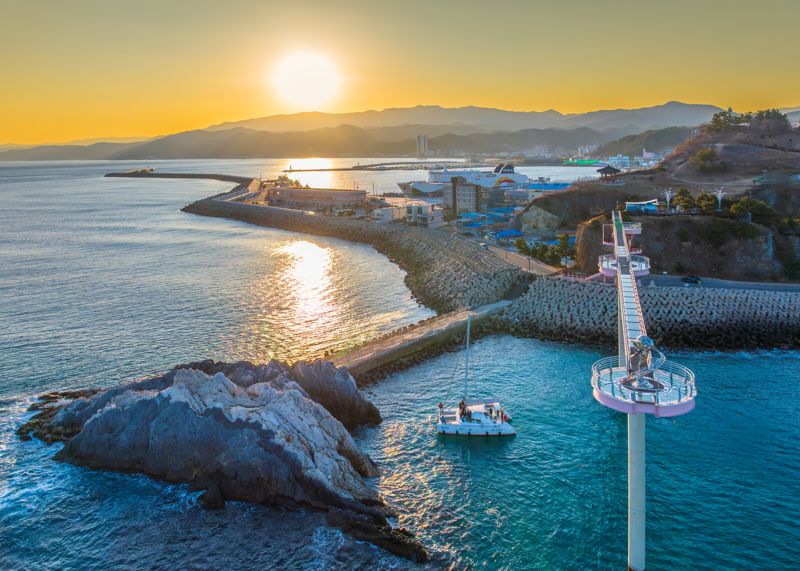
The main stage for the Uljin Snow Crab and Red Snow Crab Festival is Hupo Port. The port first gained nationwide fame in the late 1990s as a filming location for the TV drama "You and I." Today it is the country’s largest snow crab fishing harbor, full of the unique atmosphere and energy of a working port. If you visit in January or February, when the crabs are at their fattest, you can watch freshly caught snow crab from the East Sea being auctioned off right on the dock.
For travelers, the snow crab auction is a spectacle not to be missed. Every morning, as large snow crabs are laid out across the auction floor, brokers and onlookers quickly surround the area. The auctioneer scans the wooden boards held up by brokers, each marked with a bid price, and calls out the highest winning bid. The crabs that have been sold are loaded onto handcarts and wheeled away, while the next batch is spread out on the floor and the process begins again.
Snow crab, said to have been served on the king’s royal table, is at its best when the cold winds blow and the meat is firm and full. The season runs from November through May, but the plumpest crabs are usually enjoyed from February. Uljin, the nation’s top producer of snow crab, is widely regarded as the original home of the delicacy. According to historical records such as Dongguk Yeoji Seungnam, Uljin snow crab has been known as a local specialty since the Goryeo Dynasty.
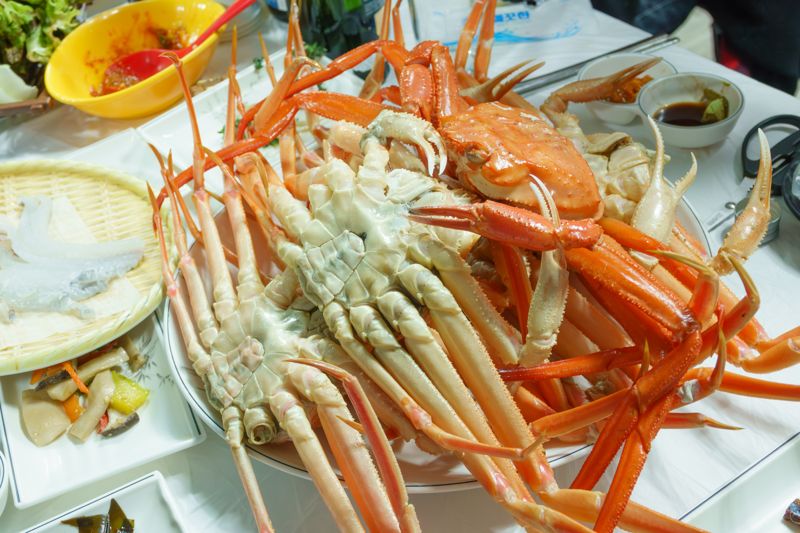
The Korean name for snow crab does not come from its size. It refers to the eight long legs extending from the body, whose joints resemble the segments of dried bamboo. Apart from the shell, almost every part of the crab can be eaten. After steaming the crab for 10 to 15 minutes, you can snap off a leg and gently pull out the pure white flesh in one piece. Mixing hot rice with the rich tomalley inside the shell makes for an unforgettable crab rice dish.
■ "Heal at Baekam Hot Spring and enjoy a yacht ride"
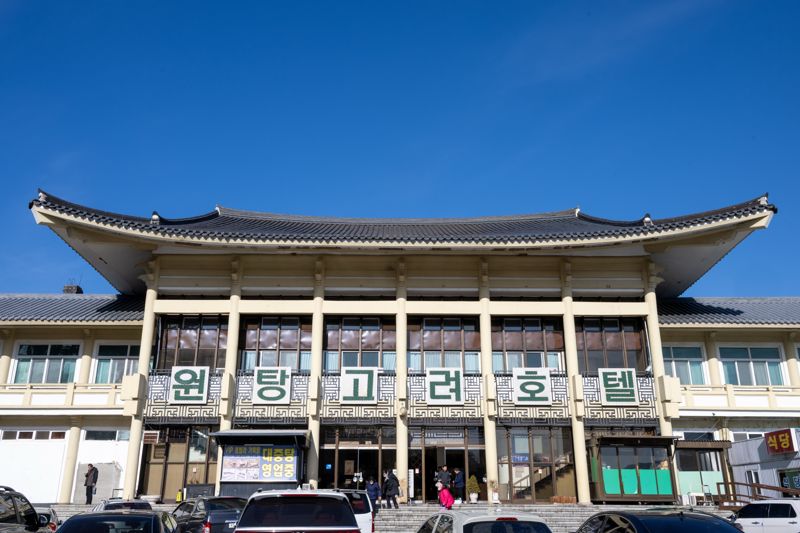
Uljin is also famous for its hot springs. The two best-known are Baekam Hot Spring in Onjeong-myeon, Uljin County, and Deokgu Hot Spring in Buk-myeon, Uljin County. Although they are located in the same region, each has its own appeal, so it is worth checking the strengths of both before you go.
Baekam Hot Spring is a traditional hot spring village nestled in the inland mountains of Uljin. For generations, people have visited for treatment and recuperation. Its waters are a mildly alkaline simple spring, gentle on the skin and soft to the touch, allowing for long, relaxing soaks without strain. Many visitors come seeking relief from joint pain or neuralgia, and the overall atmosphere is quiet and calm.
Deokgu Hot Spring, by contrast, stands out for its natural setting and hands-on experiences. It is the only hot spring in Korea where the water rises naturally to the surface without pumping, and the 42-degree water is used as it is. Open-air baths and resort-style facilities set amid forests and valleys let visitors enjoy both hot spring bathing and the pleasures of travel. In particular, soaking in an outdoor bath while snow falls in winter is considered a signature experience of Deokgu Hot Spring.
In Uljin, you can also board a yacht and cut through the sea breeze while taking in the deep blue waters of the East Sea. Yacht tours depart from the Uljin Yacht School at Hupo Port. Once it leaves the mooring area, the yacht glides over the blue waves of the East Sea, drawing passengers into a dreamlike experience. The sunset view of Hupo Port from the deck is especially stunning.
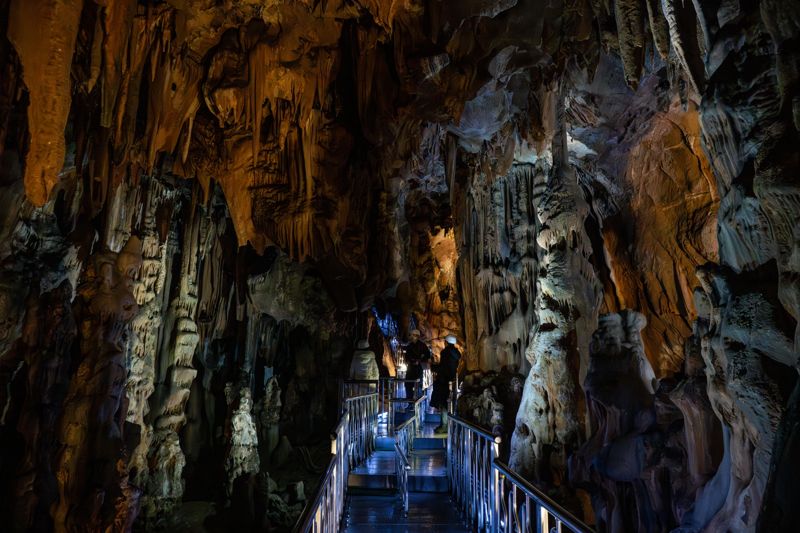
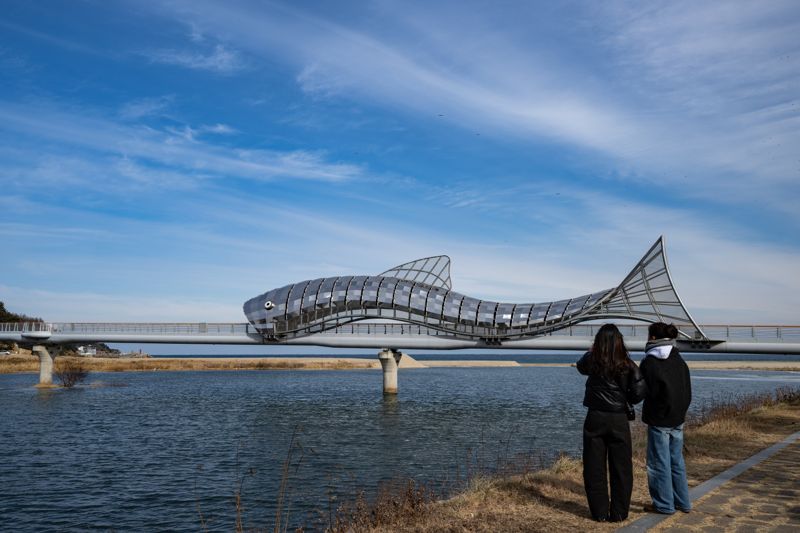
■ Wolsongjeong Pavilion and Seongnyu Cave, two of Uljin’s scenic treasures
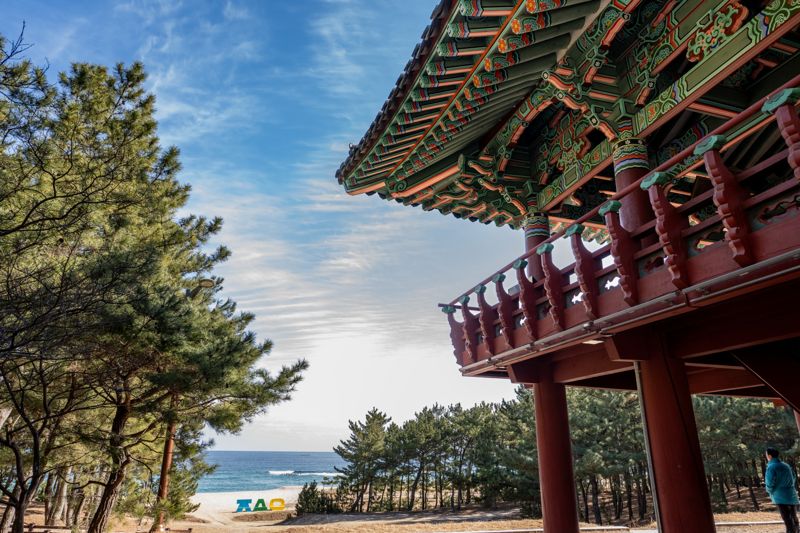
Uljin is home to many scenic sites, including Wolsongjeong Pavilion and Mangyangjeong Pavilion, both among the Eight Scenic Views of Gwandong, as well as Bulyeongsa Temple and Seongnyu Cave. Wolsongjeong Pavilion is an old pavilion first built during the Goryeo Dynasty and reconstructed in the 1980s in its traditional style. One explanation for its name is that it means a pine grove that harmonizes with the moonlight, while another holds that it refers to an immortal crossing the pine forest. The latter is considered the correct origin.
Around the pavilion, a dense forest of black pine makes for a pleasant walking path, and the vast expanse of the blue East Sea opens up right in front of you, giving a liberating sense of space. Visitors can also enjoy the plaque inscribed with a poem by King Jeongjo, who captured the beauty of this landscape in verse. The main signboard, written in clear, formal script, was penned by former president Choi Kyu-hah.
Many visitors also make their way to Seongnyu Cave, located along the Wangpicheon Stream in Geunnam-myeon, Uljin County. Designated Natural Monument No. 155, Seongnyu Cave has long been regarded as a sacred place. In the historical text Samguk yusa, compiled by Il-yeon, there is a story about Prince Bocheon, who practiced Buddhism here. Bocheon, son of King Sinmun, the 31st ruler of Silla, renounced the throne and devoted himself entirely to Buddhist training. It is said that after reciting sutras day and night inside the cave, he attained such spiritual power that he could float freely in the air. The name Seongnyu Cave literally means "the cave where the saintly Bocheon stayed."
The painter Jeong Seon, known by his pen name Gyeomjae, also left a depiction of Seongnyu Cave. While serving as magistrate of Cheongha in Gyeongsang Province (today’s Pohang area) in 1734, he produced several paintings, and this work is one of them. The image of a sheer rock peak rising sharply and the cave opening below it, like the fierce eye of a strange beast, leaves a powerful impression.
[email protected] Reporter Jung Soon-min Reporter