Acquittal Finalized for Church Members Accused of Brainwashing ‘Three Sisters’ into Falsely Accusing Their Father of Sexual Assault
- Input
- 2026-02-04 10:38:25
- Updated
- 2026-02-04 10:38:25
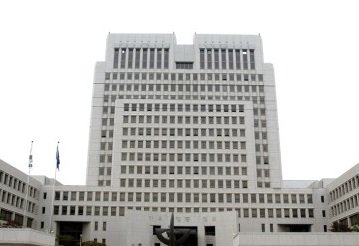
According to Financial News, three church officials, including an elder, who were put on trial for allegedly brainwashing three sisters in their congregation, implanting false memories, and then pressuring them to file a criminal complaint claiming their biological father had sexually assaulted them, have been acquitted by the Supreme Court of Korea. The Supreme Court acknowledged that the alleged sexual assaults were fabricated, but ruled that the defendants’ intent to file a false accusation had not been proven.
On the 4th, the Second Division of the Supreme Court of Korea, presided over by Justice Eom Sang-pil, upheld the lower court’s not-guilty verdict in the final appeal of three defendants: a church elder who also worked as a senior investigator at the prosecution service, his wife, and a deacon from the same church, all indicted on charges of false accusation.
The three were accused of making the sisters, who were female congregants, believe the false claim that they had been “continuously sexually assaulted by their biological father since the age of four or five,” and then coercing them into filing a false criminal complaint for sexual assault against him in August 2019.
The prosecution service viewed the case as a scheme that began after the sisters’ father came to suspect the church his daughters attended was a heretical group. Prosecutors argued that the defendants conspired to brand him a sex offender in retaliation. In the first-instance court, the judge accepted the prosecution’s argument, sentencing the elder and his wife to four years in prison and the deacon to three years, and ordered them taken into custody in the courtroom.
The first-instance court stated, “It can be recognized that the defendants repeatedly used suggestion, leading questions, and persistent questioning to elicit the answers they wanted, thereby implanting fictitious memories,” adding, “For the crime of false accusation, even conditional intent is sufficient to establish criminal intent, and it appears the defendants were fully aware that the alleged sexual assaults were fabricated.”
However, the appellate court overturned the first-instance ruling and found all three defendants not guilty. While the appellate court accepted as fact that “the alleged sexual assaults did not actually occur,” it concluded that the allegation the defendants had conspired to deliberately implant false memories had not been proven to the strict standard required in criminal cases.
The appellate court explained, “Based solely on the evidence submitted by the prosecutor, it is difficult to conclude that it has been proven that the defendants, even with conditional intent, recognized the alleged victimization as false.”
The prosecutor appealed, but the Supreme Court of Korea affirmed the appellate court’s decision.
Meanwhile, the case drew public attention when it was featured on the Seoul Broadcasting System (SBS) program “Unanswered Questions Y” in November 2019 and again in February the following year.
[email protected] Lee Hwan-joo Reporter