CIO says investigation authority over Serious Crime Investigation Agency officers must be clarified, submits concerns to government
- Input
- 2026-02-03 11:43:58
- Updated
- 2026-02-03 11:43:58
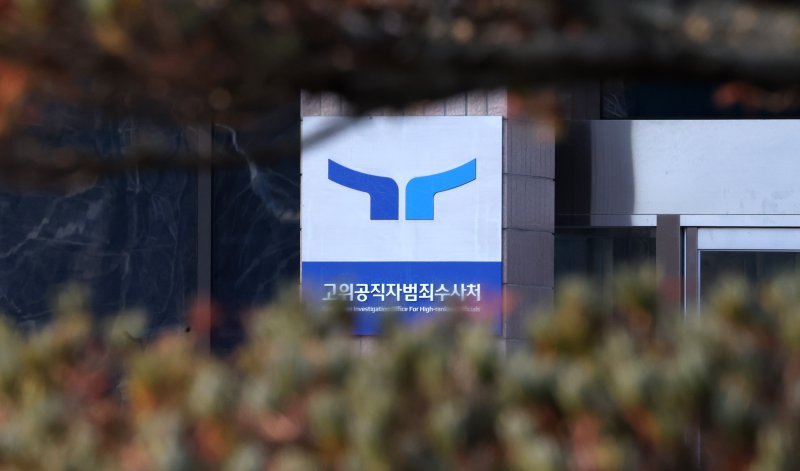
A Corruption Investigation Office for High-ranking Officials (CIO) official said at a regular press briefing held on the morning of the 3rd at Government Complex Gwacheon in Gyeonggi Province, "We have conveyed to the relevant ministries our view that, under the Corruption Investigation Office for High-ranking Officials Act (CIO Act) and the Police Agency Act, the CIO should investigate Serious Crime Investigation Agency officials of grade 3 and above, while the National Office of Investigation should investigate those of grade 4 and below."
The official went on, "The Serious Crimes Investigation Agency Act lists the Public Prosecution Office, the Corruption Investigation Office for High-ranking Officials (CIO), and police officers as subjects of investigation, but it does not clearly specify who has authority to investigate officials of the Serious Crime Investigation Agency itself," adding, "The intent is to clearly delineate the scope of each investigative body and eliminate unnecessary competition."
The CIO official also noted that although the purpose of so-called 'prosecution reform' was to prevent prosecutors from exercising direct investigative powers such as the authority to initiate and close investigations, CIO prosecutors, by the nature of their work, must retain both direct investigative powers and the authority to indict. He stressed the need for provisions that clearly define these powers.
He said, "The detailed provisions of the CIO Act are to be applied mutatis mutandis from the Prosecutors' Office Act, and a prime example is Article 4 of the Prosecutors' Office Act, which defines the role of prosecutors and is applied by the CIO. However, once the Prosecutors' Office Act is abolished in October, we will no longer be able to rely on it."
He added, "The most important principle is to secure checks and balances among investigative agencies," and continued, "We also submitted the view that there is a need, through amendments to the CIO Act, to establish unified rules on several issues, including the status of CIO officials, the definition of related offenses, and the scope of investigation targets."
The police have likewise submitted their concerns to the relevant ministries regarding the government's bill to establish the Public Prosecution Office and the Serious Crime Investigation Agency. They are worried that the broad investigative scope of the Serious Crime Investigation Agency will overlap with that of the police and lead to 'case ping-pong.'
Jaesung Yoo, Acting Commissioner General of the Korean National Police Agency, said at a regular press briefing held on the 2nd at the National Police Agency headquarters in Seodaemun District, Seoul, "We submitted our view that if the Serious Crime Investigation Agency is given both a broad mandate and the authority to request case transfers and to accept transfers at its discretion, this could result in 'case ping-pong' between the police and the Serious Crime Investigation Agency and cause delays in investigations."
[email protected] Kim Dong-gyu Reporter