"I Was Not Highlighting the Merits of a Weak Yen" – Japan's Finance Minister Walks Back Takaichi's Remarks
- Input
- 2026-02-03 11:21:11
- Updated
- 2026-02-03 11:21:11
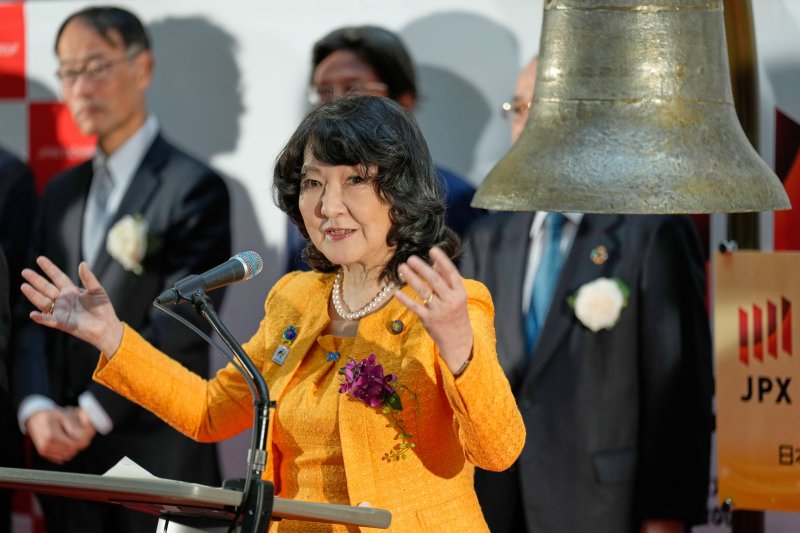
Tokyo correspondent Seo Hye-jin of Financial News reports that on the 3rd, Finance Minister Satsuki Katayama rejected Prime Minister Sanae Takaichi's remarks about the Foreign Exchange Fund Special Account, saying, "She was not emphasizing the advantages of a weak yen, nor was that the intent." Her comments appear aimed at damage control after Takaichi said that "a weak yen is a major opportunity for export industries" and that the management of the Foreign Exchange Fund Special Account was in a "beaming" state, remarks that were followed by a sharp drop in the yen's value.
Katayama made these comments at a press conference after a cabinet meeting, when asked about the prime minister's remarks regarding the Foreign Exchange Fund Special Account.
Regarding Takaichi's comments on how yen weakness affects the economy, Katayama said they were "a textbook-level explanation" and added, "As finance minister, I am entirely in the same position as the prime minister."
Earlier, on the 1st of last month, during a campaign speech in support of the House of Representatives of Japan election, Prime Minister Takaichi said that the fund set up for foreign-exchange intervention was in a state of being "very well padded (hokuhoku)," and added, "People say a weak yen is bad, but for export industries it is a major opportunity."
As controversy grew over what sounded like a defense of yen weakness, Takaichi wrote the next day on X (formerly Twitter) that her intention was not to say that either a strong yen or a weak yen is inherently good or bad, but rather to convey that "I want to build an economic structure that is resilient to exchange-rate fluctuations." However, market participants interpreted her remarks as signaling tolerance for a weak yen, which intensified selling of the yen and buying of the dollar. As a result, in New York trading on the 2nd, local time, the yen fell during the session to 155.79 yen per dollar, its lowest level in a week.
Market observers said Takaichi's comments had blunted the impact of earlier "rate checks," which had temporarily reversed the yen's weakening trend.
After Takaichi announced the dissolution of the House of Representatives of Japan, concerns grew that expansionary fiscal policy would worsen Japan's public finances, pushing the yen down to 159 per dollar on the 13th of last month. Then, after reports that the Federal Reserve Bank of New York had conducted a "rate check," the yen strengthened sharply, climbing to 152 per dollar on the 27th of last month.
A "rate check" is a procedure in which a central bank inquires with financial institutions about prevailing exchange-rate levels. Markets interpret it as a signal that the authorities may intervene in the foreign-exchange market if necessary. Even though the U.S. government has generally opposed currency-market intervention, the appearance that it might be trying to curb yen weakness was enough to move the market.
Asked about the renewed yen weakness following Takaichi's remarks, Finance Minister Katayama said she would "refrain from commenting on specific exchange-rate levels."
On broader foreign-exchange market developments, she said, "Japan and the United States are always cooperating closely," and stressed, "We will continue to work closely with the U.S. authorities as needed and respond appropriately."
[email protected] Seo Hye-jin Reporter