LDP seen likely to win outright majority on its own; combined with Japan Restoration Party it could dominate parliament
- Input
- 2026-02-03 09:49:45
- Updated
- 2026-02-03 09:49:45
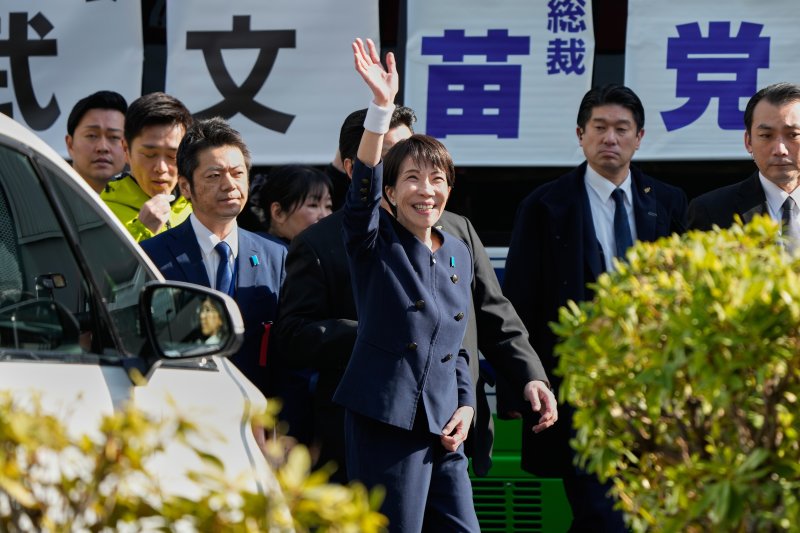
Tokyo – Correspondent Seo Hye-jin of Financial News – Projections are increasingly suggesting that Japan’s ruling Liberal Democratic Party (LDP) will secure an outright majority of 233 seats in the House of Representatives of Japan election on the 8th. If the LDP is combined with the Japan Restoration Party, which forms a coalition government with it, observers say the bloc could reach the threshold of 261 seats, an “overwhelmingly stable majority.” However, about 20% of voters in single-member districts have yet to decide which candidate to support, leaving room for the balance of power to shift by election day and the vote count.
Kyodo News reported on the 2nd that, based on a telephone survey of 194,000 voters nationwide conducted from the 31st of last month to the 2nd of this month, combined with its own reporting, its analysis indicates the Liberal Democratic Party (LDP) is projected to secure an outright majority of 233 seats on its own out of the 465 seats in the House of Representatives of Japan.
The LDP is reportedly leading in about 180 of the 289 single-member districts, buoyed by Prime Minister Sanae Takaichi’s high approval ratings. In the proportional representation segment, the LDP is also expected to increase its seats by around 10 from the 60 it held before the official campaign period began. By contrast, the Japan Restoration Party, which shares power with the LDP, is projected to fall short of its pre-campaign total of 34 seats.
There is also speculation that the combined ruling bloc of the LDP and the Japan Restoration Party could reach 261 seats, the level considered an overwhelmingly stable majority. If they secure this, the ruling parties would not only hold all committee chair posts in the House of Representatives of Japan, but also command a majority in every standing committee, giving them a decisive advantage in passing legislation.
By contrast, the new party Centrist Reform Alliance (CRA), formed by the main opposition Constitutional Democratic Party of Japan (CDP) and the third-largest opposition party Komeito, is expected to struggle. It is projected to win about 60 single-member districts and around 50 proportional representation seats, for a total of roughly 110 seats, a sharp drop from its current 167. As a result, its goal of becoming the “largest party by comparison” appears unlikely to be achieved.
The outlook is also uncertain for the Democratic Party for the People (DPFP), which may not be able to hold on to its 27 seats from before the campaign. Instead, Sanseitō is expected to expand its support in the proportional representation segment and significantly increase its current two seats. Team Mirai, which currently has no seats in the House of Representatives of Japan, is also projected to gain substantial backing in the proportional representation vote.
An electoral projection released the previous day by The Asahi Shimbun likewise pointed to the LDP winning an outright majority on its own. Some forecasts even suggested that the combined seats of the LDP and the Japan Restoration Party could exceed two-thirds of the House’s full membership, or 310 seats.
Based on a telephone and online survey of about 370,000 voters conducted from the 31st of last month to the 1st of this month, The Asahi Shimbun’s analysis projected that the LDP would win well over the 233 seats needed for an outright majority in the general election.
If combined with the Japan Restoration Party, the ruling bloc’s seats could exceed 300, and some projections suggest it might even surpass 310. Should it cross the 310-seat mark, the ruling camp alone would have enough seats to initiate a constitutional amendment. This could open the way for pursuing the constitutional changes that Prime Minister Takaichi has advocated to turn Japan into a “normal country capable of waging war.”
Meanwhile, The Mainichi Shimbun reported that on the previous night Prime Minister Takaichi met at party headquarters with party leaders, including Vice President Taro Aso and Secretary-General Suzuki Shunichi, to discuss the outlook for the House of Representatives of Japan election and the state of the race.
As the campaign enters its final phase, they are believed to have exchanged views on measures such as designating closely contested constituencies as “priority districts” and concentrating resources there.
The LDP is also running campaigns to encourage voter participation and boost turnout. An LDP official said, "The current high cabinet approval rating is thanks to solid support among younger voters," adding, "The direction of turnout among young people will determine the outcome of the election."
[email protected] Seo Hye-jin Reporter