JPMorgan and Deutsche Bank Say Gold’s Drop Is a Buying Opportunity, Call It a Mere Correction
- Input
- 2026-02-03 02:58:01
- Updated
- 2026-02-03 02:58:01
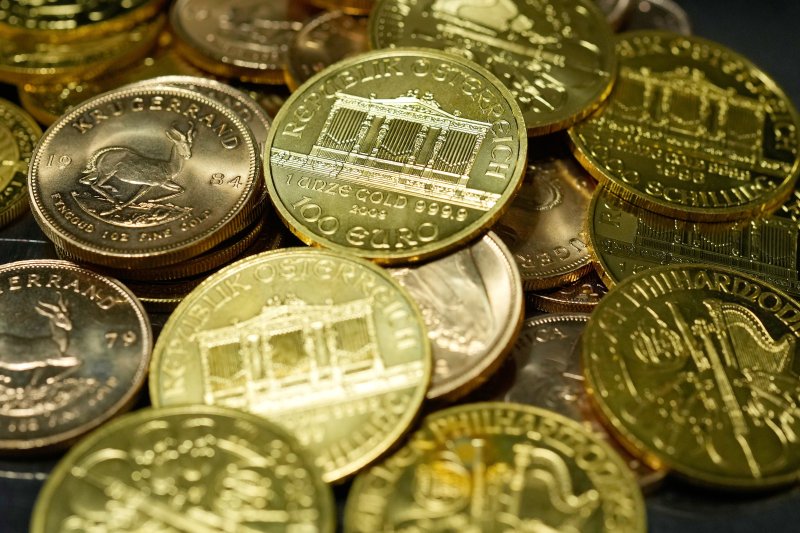
Gold has been falling since “hawk” Kevin Warsh was nominated as the next chair of the Federal Reserve System (the Fed).
Front-month April gold futures fell $62.80, or 1.32%, on the 2nd (local time) from the previous session to trade at $4,682.30 per ounce. On the 30th of last month, they had already plunged 11% on the shock of Warsh’s nomination.
The $5,000-per-ounce level, which gold had recently broken through with strong momentum, has now given way just as quickly.
President Donald John Trump’s decision to nominate Warsh as successor to Jerome Hayden Powell, who steps down in May, has poured cold water on the furious rally in gold prices.
Warsh’s nomination has eased some market concern about damage to the Fed’s independence. However, given his past hawkish stance, investors now expect rate cuts to be less aggressive than Trump had hoped.
Even so, according to Morningstar, Inc., Consumer News and Business Channel (CNBC), and MarketWatch, Wall Street investment banks such as JPMorgan Chase & Co. and Deutsche Bank AG judge the recent slide in gold as a chance to buy on dips. They argue that as prices have fallen, gold’s upside potential has actually increased compared with before.
Gregory Shearer, a market strategist at JPMorgan Chase & Co., stated, “Despite the recent short-term volatility, the momentum behind the long-term rally has not been damaged.” He added, “At JPMorgan, we see the current trend toward portfolio diversification as clear, structural, and lasting, and on the back of this momentum we are confident that gold will continue to rise over the medium term.”
Shearer views the latest weakness as a springboard for further gains. He raised his year-end price target for gold to $6,300 per ounce, implying more than 30% upside from current levels.
“Gold remains a dynamic, multi-faceted portfolio hedge,” he said, predicting that “investor demand will prove more resilient than we previously expected.”
Gold is widely used as a hedge against inflation, geopolitical risks including threats to central bank independence, currency depreciation, and equity market downturns.
Deutsche Bank AG also expects gold prices to rebound. Analyst Michael Shu reaffirmed his year-end target of $6,000 per ounce, suggesting about 26% upside potential.
In a research note, Shu wrote, “The thematic drivers for gold remain positive, and the investment rationale for allocating to gold and precious metals is unlikely to change.” Given current market conditions, he said he does not expect gold prices to keep falling, stressing that the recent decline is not a precursor to a prolonged bear market like those seen in the 1980s or in 2013.
In the 1980s, gold collapsed after the Fed responded to two oil shocks with aggressive rate hikes. Then-Chair Paul Volcker raised the benchmark interest rate to as high as 20%.
In 2013, gold prices plunged 28% in a single year. The backdrop was the so-called taper tantrum, a market panic over monetary tightening. As the economy normalized after the financial crisis, expectations grew that the Fed’s quantitative easing (QE) would end, triggering the taper tantrum.
Today, however, Deutsche Bank AG judges that the situation is different: it is neither a time for the kind of rapid rate hikes seen in the 1980s, nor an environment likely to spark another taper tantrum. For that reason, the bank sees little chance that gold will enter a sustained downtrend.
[email protected] Song Kyung-jae Reporter